- BPM
- 100
- Key
- C Major
- Camelot
- 8B
H.M.S. Pinafore, Act II: Duet. Things Are Seldom What They Seem by Arthur Sullivan, Sir Charles Mackerras, Welsh National Opera Orchestra, Thomas Allen, Felicity Palmer Song Details
"H.M.S. Pinafore, Act II: Duet. Things Are Seldom What They Seem" by Arthur Sullivan, Sir Charles Mackerras, Welsh National Opera Orchestra, Thomas Allen, Felicity Palmer had its release date on October 25, 1994. The duration of This song is about two minutes long, specifically at 2:54. This song does not appear to have any foul language. H.M.S. Pinafore, Act II: Duet. Things Are Seldom What They Seem's duration is considered a little bit shorter than the average duration of a typical track. The track order of this song in Arthur Sullivan, Welsh National Opera Chorus, Welsh National Opera Orchestra, Sir Charles Mackerras, Richard Stuart, Thomas Allen, Michael Schade, Rebecca Evans, Felicity Palmer, Donald Adams, Richard van Allan's "Gilbert & Sullivan: H.M.S. Pinafore" album is number 20 out of 27. On top of that, United States appears to be the country where this track was created. In terms of popularity, H.M.S. Pinafore, Act II: Duet. Things Are Seldom What They Seem is currently not that popular. In our opinion, the overall tone is not very danceable and projects negative sounds, such as being sad, depressed, or angry.
BPM and Tempo
We consider the tempo marking of H.M.S. Pinafore, Act II: Duet. Things Are Seldom What They Seem by Arthur Sullivan, Sir Charles Mackerras, Welsh National Opera Orchestra, Thomas Allen, Felicity Palmer to be Andante (at a walking pace) because the track has a tempo of 100 BPM, a half-time of 50BPM, and a double-time of 200 BPM. Based on that, the speed of the song's tempo is slow. The time signature for this track is 4/4.
Music Key
C Major is the music key of this track. This also means that this song has a camelot key of 8B. So, the perfect camelot match for 8B would be either 8B or 9A. While, 9B can give you a low energy boost. For moderate energy boost, you would use 5B and a high energy boost can either be 10B or 3B. Though, if you want a low energy drop, you should looking for songs with either a camelot key of 8A or 7B will give you a low energy drop, 11B would be a moderate one, and 6B or 1B would be a high energy drop. Lastly, 5A allows you to change the mood.
Want to find the BPM and music key for other songs? Check out our BPM and Key Finder page!
- Popularity
- 1%
- Loudness
- -21.591 dB
- Acousticness
- 96%
- Danceability
- 38%
- Energy
- 10%
- Instrumentalness
- 0%
- Liveness
- 32%
- Loudness
- 64%
- Speechiness
- 5%
- Valence
- 19%
Recommendations
| Track | Artist | Key | Energy | Camelot | BPM | ||
|---|---|---|---|---|---|---|---|
 | Voi, che sapete (Le nozze di Figaro) | Rise Stevens | B♭ Major | 1 | 6B | 70 BPM | |
 | Così fan tutte, K. 588 / Act I: "Ah, guarda, sorella" | Wolfgang Amadeus Mozart, Angela Brower, Miah Persson, Chamber Orchestra of Europe, Yannick Nézet-Séguin | E♭ Major | 1 | 5B | 167 BPM | |
 | 26. From ev'ry kind of man Obedience I expect | Arthur Sullivan, Lyndsie Holland, John Ayldon, The D'Oyly Carte Opera Chorus, Royal Philharmonic Orchestra, Royston Nash | C Major | 2 | 8B | 80 BPM | |
 | HMS Pinafore (or, The Lass that Loved a Sailor), Act I: Refrain, audacious tar (Josephine, Ralph) | Arthur Sullivan, Elsie Morison/Richard Lewis/Pro Arte Orchestra/Sir Malcolm Sargent, Sir Malcolm Sargent, Pro Arte Orchestra | F Major | 1 | 7B | 76 BPM | |
 | Elijah, Op. 70, MWV A25 / Part 2: "Hear ye, Israel" - "Thus saith the Lord" - "I am He that comforteth" | Felix Mendelssohn, Renée Fleming, Stephen Doughty, Orchestra of the Age of Enlightenment, Paul Daniel | B♭ Major | 0 | 6B | 120 BPM | |
 | Thespis: No. 3 Valse | Arthur Sullivan, RTE Concert Orchestra, Andrew Penny | G Major | 0 | 9B | 87 BPM | |
 | Nonnenkoor Uit Casanova | Koor en Orkest o.l.v. Benedict Silberman | F Major | 3 | 7B | 87 BPM | |
 | Sullivan: The Mikado or The Town of Titipu, Act 2: No. 24, Finale, "For he's gone and married Yum-Yum … The threatened cloud" (Pitti-Sing, Ko-Ko, Nanki-Poo, Yum-Yum, Others) | Arthur Sullivan, Marjorie Thomas/Sir Geraint Evans/Richard Lewis/Elsie Morison/Owen Brannigan/Ian Wallace/John Cameron/Jeannette Sinclair/Monica Sinclair/Glyndebourne Chorus/Pro Arte Orchestra/Sir Malcolm Sargent, Sir Malcolm Sargent, Pro Arte Orchestra | E♭ Major | 3 | 5B | 110 BPM | |
 | Andrea Chénier, Andrea Chenier, Act III: Nemico della Patria | Umberto Giordano, Dmitri Hvorostovsky, Russia Spiritual Revival Choir, Philharmonia of Russia, Constantine Orbelian | B♭ Major | 3 | 6B | 128 BPM | |
| Tosca, S. 69, Tosca, Act I: Tre sbirri, una carrozza, "Te Deum" | Giacomo Puccini, Dmitri Hvorostovsky, Russia Spiritual Revival Choir, Philharmonia of Russia, Constantine Orbelian | C Minor | 5 | 5A | 73 BPM | |
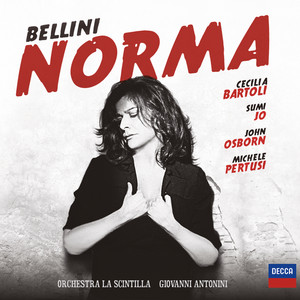 | Norma / Act 2 Scene 1: "Si, fino all’ore estreme" (Critical Ed. Maurizio Biondi and Riccardo Minasi) | Vincenzo Bellini, Cecilia Bartoli, Sumi Jo, Orchestra La Scintilla, Giovanni Antonini | F Major | 5 | 7B | 135 BPM | |
 | Gounod: Messe solennelle de Sainte Cécile: VIII. Domine salvum | Charles Gounod, Georges Prêtre, Nouvel Orchestre Philharmonique de Radio France | G Major | 1 | 9B | 85 BPM | |
 | Orff: Carmina Burana, Pt. 2, In Taberna: Olim lacus colueram | Carl Orff, Sir Simon Rattle, Lawrence Brownlee, Rundfunkchor Berlin, Berliner Philharmoniker | E Minor | 2 | 9A | 99 BPM | |
 | Songs of Travel: Whither Must I Wander? | Ralph Vaughan Williams, David John Pike, Isabelle Trüb | E Major | 3 | 12B | 92 BPM | |
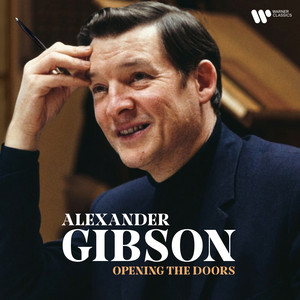 | Bizet: Petite suite des "Jeux d'enfants", Op. 22, WD 39: I. Marche "Trompette et tambour" | Georges Bizet, Alexander Gibson, Scottish National Orchestra | C Major | 1 | 8B | 121 BPM | |
 | Ariane et Barbe-bleue, Act I: Prenez-les! - Penchez-vous! (the Nurse, Ariane) | Paul Dukas, Marilyn Schmiege, Roderick Kennedy, Jocelyne Taillon, Cynthia Buchan, Monique Baudoin, Mitsuko Shirai, Francine Laurent, Josef Otten, Jörg Pavelec, Franz Gerihsen, WDR Rundfunkchor Köln, WDR Sinfonieorchester Köln, Gary Bertini | F♯ Major | 4 | 2B | 91 BPM | |
 | O del mio amato ben - Voice | Stefano Donaudy, Carlo Bergonzi, John Wustman | A Major | 1 | 11B | 60 BPM | |
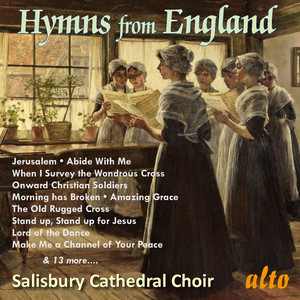 | Onward Christian Soldiers | Sabine Baring-Gould, Arthur Sullivan, Salisbury Cathedral Choir, Simon Lole | E♭ Major | 2 | 5B | 170 BPM | |
| Elijah, Op. 70, MWV A25 / Part 2: "Be not afraid, saith God the Lord" | Felix Mendelssohn, Edinburgh Festival Chorus, Stephen Doughty, Orchestra of the Age of Enlightenment, Paul Daniel | G Major | 2 | 9B | 119 BPM | |
 | Offenbach: Orphée aux enfers, Act 2: Final. "Ne regarde pas en arrière !" (L'Opinion publique, Jupiter, Chœur, Orphée, Eurydice) | Jacques Offenbach, Marc Minkowski, Chœur de l’Opéra de Lyon, Ewa Podles, Laurent Naouri, Natalie Dessay, Yann Beuron, Orchestre de Chambre de Grenoble, Orchestre de l'Opéra de Lyon | A Major | 3 | 11B | 108 BPM | |
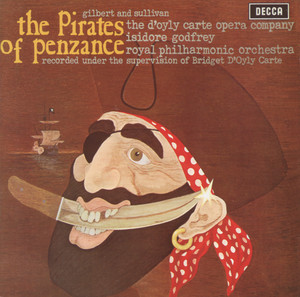 | 15. Oh, men of dark and dismal fate | Arthur Sullivan, Valerie Masterson, Pauline Wales, Jean Allister, Christene Palmer, Philip Potter, George Cook, John Reed, Donald Adams, The D'Oyly Carte Opera Chorus, Royal Philharmonic Orchestra, Isidore Godfrey | F Major | 1 | 7B | 109 BPM | |
 | Bellini: I puritani: "All’erta!" (Bruno, Coro) | Vincenzo Bellini, Dresdner Philharmonie, Riccardo Frizza | D Major | 5 | 10B | 136 BPM | |
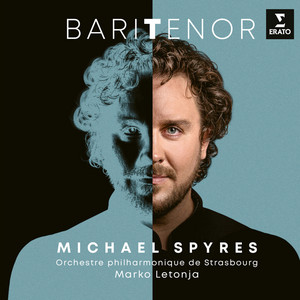 | Méhul: Ariodant, Act III: "Oh, Dieux! Ecoutez ma prière" (Edgard) | Étienne Nicolas Méhul, Michael Spyres, Marko Letonja, Orchestre Philharmonique De Strasbourg | F Minor | 2 | 4A | 81 BPM | |
 | Puccini: Messa di Gloria: Gloria in excelsis Deo - In terra pax - Laudamus te | Giacomo Puccini, London Symphony Chorus, London Symphony Orchestra, Antonio Pappano | A♭ Major | 2 | 4B | 108 BPM | |
 | Vilia from "The Merry Widow" | Franz Lehár, Anna Moffo, RCA Victor Orchestra, Skitch Henderson | C Major | 2 | 8B | 96 BPM |
- ISRC
- USTE10723374
- Label
- L-M Records/RCA Records