- BPM
- 132
- Key
- B Major
- Camelot
- 1B
Tchaikovsky: Swan Lake, Op. 20, Act II: No. 10, Scene. Moderato by Pyotr Ilyich Tchaikovsky, David Lloyd-Jones, The New London Orchestra Song Details
"Tchaikovsky: Swan Lake, Op. 20, Act II: No. 10, Scene. Moderato" by Pyotr Ilyich Tchaikovsky, David Lloyd-Jones, The New London Orchestra had its release date on March 29, 2011. The duration of This song is about two minutes long, specifically at 2:47. This song does not appear to have any foul language. Tchaikovsky: Swan Lake, Op. 20, Act II: No. 10, Scene. Moderato's duration is considered a little bit shorter than the average duration of a typical track. There are a total of 39 in the song's album "Swan Lake [Matthew Bourne version]". In this album, this song's track order is #13. Furthermore, we believe that the track originated from Germany. Based on our statistics, Tchaikovsky: Swan Lake, Op. 20, Act II: No. 10, Scene. Moderato's popularity is not that popular right now. In our opinion, the overall tone is not very danceable and projects negative sounds, such as being sad, depressed, or angry.
BPM and Tempo
With Tchaikovsky: Swan Lake, Op. 20, Act II: No. 10, Scene. Moderato by Pyotr Ilyich Tchaikovsky, David Lloyd-Jones, The New London Orchestra having a BPM of 132 with a half-time of 66 BPM and a double-time of 264 BPM, we would consider this track to have a Allegro (fast, quick, and bright) tempo marking. Because of this, we believe that the song has an overall fast tempo. Looking at the BPM of this song, this song might go great with walking. The time signature for this track is 4/4.
Music Key
This song has a musical key of B Major. Or for those who are familiar with the camelot wheel, this song has a camelot key of 1B. So, the perfect camelot match for 1B would be either 1B or 2A. While, 2B can give you a low energy boost. For moderate energy boost, you would use 10B and a high energy boost can either be 3B or 8B. Though, if you want a low energy drop, you should looking for songs with either a camelot key of 1A or 12B will give you a low energy drop, 4B would be a moderate one, and 11B or 6B would be a high energy drop. Lastly, 10A allows you to change the mood.
Want to find the BPM and music key for other songs? Check out our BPM and Key Finder page!
- Popularity
- 13%
- Loudness
- -13.522 dB
- Acousticness
- 92%
- Danceability
- 25%
- Energy
- 31%
- Instrumentalness
- 86%
- Liveness
- 35%
- Loudness
- 77%
- Speechiness
- 4%
- Valence
- 7%
Recommendations
| Track | Artist | Key | Energy | Camelot | BPM | ||
|---|---|---|---|---|---|---|---|
 | Symphony No. 25 in G Minor, K. 183: I. Allegro con brio | Wolfgang Amadeus Mozart, Academy of St. Martin in the Fields, Sir Neville Marriner | G Minor | 2 | 6A | 80 BPM | |
 | Violin Concerto No. 2 in B Minor, Op. 7, "La campanella": III. Rondo | Niccolò Paganini, Netherlands Symphony Orchestra, Rudolf Koelman, Jan Willem de Vriend | B Minor | 2 | 10A | 105 BPM | |
 | Fee des Lilas (Variation VI) | Pyotr Ilyich Tchaikovsky, Slovak State Philharmonic Orchestra, Kosice | C Major | 3 | 8B | 116 BPM | |
 | Haydn: Symphony No. 94 in G Major, Hob. I:94 "Surprise": IV. Finale. Allegro di molto | Joseph Haydn, André Previn, Pittsburgh Symphony Orchestra | G Major | 2 | 9B | 140 BPM | |
 | The Planets, Op. 32: 4. Jupiter, the Bringer of Jollity | Gustav Holst, Berliner Philharmoniker, Herbert von Karajan | G Minor | 3 | 6A | 140 BPM | |
 | Orchestral Suite No. 3 in D Major, BWV 1068: II. Air "on the G String" | Johann Sebastian Bach, David Bell, Berliner Philharmoniker, Herbert von Karajan | D Major | 1 | 10B | 113 BPM | |
 | Giselle: Act II: Entree d'Hilarion, scene et fugue des Wilis - Grand pas de duex | Adolphe Adam, Slovak Radio Symphony Orchestra, Andrew Mogrelia | G Major | 1 | 9B | 122 BPM | |
 | Peter and the Wolf, Op. 67: The Bird | Sergei Prokofiev, Slovak Radio Symphony Orchestra, Ondrej Lenard | C Major | 0 | 8B | 99 BPM | |
![Die Flamme von Paris (Flames of Paris), Act IV: Coda [arr. March] by Boris Vladimirovich Asafiev, Sofia National Opera Orchestra, Boris Spassov](https://i.scdn.co/image/ab67616d00001e020d73d1173789e937d83fa6c9) | Die Flamme von Paris (Flames of Paris), Act IV: Coda [arr. March] | Boris Vladimirovich Asafiev, Sofia National Opera Orchestra, Boris Spassov | C Major | 4 | 8B | 135 BPM | |
 | Coriolan, Op. 62: Coriolan Overture, Op. 62 | Ludwig van Beethoven, Berliner Philharmoniker, Herbert von Karajan | F Minor | 2 | 4A | 76 BPM | |
 | Requiem: IIa. Dies irae | Giuseppe Verdi, Mariinsky Chorus, Mariinsky Orchestra, Valery Gergiev | C Minor | 4 | 5A | 88 BPM | |
 | Le pavillon d'Armide, Op. 29 (Excerpts): No. 6a, Variation - No. 6b, Variation pour Vicomte - No. 6c, Variation pour Armide - No. 6d, Code finale - No. 7, Scène mimique | Nikolai Tcherepnin, Moscow Philharmonic Orchestra, Henry Shek | E Major | 0 | 12B | 78 BPM | |
 | Waltz in A flat major, Op.39 No. 15 | Johannes Brahms, Radio Symphony Orchestra | A Major | 1 | 11B | 89 BPM | |
 | Carmen Ballet Suite (after Bizet): IX. Torero | Rodion Shchedrin, Slovenian Symphony Orchestra, Anton Nanut | F Major | 5 | 7B | 115 BPM | |
 | Gold Und Silber (Gold And Silver), Op. 79 | Slovak Radio Symphony Orchestra, Franz Lehár | C Major | 1 | 8B | 81 BPM | |
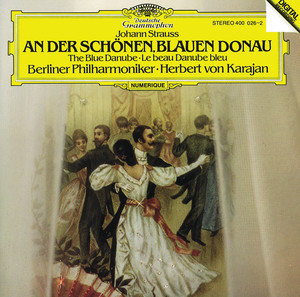 | An der schönen blauen Donau, Waltz, Op. 314 | Johann Strauss II, Berliner Philharmoniker, Herbert von Karajan | D Major | 0 | 10B | 95 BPM | |
 | Serenade | Jairos | C Major | 2 | 8B | 118 BPM | |
 | Minkus: Don Quixote, Act 3: II. Adage | Ludwig Minkus, Robert Irving, Royal Philharmonic Orchestra | E♭ Major | 1 | 5B | 57 BPM | |
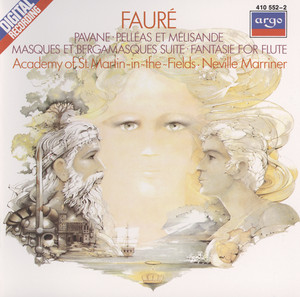 | Pelléas et Mélisande, Op.80: 3. Sicilienne | Gabriel Fauré, Academy of St. Martin in the Fields, Sir Neville Marriner | G Minor | 0 | 6A | 111 BPM | |
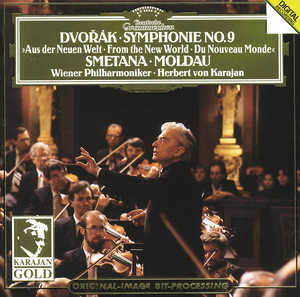 | Má vlast, JB 1:112: II. Vltava "The Moldau" | Bedřich Smetana, Wiener Philharmoniker, Herbert von Karajan | E Minor | 1 | 9A | 78 BPM | |
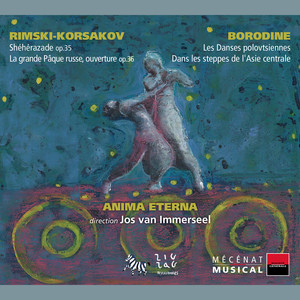 | Les danses polovtsiennes (Extraits de l'opéra Le Prince Igor): II. Danse des hommes | Alexander Borodin, Anima Eterna, Jos Van Immerseel | A Major | 0 | 11B | 87 BPM | |
 | Peer Gynt Suite No. 1, Op. 46: II. Åse's Death | Edvard Grieg, Wiener Philharmoniker, Zubin Mehta | G Major | 0 | 9B | 99 BPM | |
| The Sleeping Beauty, Op. 66 : Valse | Pyotr Ilyich Tchaikovsky, Slovak State Philharmonic Orchestra, Kosice | B♭ Major | 2 | 6B | 100 BPM | |
 | Masquerade (Suite): 1. Waltz - Excerpt | Aram Khachaturian, London Symphony Orchestra, Stanley Black | C Major | 3 | 8B | 67 BPM | |
 | Waltz No. 19 in A minor, Op. posth. | Frédéric Chopin, Peter Jablonski | A Minor | 0 | 8A | 69 BPM |
- ISRC
- DEA809611413
- Label
- L-M Records/RCA Records