- BPM
- 178
- Key
- A♭ Major
- Camelot
- 4B
Piano Trio No. 2 In E Flat Major, Op. 100, D. 929: III. Scherzando - Allegro Moderato - Trio by Stuttgart Piano Trio, Franz Schubert Song Details
Stuttgart Piano Trio, Franz Schubert's 'Piano Trio No. 2 In E Flat Major, Op. 100, D. 929: III. Scherzando - Allegro Moderato - Trio' had a release date set for May 15, 1989. Since This song is still less than 10 minute long, it is still considered a pretty long duration song compared to the average song length. This song does not appear to be explicit due to the lack of the "E" tag. There are a total of 5 in the song's album "Schubert: Piano Trios In E Flat Major, D. 929 And D. 897". In this album, this song's track order is #3. Furthermore, we believe that the track originated from Hong Kong. The popularity of Piano Trio No. 2 In E Flat Major, Op. 100, D. 929: III. Scherzando - Allegro Moderato - Trio is currently not that popular right now. Although the tone can be danceable to some, this track does projects more of a negative sound rather than a postive one.
BPM and Tempo
With Piano Trio No. 2 In E Flat Major, Op. 100, D. 929: III. Scherzando - Allegro Moderato - Trio by Stuttgart Piano Trio, Franz Schubert having a BPM of 178 with a half-time of 89 BPM and a double-time of 356 BPM, we would consider this track to have a Presto (very, very fast) tempo marking. Because of this, we believe that the song has an overall fast tempo. The time signature for this track is 3/4.
Music Key
This song has a musical key of A♭ Major. Or for those who are familiar with the camelot wheel, this song has a camelot key of 4B. So, the perfect camelot match for 4B would be either 4B or 5A. While, 5B can give you a low energy boost. For moderate energy boost, you would use 1B and a high energy boost can either be 6B or 11B. Though, if you want a low energy drop, you should looking for songs with either a camelot key of 4A or 3B will give you a low energy drop, 7B would be a moderate one, and 2B or 9B would be a high energy drop. Lastly, 1A allows you to change the mood.
Want to find the BPM and music key for other songs? Check out our BPM and Key Finder page!
- Popularity
- 12%
- Loudness
- -23.702 dB
- Acousticness
- 99%
- Danceability
- 41%
- Energy
- 6%
- Instrumentalness
- 62%
- Liveness
- 22%
- Loudness
- 60%
- Speechiness
- 5%
- Valence
- 21%
Recommendations
| Track | Artist | Key | Energy | Camelot | BPM | ||
|---|---|---|---|---|---|---|---|
 | Medeira River | Philip Glass, Kristjan Järvi, Charles Coleman, MDR Leipzig Radio Symphony Orchestra, Absolute Ensemble | C Major | 5 | 8B | 118 BPM | |
 | Sonata in D Minor, K. 9 | Domenico Scarlatti, Ivo Pogorelich | D Minor | 0 | 7A | 94 BPM | |
 | Die Walküre, Act III: Ride of the Valkyries | Richard Wagner, Budapest Symphony Orchestra, György Lehel | D♭ Major | 1 | 3B | 72 BPM | |
 | 12 Danzas españolas, Op. 37: 2. Oriental | Enrique Granados, Alicia de Larrocha | C Minor | 0 | 5A | 66 BPM | |
 | Overture to "A Midsummer Night's Dream", Op. 21: Tempo primo | Felix Mendelssohn, John Eliot Gardiner, London Symphony Orchestra | E Major | 0 | 12B | 140 BPM | |
 | Symphony No. 3 in F Major, Op. 90: III. Poco allegretto | Johannes Brahms, David Zinman | C Minor | 0 | 5A | 173 BPM | |
 | Lamentate: Fragile e conciliante | Arvo Pärt, Ralph van Raat, Netherlands Radio Chamber Philharmonic, Joann Falletta | D♭ Major | 0 | 3B | 94 BPM | |
 | Grieg: Peer Gynt Suite No. 1, Op. 46: II. The Death of Åse | Edvard Grieg, The Norwegian Radio Orchestra, Ari Rasilainen | G Major | 0 | 9B | 160 BPM | |
 | Serenade for Strings in E Major, Op. 22, B. 52: I. Moderato | Antonín Dvořák, Prague Chamber Orchestra, Petr Skvor | E Major | 1 | 12B | 83 BPM | |
 | Má vlast, JB 1:112: No. 2, Vltava (My Country: Moldau) | Bedřich Smetana, Polish National Radio Symphony Orchestra, Antoni Wit | G Major | 1 | 9B | 138 BPM | |
 | Sonata in E Major, K. 380 (L. 23) | Domenico Scarlatti, Leon Fleisher | E Major | 1 | 12B | 93 BPM | |
 | Bach, JS : Well-Tempered Clavier Book 1 : Prelude No.1 in C major BWV846 | Daniel Barenboim | C Major | 0 | 8B | 95 BPM | |
 | The Seasons, Op. 37a, TH 135: 6. June: Barcarolle | Pyotr Ilyich Tchaikovsky, Brigitte Engerer | G Minor | 1 | 6A | 105 BPM | |
 | Scherzo in D Minor | Pavel Kogan, Moscow State Symphony Orchestra | D Minor | 4 | 7A | 121 BPM | |
 | Symphonie n°9 en mi mineur, Op. 95 du nouveau monde: Adagio | Antonín Dvořák, Slovak Philharmonic, Kurt Redel | E Minor | 1 | 9A | 121 BPM | |
 | Marche funebre | Luigi Cherubini, Radio Svizzera Italiana Orchestra, Diego Fasolis | D Minor | 0 | 7A | 82 BPM | |
 | Piano Trio in G Minor, Op. 3: III. Assez lent | Ernest Chausson, Stuttgart Piano Trio | G Minor | 1 | 6A | 84 BPM | |
 | Ständchen (From Schwanengesang, D957) | Franz Liszt, Evgeny Kissin | D Major | 0 | 10B | 68 BPM | |
 | The Garden Is Becoming A Robe Room - 2004 Digital Remaster | Michael Nyman | E Minor | 3 | 9A | 73 BPM | |
 | Le Carnaval des Animaux, R. 125: VII. Aquarium | Camille Saint-Saëns, Ensemble Musique Oblique | A Minor | 0 | 8A | 127 BPM | |
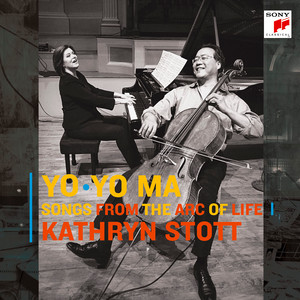 | Il bell'Antonio, Tema III | Giovanni Sollima, Yo-Yo Ma, Kathryn Stott | C Minor | 1 | 5A | 88 BPM | |
 | Lieder ohne Worte, Op. 19b: Lieder ohne Worte (Song without Words) No. 6 in G Minor, Op. 19, No. 6, "Venezianisches Gondellied" [Venetian Gondola Song] | Felix Mendelssohn, Péter Nagy | G Major | 0 | 9B | 101 BPM | |
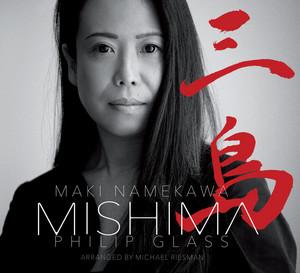 | Mishima / Opening | Philip Glass, Maki Namekawa | B♭ Major | 2 | 6B | 123 BPM | |
 | Mishima: Blood Oath | Philip Glass, Angèle Dubeau, La Pietà | E♭ Major | 1 | 5B | 100 BPM | |
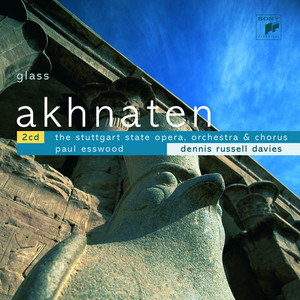 | Akhnaten: Act I, Prelude: Refrain - Verse 1 - Verse 2 | Philip Glass, Dennis Russell Davies | F Major | 1 | 7B | 101 BPM |
- ISRC
- HKI199301803
- Label
- L-M Records/RCA Records