- BPM
- 167
- Key
- A♭ Major
- Camelot
- 4B
Ich bin ein Zigeunerkind by Rudolf Schock Song Details
Rudolf Schock's 'Ich bin ein Zigeunerkind' had a release date set for February 28, 2023. The duration of This song is about two minutes long, specifically at 2:55. This song does not appear to have any foul language. Ich bin ein Zigeunerkind's duration is considered a little bit shorter than the average duration of a typical track. There are a total of 20 in the song's album "Rudolf Schock; Einfach das beste, Vol. 2". In this album, this song's track order is #19. The popularity of Ich bin ein Zigeunerkind is currently unknown right now. In our opinion, the overall tone is not very danceable and projects negative sounds, such as being sad, depressed, or angry.
BPM and Tempo
With Ich bin ein Zigeunerkind by Rudolf Schock having a BPM of 167 with a half-time of 84 BPM and a double-time of 334 BPM, we would consider this track to have a Vivace (lively and fast) tempo marking. Because of this, we believe that the song has an overall fast tempo. The time signature for this track is 3/4.
Music Key
This song has a musical key of A♭ Major. Or for those who are familiar with the camelot wheel, this song has a camelot key of 4B. So, the perfect camelot match for 4B would be either 4B or 5A. While, 5B can give you a low energy boost. For moderate energy boost, you would use 1B and a high energy boost can either be 6B or 11B. Though, if you want a low energy drop, you should looking for songs with either a camelot key of 4A or 3B will give you a low energy drop, 7B would be a moderate one, and 2B or 9B would be a high energy drop. Lastly, 1A allows you to change the mood.
Want to find the BPM and music key for other songs? Check out our BPM and Key Finder page!
- Popularity
- 0%
- Loudness
- -11.357 dB
- Acousticness
- 94%
- Danceability
- 20%
- Energy
- 28%
- Instrumentalness
- 3%
- Liveness
- 9%
- Loudness
- 81%
- Speechiness
- 4%
- Valence
- 27%
Recommendations
| Track | Artist | Key | Energy | Camelot | BPM | ||
|---|---|---|---|---|---|---|---|
 | Komm, lieber Mai und mache | Eva Lind | B♭ Major | 3 | 6B | 79 BPM | |
 | My Fair Lady: Kann Denn Die Kinder Keiner Lehren Wie Man Spricht | Alfred Schieske, Boris Greverus, Rex Gildo, Hans Hardt, Paul Hubschmid, Karin Hubner, Friedrich Schoenfelder | C Major | 3 | 8B | 140 BPM | |
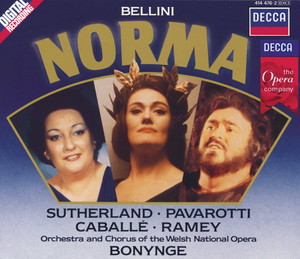 | Norma / Act 1: Norma viene | Vincenzo Bellini, Welsh National Opera Chorus, Welsh National Opera Orchestra, Richard Bonynge | E♭ Major | 3 | 5B | 79 BPM | |
 | Hänsel und Gretel, Act II: Abends will ich schlafen gehn (Hänsel, Gretel) | Engelbert Humperdinck, Donald Runnicles, Jennifer Larmore, Ruth Ziesak, Symphonieorchester des Bayerischen Rundfunks | F Major | 1 | 7B | 89 BPM | |
 | O del mio dolce ardor | Christoph Willibald Gluck, Ramón Vargas | G Minor | 1 | 6A | 184 BPM | |
 | Heut' ist der schönste Tag in meinem Leben | Joseph Schmidt | B♭ Major | 4 | 6B | 96 BPM | |
 | Komm in die Gondel (From "Eine Nacht in Venedig") | Johann Strauss II, Jonas Kaufmann, Ádám Fischer, Wiener Philharmoniker | C Major | 2 | 8B | 72 BPM | |
 | Don Giovanni, K.527, Act I Scene 14: Dalla sua pace | Wolfgang Amadeus Mozart, Juan Diego Flórez, Riccardo Minasi | E♭ Major | 2 | 5B | 106 BPM | |
 | Drei rote Rosen | Lale Andersen | D Major | 5 | 10B | 106 BPM | |
 | Gianni Schicchi (O mio bambino caro) | Katia Ricciarelli | A♭ Major | 2 | 4B | 79 BPM | |
 | The Bohemian Girl - Arr. by Karel Mark Chichon: I Dreamt I Dwelt in Marble Halls | Michael William Balfe, Elina Garanca, Orchestra Sinfonica Nazionale Della RAI, Karel Mark Chichon | D Major | 1 | 10B | 87 BPM | |
 | Les Pecheurs des Perles / Act 1: "Au fond du temple saint" | Georges Bizet, Luciano Pavarotti, Nicolai Ghiaurov, National Philharmonic Orchestra, Robin Stapleton | E♭ Major | 2 | 5B | 78 BPM | |
![Die Csardasfurstin (the Gypsy Princess) [Sung in Hungarian], Act I: A lanyok, lanyok, a lanyok angyalok [Feri, Boni, Chorus] by Emmerich Kálmán, Kamill Feleki, Hanna Honthy, Erzsebet Hazy, Laszlo Palocz, Robert Ratonyi, Anna Zentay, Gyorgy Korondy, Laszlo Csakanyi, Ferencz Laszlo, Hungarian Radio and Television Chorus, Hungarian Radio And Television Symphony Orchestra, Tamás Bródy](https://i.scdn.co/image/ab67616d00001e023306107cac7d88587c936a6b) | Die Csardasfurstin (the Gypsy Princess) [Sung in Hungarian], Act I: A lanyok, lanyok, a lanyok angyalok [Feri, Boni, Chorus] | Emmerich Kálmán, Kamill Feleki, Hanna Honthy, Erzsebet Hazy, Laszlo Palocz, Robert Ratonyi, Anna Zentay, Gyorgy Korondy, Laszlo Csakanyi, Ferencz Laszlo, Hungarian Radio and Television Chorus, Hungarian Radio And Television Symphony Orchestra, Tamás Bródy | D Major | 5 | 10B | 96 BPM | |
 | The Merry Widow, Act II: Vilja-Lied | Franz Lehár, Viktor Léon, Leo Stein, Adrian Ross, Vladimir Karmirski, Melbourne Symphony Orchestra, Yvonne Kenny | G Major | 2 | 9B | 80 BPM | |
 | Bohemios: Coro de Bohemios | Amadeo Vives, Maria Bayo, Orquesta Sinfonica De Tenerife, Antonio Ros Marbà, Coro Polifonico De La Universidad De La Laguna, Coral Universitaria De La Laguna, Coral "reyes Bartlet" De Puerto De La Cruz | A♭ Major | 4 | 4B | 124 BPM | |
 | Einzugsmarsch aus Der Zigeunerbaron | Menskes Chöre | B♭ Major | 6 | 6B | 113 BPM | |
 | Salut! demeure chaste et pure (Faust) | Jussi Björling, RCA Victor Orchestra | A♭ Major | 4 | 4B | 100 BPM | |
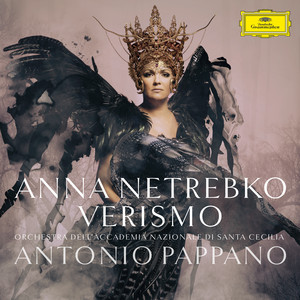 | Adriana Lecouvreur / Act 1: "Ecco: respiro appena ... Io son l'umile ancella" | Francesco Cilea, Anna Netrebko, Orchestra dell'Accademia Nazionale di Santa Cecilia, Antonio Pappano | A♭ Major | 1 | 4B | 82 BPM | |
 | Annchen von Tharau | Friedrich Silcher, Carl Maria von Weber Men's Choir, Berlin, Andreas Wiedermann | A Major | 1 | 11B | 139 BPM | |
 | Lasciami cantare una canzone | Leo Nucci, Salotto Ottocento Ensemble | D Major | 2 | 10B | 94 BPM | |
 | Land of Hope and Glory | Frida Boccara, Mastreechter Staar | F Major | 5 | 7B | 108 BPM | |
 | Giuseppe Verdi: Der Troubadour - Vedi! Le fosche notturne spoglie (Zigeunerchor) | Chor der Staatsoper Wien, Vienna Volksoper Orchestra, Wilhelm Loibner | C Major | 2 | 8B | 127 BPM | |
 | Du bist meine Sonne | Rudolf Schock | A♭ Major | 3 | 4B | 167 BPM | |
 | Tausend Mandolinen | Vico Torriani | F Major | 3 | 7B | 98 BPM | |
 | Rigoletto: Scorrendo uniti remota via | Chor der Deutschen Oper Berlin, Orchester der Deutschen Oper Berlin, Rafael Frühbeck de Burgos | A Major | 1 | 11B | 118 BPM |
- ISRC
- UKMUY1734395
- Label
- L-M Records/RCA Records