- BPM
- 107
- Key
- B♭ Major
- Camelot
- 6B
Variations on an Original Theme by Handel: Variation 3 by Johannes Brahms, David Wilde Song Details
On March 2, 2009, the song "Variations on an Original Theme by Handel: Variation 3" was released by Johannes Brahms, David Wilde. With This song being less than a minute long, we are pretty confident that this song does not contain any foul language. That being said, this song is pretty short compared to other songs. This song is part of Wilde Plays Brahms: Two Rhapsodies, Variations on an Original Theme, Three Intermezzi by Johannes Brahms, David Wilde. The song's track number on the album is #21 out of 44 tracks. Based on our data, United Kingdom was the country where this track was produced or recorded. In terms of popularity, Variations on an Original Theme by Handel: Variation 3 is currently unknown. The mood doesn't appear to be that danceable, but it still produces a high amount of positive energy.
BPM and Tempo
Since Variations on an Original Theme by Handel: Variation 3 by Johannes Brahms, David Wilde has a tempo of 107 beats per a minute, the tempo markings of this song would be Andante (at a walking pace). With Variations on an Original Theme by Handel: Variation 3 being at 107 BPM, the half-time would be 54 BPM with a double-time of 214 BPM.In addition, we consider the tempo speed to be pretty slow for this song. The time signature for this track is 3/4.
Music Key
This song is in the music key of B♭ Major. Or for those who are familiar with the camelot wheel, this song has a camelot key of 6B. So, the perfect camelot match for 6B would be either 6B or 7A. While, 7B can give you a low energy boost. For moderate energy boost, you would use 3B and a high energy boost can either be 8B or 1B. Though, if you want a low energy drop, you should looking for songs with either a camelot key of 6A or 5B will give you a low energy drop, 9B would be a moderate one, and 4B or 11B would be a high energy drop. Lastly, 3A allows you to change the mood.
Want to find the BPM and music key for other songs? Check out our BPM and Key Finder page!
- Popularity
- 0%
- Loudness
- -17.157 dB
- Acousticness
- 98%
- Danceability
- 37%
- Energy
- 30%
- Instrumentalness
- 85%
- Liveness
- 12%
- Loudness
- 71%
- Speechiness
- 4%
- Valence
- 90%
Recommendations
| Track | Artist | Key | Energy | Camelot | BPM | ||
|---|---|---|---|---|---|---|---|
 | Humoresque No. 7 in G-flat Major, Op. 101 | Boston Symphony Orchestra, Yo-Yo Ma, Seiji Ozawa, Itzhak Perlman | F♯ Major | 1 | 2B | 83 BPM | |
 | Allegro molto agitato in D Minor | Fanny Mendelssohn, Heather Schmidt | D Major | 1 | 10B | 111 BPM | |
 | Souvenir d'un lieu cher, Op. 42: III. Mélodie (Ed. Herrmann) | Pyotr Ilyich Tchaikovsky, Daniel Lozakovich, Stanislav Soloviev | E♭ Major | 1 | 5B | 178 BPM | |
 | 8 Nocturnes, Op. 368: No. 2, Andantino animato | Carl Czerny, Roberte Mamou | E♭ Major | 0 | 5B | 169 BPM | |
 | Violin Concerto No. 1 in G Minor, Op. 26: II. Adagio | Max Bruch, Itzhak Perlman, Bernard Haitink, Royal Concertgebouw Orchestra | E♭ Major | 1 | 5B | 87 BPM | |
 | Keyboard Sonata in D Minor, Kk. 1 | Domenico Scarlatti, Ivo Pogorelich | D Minor | 1 | 7A | 107 BPM | |
 | Piano Concerto No. 2 in B-Flat Major, Op. 83: II. Allegro appassionato | Johannes Brahms, Nelson Freire, Frankfurt Radio Symphony Orchestra, Horst Stein | E Major | 2 | 12B | 170 BPM | |
 | Glück: I. Andante | Siegfried Wagner, Rundfunk-Sinfonieorchester Frankfurt, Dimitrij Kitajenko | A Minor | 0 | 8A | 86 BPM | |
 | Symphony No. 4 in E Minor, Op. 98: I. Allegro non troppo | Johannes Brahms, Wiener Philharmoniker, Carlos Kleiber | D Major | 3 | 10B | 68 BPM | |
 | Notturno for Strings and Harp | Arnold Schoenberg, Daniel Hope, Zürcher Kammerorchester, Jane Berthe | A♭ Major | 1 | 4B | 75 BPM | |
 | Schumann: 6 Studien in kanonischer Form, Op. 56: No. 1, Nicht schnell | Robert Schumann, Piotr Anderszewski | C Major | 0 | 8B | 173 BPM | |
 | 10 Preludes, Op. 23: No. 5. Alla marcia in G Minor | Sergei Rachmaninoff, Nikolai Lugansky | G Minor | 2 | 6A | 106 BPM | |
![21 Hungarian Dances, WoO 1: Hungarian Dance No. 1 in G Minor (arr. For orchestra) [Orch. J. Brahms] by Johannes Brahms, London Philharmonic Orchestra, Marin Alsop](https://i.scdn.co/image/ab67616d00001e02652a3346f04f528486b5a47f) | 21 Hungarian Dances, WoO 1: Hungarian Dance No. 1 in G Minor (arr. For orchestra) [Orch. J. Brahms] | Johannes Brahms, London Philharmonic Orchestra, Marin Alsop | G Minor | 2 | 6A | 133 BPM | |
 | Variations on a Rococo Theme, Op. 33, TH 57: Var: VI. Andante | Pyotr Ilyich Tchaikovsky, Jean-Guihen Queyras, BBC Symphony Orchestra, Jiří Bělohlávek | D Major | 0 | 10B | 114 BPM | |
 | Poulenc: Cello Sonata, FP 143: II. Cavatine | Francis Poulenc, Daniel Müller-Schott/Robert Kulek | F♯ Major | 0 | 2B | 77 BPM | |
 | Vocalise, Op. 34, No. 14 | Sergei Rachmaninoff, Berliner Philharmoniker, Lorin Maazel | E Minor | 1 | 9A | 76 BPM | |
 | Symphony No. 7 in A Major, Op. 92: IV. Allegro con brio | Ludwig van Beethoven, Berliner Philharmoniker, Kirill Petrenko | A Major | 4 | 11B | 80 BPM | |
 | 21 Hungarian Dances, WoO 1 (arr. J. Joachim for violin and piano): No. 3 in F Major | Joseph Joachim, Johannes Brahms, Marat Bisengaliev, John Lenehan | F Major | 0 | 7B | 146 BPM | |
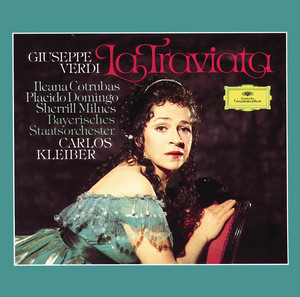 | La Traviata / Act 1: Prelude | Giuseppe Verdi, Bavarian State Orchestra, Carlos Kleiber | B Major | 0 | 1B | 131 BPM | |
 | The Lark | Mikhail Glinka, Evgeny Kissin | B♭ Minor | 0 | 3A | 96 BPM | |
 | 3 Romances sans paroles, Op. 17: No. 3 in A-Flat Major. Andante moderato | Gabriel Fauré, Kun-Woo Paik | A♭ Major | 0 | 4B | 65 BPM | |
 | Piano Concerto No. 2 in F Major, Op. 102: II. Andante | Dmitri Shostakovich, Boris Giltburg, Royal Liverpool Philharmonic Orchestra, Vasily Petrenko | C Minor | 0 | 5A | 80 BPM | |
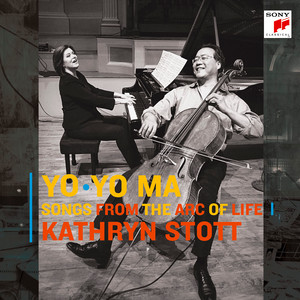 | Salut d'Amour, Op. 12 | Edward Elgar, Yo-Yo Ma, Kathryn Stott | D Major | 0 | 10B | 73 BPM | |
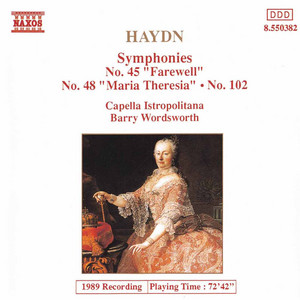 | Symphony No. 45 in F-Sharp Minor, Hob.I:45, "Farewell": I. Allegro assai | Joseph Haydn, Capella Istropolitana, Barry Wordsworth | F♯ Minor | 2 | 11A | 156 BPM | |
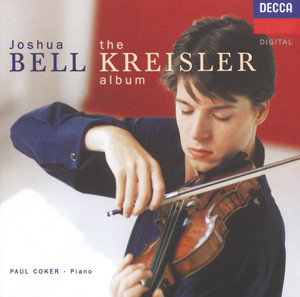 | Liebesfreud | Fritz Kreisler, Joshua Bell, Paul Coker | F Major | 1 | 7B | 99 BPM |
- ISRC
- GBEBL0904021
- Label
- L-M Records/RCA Records