- BPM
- 79
- Key
- E Minor
- Camelot
- 9A
Maurice Ravel, Melodies Hebraiques: L'enigme eternelle by Maurice Ravel, Ron Regev, Inbal Segev Song Details
"Maurice Ravel, Melodies Hebraiques: L'enigme eternelle" by Maurice Ravel, Ron Regev, Inbal Segev had its release date on October 9, 2007. With This song being less than two minutes long, at 1:39, we are fairly confident that this song is not explicit and is safe for all ages. Based on the duration of this song, this song duration is much smaller than the average song duration. There are a total of 18 in the song's album "Nigun: - A Celebration Of Jewish Music". In this album, this song's track order is #16. Furthermore, we believe that the track originated from United States. Maurice Ravel, Melodies Hebraiques: L'enigme eternelle is unknown right now. In our opinion, the overall tone is not very danceable and projects negative sounds, such as being sad, depressed, or angry.
BPM and Tempo
With Maurice Ravel, Melodies Hebraiques: L'enigme eternelle by Maurice Ravel, Ron Regev, Inbal Segev having a BPM of 79 with a half-time of 40 BPM and a double-time of 158 BPM, we would consider this track to have a Andante (at a walking pace) tempo marking. Because of this, we believe that the song has an overall slow tempo. The time signature for this track is 4/4.
Music Key
This song is in the music key of E Minor. Because this track belongs in the E Minor key, the camelot key is 9A. So, the perfect camelot match for 9A would be either 9A or 8B. While, a low energy boost can consist of either 9B or 10A. For moderate energy boost, you would use 6A and a high energy boost can either be 11A or 4A. However, if you are looking for a low energy drop, finding a song with a camelot key of 8A would be a great choice. Where 12A would give you a moderate drop, and 7A or 2A would be a high energy drop. Lastly, 12B allows you to change the mood.
Want to find the BPM and music key for other songs? Check out our BPM and Key Finder page!
- Popularity
- 0%
- Loudness
- -25.252 dB
- Acousticness
- 99%
- Danceability
- 32%
- Energy
- 3%
- Instrumentalness
- 76%
- Liveness
- 9%
- Loudness
- 58%
- Speechiness
- 4%
- Valence
- 13%
Recommendations
| Track | Artist | Key | Energy | Camelot | BPM | ||
|---|---|---|---|---|---|---|---|
 | Ravel: Menuet sur le nom de Haydn, M. 58 | Maurice Ravel, Bertrand Chamayou | G Major | 0 | 9B | 122 BPM | |
 | Nocturnes, Op. 27: No. 2 in D-Flat Major | Frédéric Chopin, Arthur Rubinstein | D♭ Major | 0 | 3B | 77 BPM | |
 | 12 Etudes d'execution transcendante, Op. 11: No. 1 Lullaby | Sergei Lyapunov, Konstantin Scherbakov | F♯ Major | 0 | 2B | 90 BPM | |
 | Orfeo ed Euridice, Wq. 30, Act II: Danse des champs-elysées "Mélodie" (Arr. for Piano by Ignaz Friedman) | Christoph Willibald Gluck, Joseph Banowetz | A Major | 0 | 11B | 72 BPM | |
 | Lieder ohne Worte, Op. 19, No. 1 | Felix Mendelssohn, Murray Perahia | E Major | 0 | 12B | 138 BPM | |
 | 6 Pezzi, P. 44: No. 3. Notturno | Ottorino Respighi, Konstantin Scherbakov | F♯ Major | 0 | 2B | 87 BPM | |
 | Nocturne in B Flat Major, H. 37 (Version for Harp) | John Field, Magdalena Hoffmann | B♭ Major | 1 | 6B | 97 BPM | |
 | Sur L'herbe | Laurent Naouri, David Abramovitz, Maurice Ravel | F♯ Minor | 0 | 11A | 72 BPM | |
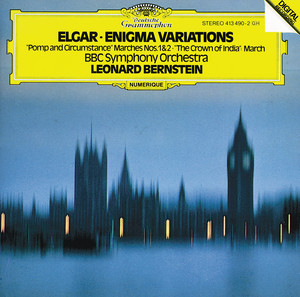 | Variations On An Original Theme, Op.36 "Enigma": 12. B.G.N. (Andante) | Edward Elgar, BBC Symphony Orchestra, Leonard Bernstein | B♭ Major | 0 | 6B | 82 BPM | |
 | Gottes Zeit ist die allerbeste Zeit, BWV 106 "Actus tragicus": I. Sonatina | Johann Sebastian Bach, Márta Kurtág, György Kurtág | F Major | 3 | 7B | 102 BPM | |
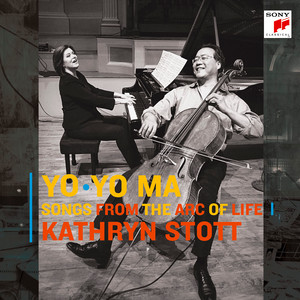 | Songs My Mother Taught Me (from "Gypsy Songs", Op. 55, No. 4) | Antonín Dvořák, Yo-Yo Ma, Kathryn Stott | B Minor | 0 | 10A | 92 BPM | |
 | Poulenc: Concerto for Two Pianos in D Minor, FP 61: II. Larghetto | Francis Poulenc, James Conlon, François-René Duchâble, Jean-Philippe Collard, Rotterdam Philharmonic Orchestra | B♭ Major | 0 | 6B | 84 BPM | |
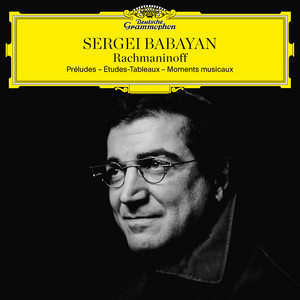 | 12 Songs, Op. 21: V. Lilacs (Transcr. Rachmaninoff for Solo Piano) | Sergei Rachmaninoff, Sergei Babayan | A♭ Major | 0 | 4B | 78 BPM | |
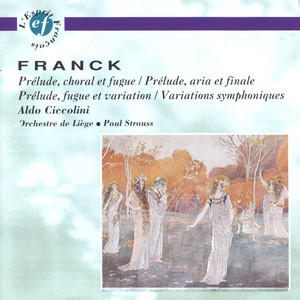 | Franck: Prélude, fugue et variation, Op. 18, FWV 30: Prélude | César Franck, Aldo Ciccolini | B Minor | 0 | 10A | 127 BPM | |
| Ravel: Pavane pour une infante défunte, M. 19 | Maurice Ravel, Bertrand Chamayou | E Minor | 0 | 9A | 126 BPM | |
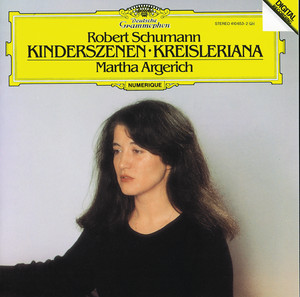 | Kinderszenen, Op. 15: I. Von fremden Ländern und Menschen | Robert Schumann, Martha Argerich | G Major | 0 | 9B | 128 BPM | |
 | 6 Consolations, S. 172: No. 2 in E Major (Un Poco Più Mosso) | Franz Liszt, Daniel Barenboim | B Major | 0 | 1B | 69 BPM | |
 | Thaïs, Act II: Méditation | Jules Massenet, Joshua Bell, Royal Philharmonic Orchestra, Andrew Litton | E Minor | 1 | 9A | 172 BPM | |
 | Romeo and Juliette, Op. 64 (Arr. for Viola and Piano by Vadim Borisovsky, Orchestration for Viola and String Orchestra by François Vallières): Introduction | Sergei Prokofiev, Elvira Misbakhova, I Musici de Montréal, Jean-François Rivest | D Major | 1 | 10B | 99 BPM | |
 | Zdes' khorosho ('How Fair This Spot'), Op. 21, No. 7 | Sergei Rachmaninoff, Pablo Ferrandez, Denis Kozhukhin | A Major | 0 | 11B | 87 BPM | |
| Après un rêve, Op. 7, No. 1 | Gabriel Fauré, Yo-Yo Ma | F Minor | 0 | 4A | 115 BPM | |
 | Carnaval, Op. 9: XII. Chopin | Robert Schumann, Daniil Trifonov | E Major | 0 | 12B | 68 BPM | |
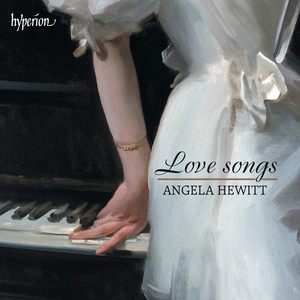 | Symphony No. 5: IV. Adagietto. Sehr langsam (Arr. Hewitt) | Gustav Mahler, Angela Hewitt | G Major | 0 | 9B | 63 BPM | |
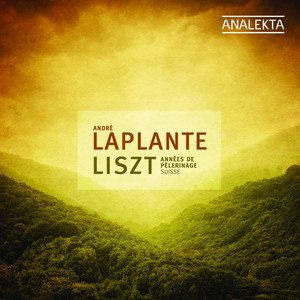 | Églogue | Franz Liszt, André Laplante | A♭ Major | 0 | 4B | 74 BPM | |
 | Poulenc: Piano Concerto in C-Sharp Minor, FP 146: II. Andante con moto | Francis Poulenc, James Conlon, Rotterdam Philharmonic Orchestra | E♭ Major | 0 | 5B | 175 BPM |
- ISRC
- USZGD0400282
- Label
- L-M Records/RCA Records