- BPM
- 108
- Key
- C Major
- Camelot
- 8B
The RIte of Spring, K015 (Version for 2 Pianos), Pt. 2: IX. Introduction by Igor Stravinsky, Leif Ove Andsnes, Marc-André Hamelin Song Details
"The RIte of Spring, K015 (Version for 2 Pianos), Pt. 2: IX. Introduction" by Igor Stravinsky, Leif Ove Andsnes, Marc-André Hamelin had its release date on February 2, 2018. With this song being about 5 minutes long, at This song is fairly a long song compared to the average song length. This song does not have an "Explicit" tag, making it safe for all ages. There are a total of 21 in the song's album "Stravinsky: The Rite of Spring, Concerto & Other Works for 2 Pianos". In this album, this song's track order is #9. Furthermore, we believe that the track originated from United Kingdom. In terms of popularity, The RIte of Spring, K015 (Version for 2 Pianos), Pt. 2: IX. Introduction is currently not that popular. Although the overall vibe is very danceable, it does project more negative sounds.
BPM and Tempo
With The RIte of Spring, K015 (Version for 2 Pianos), Pt. 2: IX. Introduction by Igor Stravinsky, Leif Ove Andsnes, Marc-André Hamelin having a BPM of 108 with a half-time of 54 BPM and a double-time of 216 BPM, we would consider this track to have a Andante (at a walking pace) tempo marking. Because of this, we believe that the song has an overall moderate tempo. The time signature for this track is 4/4.
Music Key
This song is in the music key of C Major. Or for those who are familiar with the camelot wheel, this song has a camelot key of 8B. So, the perfect camelot match for 8B would be either 8B or 9A. While, 9B can give you a low energy boost. For moderate energy boost, you would use 5B and a high energy boost can either be 10B or 3B. Though, if you want a low energy drop, you should looking for songs with either a camelot key of 8A or 7B will give you a low energy drop, 11B would be a moderate one, and 6B or 1B would be a high energy drop. Lastly, 5A allows you to change the mood.
Want to find the BPM and music key for other songs? Check out our BPM and Key Finder page!
- Popularity
- 3%
- Loudness
- -46.163 dB
- Acousticness
- 86%
- Danceability
- 63%
- Energy
- 0%
- Instrumentalness
- 87%
- Liveness
- 6%
- Loudness
- 23%
- Speechiness
- 15%
- Valence
- 16%
Recommendations
| Track | Artist | Key | Energy | Camelot | BPM | ||
|---|---|---|---|---|---|---|---|
 | Parsifal, WWV 111, Act III Suite (Ed. Abbado): Karfreitagszauber "Good Friday Music" | Richard Wagner, Berliner Philharmoniker, Claudio Abbado | B Major | 0 | 1B | 68 BPM | |
 | Appalachian Spring: VIII. Coda. Moderato | Aaron Copland, Leonard Bernstein, New York Philharmonic | C Major | 0 | 8B | 106 BPM | |
 | Symphony in E Minor, Op. 32, "Gaelic Symphony": I. Allegro con fuoco | Amy Beach, Nashville Symphony Orchestra, Kenneth Schermerhorn | E Minor | 1 | 9A | 111 BPM | |
 | Nocturnes, CD 98: I. Nuages | Claude Debussy, Berliner Philharmoniker, Claudio Abbado | C Major | 0 | 8B | 83 BPM | |
 | Symphony No. 5 in B-Flat Major, Op. 100: II. Allegro marcato | Sergei Prokofiev, The Cleveland Orchestra, Franz Welser-Möst | C Major | 0 | 8B | 105 BPM | |
 | 1st Movement: Adaggio / Allegro Molto | London Philharmonic Orchestra | E Minor | 1 | 9A | 116 BPM | |
 | String Quartet No. 8 in C Minor, Op. 110: II. Allegro molto - Live | Dmitri Shostakovich, Emerson String Quartet | G Major | 4 | 9B | 135 BPM | |
 | Prokofiev: Piano Concerto No. 2 in G Minor, Op. 16: II. Scherzo (Vivace) | Sergei Prokofiev, Evgeny Kissin, Vladimir Ashkenazy, Philharmonia Orchestra | B♭ Major | 2 | 6B | 82 BPM | |
 | Elegy, Op. 58 | Edward Elgar, English Northern Philharmonia, David Lloyd-Jones | F Minor | 0 | 4A | 84 BPM | |
 | Dido & Aeneas, Z. 626: When I Am Laid in Earth "Dido's Lament" (Transcr. L. Stokowski) | Henry Purcell, Timothy Walden, Bournemouth Symphony Orchestra, José Serebrier | E Major | 0 | 12B | 76 BPM | |
 | Poulenc: Concerto for Two Pianos in D Minor, FP 61: I. Allegro ma non troppo | Francis Poulenc, James Conlon, Rotterdam Philharmonic Orchestra | E♭ Major | 1 | 5B | 103 BPM | |
 | Fontane di Roma, P. 106: I. La fontana di Valle Giulia all'alba | Ottorino Respighi, New York Philharmonic, Giuseppe Sinopoli | F♯ Major | 2 | 2B | 73 BPM | |
 | Ma mère l'oye, M. 62: II. Pavane de la Belle au bois dormant.Lent - Allegro - Mouvement de Valse modéré | Maurice Ravel, Berliner Philharmoniker, Pierre Boulez | E Minor | 0 | 9A | 63 BPM | |
 | Le sacre du printemps / Pt. 1: L'Adoration de la terre: V. Jeux des cités rivales | Igor Stravinsky, Orchestre de Paris, Klaus Mäkelä | C Minor | 3 | 5A | 110 BPM | |
 | Elgar: Cello Concerto in E Minor, Op. 85: II. Lento - Allegro molto | Edward Elgar, Jacqueline du Pré, London Symphony Orchestra, Sir John Barbirolli | G Major | 2 | 9B | 87 BPM | |
 | Stravinsky: The Rite of Spring, Pt. 2 "The Sacrifice": Sacrificial Dance | Igor Stravinsky, Riccardo Muti, Philadelphia Orchestra | G Minor | 5 | 6A | 132 BPM | |
 | Petrushka: The Shrove-Tide Fair | Robert Groslot, Belgian Radio and Television Philharmonic Orchestra, Igor Stravinsky | D Minor | 5 | 7A | 80 BPM | |
 | Symphony No. 5 in E Minor, Op. 64: III. Valse. Allegro moderato | Pyotr Ilyich Tchaikovsky, Berliner Philharmoniker, Kirill Petrenko | A Major | 0 | 11B | 139 BPM | |
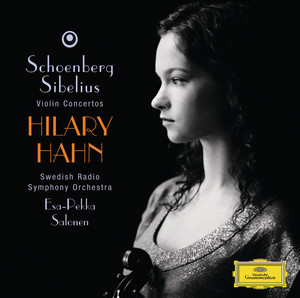 | Violin Concerto, Op. 36: I. Poco Allegro | Arnold Schoenberg, Hilary Hahn, Swedish Radio Symphony Orchestra, Esa-Pekka Salonen | A Minor | 2 | 8A | 82 BPM | |
 | Piano Concerto No. 2 in C Minor, Op. 18: I. Moderato | Sergei Rachmaninoff, Yuja Wang, Los Angeles Philharmonic, Gustavo Dudamel | G Minor | 3 | 6A | 97 BPM | |
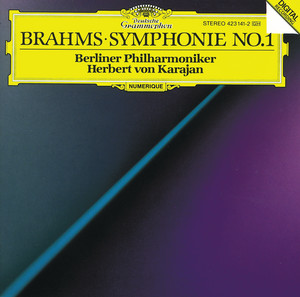 | Symphony No. 1 in C Minor, Op. 68: II. Andante sostenuto | Johannes Brahms, Berliner Philharmoniker, Herbert von Karajan | E Major | 1 | 12B | 85 BPM | |
 | Mavra (arr. S. Dushkin): Mavra: Russian Maiden's Song, "Parasha's Aria" (arr. S. Dushkin for violin and piano) | Samuel Dushkin, Igor Stravinsky, Livia Sohn, Benjamin Loeb | G Minor | 0 | 6A | 140 BPM | |
 | Daphnis et Chloe: Part III: Bacchanale | Maurice Ravel, Bordeaux Opera Chorus, Bordeaux Aquitaine National Orchestra, Laurent Petitgirard | B♭ Minor | 4 | 3A | 82 BPM | |
 | Lemminkäinen Suite, Op. 22: II. The Swan of Tuonela | Jean Sibelius, London Symphony Orchestra, Sir Charles Mackerras | A Minor | 0 | 8A | 113 BPM | |
 | Pacific 231 | Arthur Honegger, Neeme Järvi, Danish National Symphony Orchestra | B♭ Minor | 3 | 3A | 130 BPM |
- ISRC
- GBAJY1818909
- Label
- L-M Records/RCA Records