- BPM
- 73
- Key
- D♭ Major
- Camelot
- 3B
Der Rosenkavalier, Op. 59 / Act 2: Introduction - "Ein ernster Tag" by Richard Strauss, Otto Wiener, Emmy Loose, Herbert Prikopa, Wiener Philharmoniker, Sir Georg Solti Song Details
Richard Strauss, Otto Wiener, Emmy Loose, Herbert Prikopa, Wiener Philharmoniker, Sir Georg Solti's 'Der Rosenkavalier, Op. 59 / Act 2: Introduction - "Ein ernster Tag"' had a release date set for January 1, 1969. With This song being less than two minutes long, at 1:51, we are fairly confident that this song is not explicit and is safe for all ages. Based on the duration of this song, this song duration is much smaller than the average song duration. There are a total of 43 in the song's album "Strauss, R.: Der Rosenkavalier". In this album, this song's track order is #1. Furthermore, we believe that the track originated from United Kingdom. Der Rosenkavalier, Op. 59 / Act 2: Introduction - "Ein ernster Tag" is not that popular right now. In our opinion, the overall tone is not very danceable and projects negative sounds, such as being sad, depressed, or angry.
BPM and Tempo
With Der Rosenkavalier, Op. 59 / Act 2: Introduction - "Ein ernster Tag" by Richard Strauss, Otto Wiener, Emmy Loose, Herbert Prikopa, Wiener Philharmoniker, Sir Georg Solti having a BPM of 73 with a half-time of 36 BPM and a double-time of 146 BPM, we would consider this track to have a Adagio (slowly with great expression) tempo marking. Because of this, we believe that the song has an overall slow tempo. The time signature for this track is 4/4.
Music Key
This song has a musical key of D♭ Major. Or for those who are familiar with the camelot wheel, this song has a camelot key of 3B. So, the perfect camelot match for 3B would be either 3B or 4A. While, 4B can give you a low energy boost. For moderate energy boost, you would use 12B and a high energy boost can either be 5B or 10B. Though, if you want a low energy drop, you should looking for songs with either a camelot key of 3A or 2B will give you a low energy drop, 6B would be a moderate one, and 1B or 8B would be a high energy drop. Lastly, 12A allows you to change the mood.
Want to find the BPM and music key for other songs? Check out our BPM and Key Finder page!
- Popularity
- 4%
- Loudness
- -14.588 dB
- Acousticness
- 95%
- Danceability
- 33%
- Energy
- 42%
- Instrumentalness
- 2%
- Liveness
- 66%
- Loudness
- 76%
- Speechiness
- 5%
- Valence
- 30%
Recommendations
| Track | Artist | Key | Energy | Camelot | BPM | ||
|---|---|---|---|---|---|---|---|
 | Symphonie fantastique, Op. 14, H 48: II. Un Bal | Hector Berlioz, London Symphony Orchestra, Sir Colin Davis | A Major | 1 | 11B | 113 BPM | |
 | Violin Concerto in D Minor, Op. 47: III. Allegro, ma non tanto | Jean Sibelius, Anne-Sophie Mutter, Staatskapelle Dresden, André Previn | D Major | 2 | 10B | 112 BPM | |
 | Fantasia & Fugue in C Minor, Op. 86 (After J.S. Bach's BWV 537): Fantasia | Edward Elgar, Seattle Symphony Orchestra, Gerard Schwarz | F Minor | 1 | 4A | 143 BPM | |
 | Ariadne auf Naxos / Prologue: "Ein Augenblick ist wenig" | Richard Strauss, Edita Gruberova, Julia Varady, Gewandhausorchester, Kurt Masur | E Major | 1 | 12B | 95 BPM | |
 | Symphony No. 1, Op. 9: I. Allegro ma non troppo | Samuel Barber, Leonard Slatkin, St. Louis Symphony | D♭ Major | 0 | 3B | 106 BPM | |
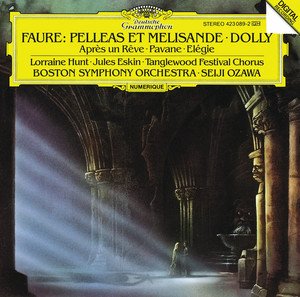 | Pelléas et Mélisande, Op.80: 2. Fileuse. Andantino quasi Allegretto | Gabriel Fauré, Boston Symphony Orchestra, Seiji Ozawa | G Major | 1 | 9B | 88 BPM | |
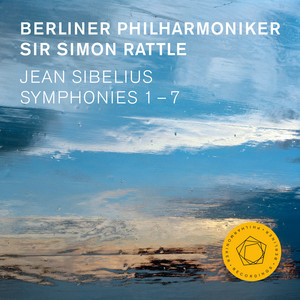 | Symphony No. 2 in D Major, Op. 43: I. Allegretto | Jean Sibelius, Berliner Philharmoniker, Sir Simon Rattle | D Major | 1 | 10B | 117 BPM | |
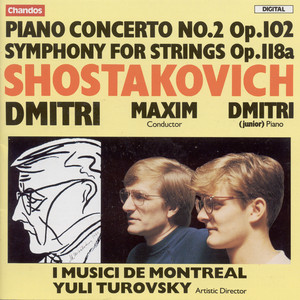 | Piano Concerto No. 2 in F Major, Op. 102: II. Andante | Dmitri Shostakovich, I Musici de Montréal, Maxim Shostakovich | C Minor | 0 | 5A | 177 BPM | |
 | Die Fledermaus: Overture | Johann Strauss II, Bavarian State Orchestra, Carlos Kleiber | G Major | 1 | 9B | 100 BPM | |
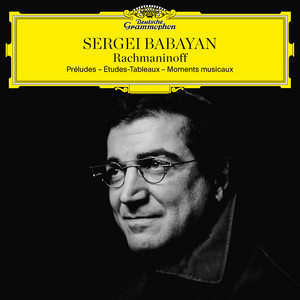 | 12 Songs, Op. 21: V. Lilacs (Transcr. Rachmaninoff for Solo Piano) | Sergei Rachmaninoff, Sergei Babayan | A♭ Major | 0 | 4B | 78 BPM | |
 | Orfeo ed Euridice, Wq. 30: Dance of the Blessed Spirits "Melody" (Arr. Sgambati for Piano) | Christoph Willibald Gluck, Yuja Wang | D Minor | 0 | 7A | 70 BPM | |
 | A Midsummer Night's Dream, Incidental Music, Op.61, MWV M 13: No.1 Scherzo | Felix Mendelssohn, Judi Dench, Boston Symphony Orchestra, Seiji Ozawa | G Minor | 2 | 6A | 123 BPM | |
 | Mahler: Symphony No. 2 in C Minor "Resurrection": II. Andante moderato. Sehr gemächlich. Nie eilen | Gustav Mahler, Sir Simon Rattle, Berliner Philharmoniker | A♭ Major | 0 | 4B | 93 BPM | |
 | Academic Festival Overture, Op. 80 | Johannes Brahms, Chicago Symphony Orchestra, Sir Georg Solti | C Major | 2 | 8B | 73 BPM | |
 | Souvenir de Florence, Op. 70: III. Allegretto moderato | Pyotr Ilyich Tchaikovsky, Vienna Chamber Orchestra, Philippe Entremont | D♭ Major | 1 | 3B | 82 BPM | |
 | Symphony No. 4: IV. Sehr behaglich | Gustav Mahler, Berliner Philharmoniker, Yannick Nézet-Séguin, Christiane Karg | E Minor | 1 | 9A | 80 BPM | |
 | Recueil de chants, Op. 65: No. 6, Barcarolle | Charles-Valentin Alkan, Bruce Liu | G Minor | 0 | 6A | 70 BPM | |
 | Enigma Variations, Op. 36: Var. 8. Allegretto "W.N." | Edward Elgar, BBC Symphony Orchestra, Leonard Bernstein | G Major | 0 | 9B | 84 BPM | |
 | Pelléas et Mélisande, CD 93, Suite (Arr. Leinsdorf): I. Act I. Opening - Interlude 1 - Interlude 2 | Claude Debussy, Berliner Philharmoniker, Claudio Abbado | D Minor | 0 | 7A | 141 BPM | |
 | Symphony No.8 In G, Op.88, B. 163: 4. Allegro ma non troppo | Antonín Dvořák, Berliner Philharmoniker, Rafael Kubelík | G Major | 2 | 9B | 141 BPM | |
 | Kinderszenen | Robert Schumann, Ivan Moravec | F Major | 0 | 7B | 131 BPM | |
 | Piano Concerto No.1 in E minor, Op.11: 2. Romance (Larghetto) | Frédéric Chopin, Krystian Zimerman, Polish Festival Orchestra | E Major | 0 | 12B | 65 BPM | |
 | Roland Furieux: II. Andante tranquillo | Augusta Holmès, Michael Francis, Deutsche Staatsphilharmonie Rheinland-Pfalz | E♭ Major | 1 | 5B | 88 BPM | |
 | Gypsy Melodies, Op. 55, B. 104: IV. Songs My Mother Taught Me (Adapt. for Cello and Orchestra) | Antonín Dvořák, Camille Thomas, Brussels Philharmonic, Mathieu Herzog | C Minor | 1 | 5A | 100 BPM | |
 | Dido and Aeneas, Z. 626 / Act III: "When I Am Laid in Earth" Dido's Lamento (Arr. by Mathieu Herzog for Cello and Strings) | Henry Purcell, Camille Thomas, Brussels Philharmonic, Mathieu Herzog | G Minor | 1 | 6A | 77 BPM |
- ISRC
- GBF076940316
- Label
- L-M Records/RCA Records