- BPM
- 126
- Key
- C Major
- Camelot
- 8B
Neue Liebeslieder Waltzer, Op.65 - Verses From "Polydora": 7. Vom Gebirge, Well' auf Well' by Johannes Brahms, Edith Mathis, Brigitte Fassbaender, Peter Schreier, Dietrich Fischer-Dieskau, Karl Engel, Wolfgang Sawallisch Song Details
On January 1, 1983, the song "Neue Liebeslieder Waltzer, Op.65 - Verses From "Polydora": 7. Vom Gebirge, Well' auf Well'" was released by Johannes Brahms, Edith Mathis, Brigitte Fassbaender, Peter Schreier, Dietrich Fischer-Dieskau, Karl Engel, Wolfgang Sawallisch. With This song being less than two minutes long, at 1:01, we are fairly confident that this song is not explicit and is safe for all ages. Based on the duration of this song, this song duration is much smaller than the average song duration. The song is number 25 out of 36 in Brahms: Liebeslieder-Walzer by Johannes Brahms, Edith Mathis, Brigitte Fassbaender, Peter Schreier, Dietrich Fischer-Dieskau. Based on our statistics, Neue Liebeslieder Waltzer, Op.65 - Verses From "Polydora": 7. Vom Gebirge, Well' auf Well''s popularity is not that popular right now. The overall tone is very danceable, especially with its high energy, which produces more of a euphoric, cheerful, or happy vibe.
BPM and Tempo
The tempo marking of Neue Liebeslieder Waltzer, Op.65 - Verses From "Polydora": 7. Vom Gebirge, Well' auf Well' by Johannes Brahms, Edith Mathis, Brigitte Fassbaender, Peter Schreier, Dietrich Fischer-Dieskau, Karl Engel, Wolfgang Sawallisch is Allegro (fast, quick, and bright), since this song has a tempo of 126 BPM. With that information, we can conclude that the song has a fast tempo. This song can go great with walking. The time signature for this track is 1/4.
Music Key
This song is in the music key of C Major. This also means that this song has a camelot key of 8B. So, the perfect camelot match for 8B would be either 8B or 9A. While, 9B can give you a low energy boost. For moderate energy boost, you would use 5B and a high energy boost can either be 10B or 3B. Though, if you want a low energy drop, you should looking for songs with either a camelot key of 8A or 7B will give you a low energy drop, 11B would be a moderate one, and 6B or 1B would be a high energy drop. Lastly, 5A allows you to change the mood.
Want to find the BPM and music key for other songs? Check out our BPM and Key Finder page!
- Popularity
- 2%
- Loudness
- -18.559 dB
- Acousticness
- 99%
- Danceability
- 70%
- Energy
- 24%
- Instrumentalness
- 0%
- Liveness
- 58%
- Loudness
- 69%
- Speechiness
- 5%
- Valence
- 91%
Recommendations
| Track | Artist | Key | Energy | Camelot | BPM | ||
|---|---|---|---|---|---|---|---|
 | Cello Sonata No. 1 in E Minor, Op. 38: II. Allegretto quasi menuetto | Johannes Brahms, Maria Kliegel, Kristin Merscher | A Minor | 0 | 8A | 104 BPM | |
 | Chopin: Nocturne No. 8 in D-Flat Major, Op. 27 No. 2 | Frédéric Chopin, Gabriela Montero | D♭ Major | 0 | 3B | 107 BPM | |
 | Scriabin: 24 Preludes, Op. 11: No. 21 in B-Flat Major | Alexander Scriabin, Mikhail Pletnev | E♭ Major | 0 | 5B | 70 BPM | |
 | Prelude and Allegro in the style of Pugnani | Samuel Sanders, Itzhak Perlman | E Minor | 3 | 9A | 107 BPM | |
 | 6 Violin Sonatas, Op. 10b No. 3 in D Minor, J. 101: I. Air russe. Allegretto moderato | Carl Maria von Weber, Nino Gvetadze, Frederieke Saeijs | D Minor | 1 | 7A | 113 BPM | |
 | Violin Concerto No. 3 in G Major, K. 216: I. Allegro | Wolfgang Amadeus Mozart, Arabella Steinbacher, Festival Strings Lucerne (musical direction), Lucerne Festival Strings, Daniel Dodds | G Major | 1 | 9B | 119 BPM | |
 | Symphony No. 7 in A Major, Op. 92: II. Allegretto | Ludwig van Beethoven, Berliner Philharmoniker, Kirill Petrenko | E Minor | 0 | 9A | 68 BPM | |
 | Messiah, HWV 56, Pt. I: Pastoral Symphony, "Pifa" (Arr. L. Stokowski) | George Frideric Handel, Bournemouth Symphony Orchestra, José Serebrier | C Major | 0 | 8B | 84 BPM | |
 | 3 Old Viennese Dances: No. 2, Liebesleid (Transcr. for Violin and Orchestra) | Fritz Kreisler, María Dueñas, Wiener Symphoniker, Manfred Honeck | G Major | 0 | 9B | 103 BPM | |
 | The Lark | Mikhail Glinka, Evgeny Kissin | B♭ Minor | 0 | 3A | 96 BPM | |
 | II. Dumka (Arr. P. Breiner for Piano) | Antonín Dvořák, Peter Breiner | B Minor | 0 | 10A | 71 BPM | |
 | Nocturne No. 2 in C Minor, H. 25 | John Field, Benjamin Frith | C Minor | 0 | 5A | 98 BPM | |
 | Romance No. 2 In F Major, Op. 50 | Slovak Philharmonic, Takako Nishizaki, Ludwig van Beethoven | F Major | 1 | 7B | 88 BPM | |
 | Peer Gynt Suite No.1 op. 46 Morning (Allegro pastorale) | Academy of St. Martin in the Fields | E Major | 0 | 12B | 68 BPM | |
![Organ Sonata No. 4, BWV 528: II. Andante [Adagio] (Transcr. by August Stradal) by Johann Sebastian Bach, Víkingur Ólafsson](https://i.scdn.co/image/ab67616d00001e02369f6761d1cccba9a34f05cf) | Organ Sonata No. 4, BWV 528: II. Andante [Adagio] (Transcr. by August Stradal) | Johann Sebastian Bach, Víkingur Ólafsson | B Minor | 0 | 10A | 71 BPM | |
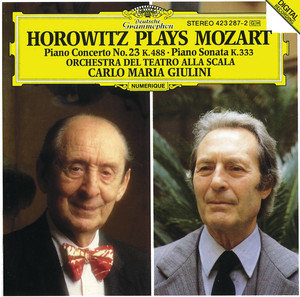 | Piano Concerto No. 23 in A Major, K. 488: II. Adagio | Wolfgang Amadeus Mozart, Vladimir Horowitz, Orchestra Del Teatro Alla Scala, Milano, Carlo Maria Giulini | F♯ Minor | 0 | 11A | 108 BPM | |
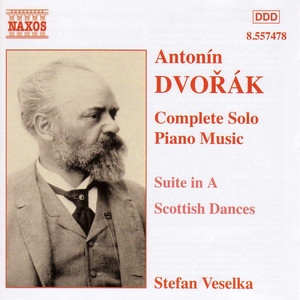 | 2 Pieces, Op. Posth., B. 188: No. 1, Lullaby in G Major | Antonín Dvořák, Stefan Veselka | G Major | 0 | 9B | 66 BPM | |
 | Schumann: Kinderszenen, Op. 15: I Von fremden Ländern und Menschen | Robert Schumann, Maria João Pires | G Major | 0 | 9B | 67 BPM | |
 | 14 Romances, Op. 34: No. 14 Vocalise (Arr. Kocsis for Piano) | Sergei Rachmaninoff, Yuja Wang | D♭ Minor | 0 | 12A | 62 BPM | |
 | 3 Violin Duets (1996 Digital Remaster): I. Praeludium | Pinchas Zukerman, Itzhak Perlman | B Minor | 1 | 10A | 91 BPM | |
 | Nien, Geliebter, Setze Dich | Georg Friedrich Daumer, Johannes Brahms, One Voice Mixed Chorus, Jane Ramseyer Miller | E Major | 0 | 12B | 86 BPM | |
 | 21 Hungarian Dances, WoO 1 (arr. J. Joachim for violin and piano): No. 12 in D Minor | Joseph Joachim, Johannes Brahms, Marat Bisengaliev, John Lenehan | D Minor | 1 | 7A | 77 BPM | |
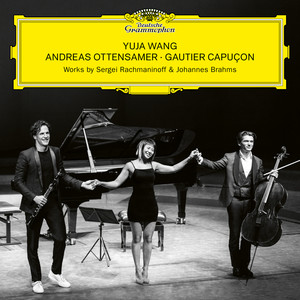 | Clarinet Trio in A Minor, Op. 114: I. Allegro | Johannes Brahms, Andreas Ottensamer, Gautier Capuçon, Yuja Wang | A Minor | 1 | 8A | 68 BPM | |
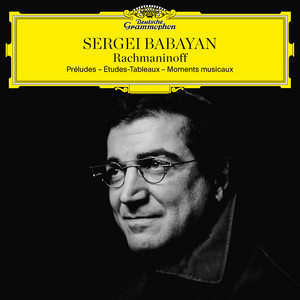 | 12 Songs, Op. 21: V. Lilacs (Transcr. Rachmaninoff for Solo Piano) | Sergei Rachmaninoff, Sergei Babayan | A♭ Major | 0 | 4B | 78 BPM | |
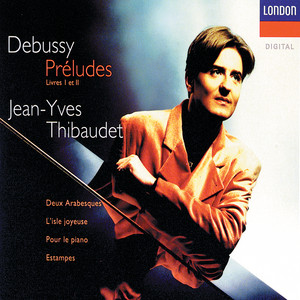 | Rêverie, L. 68: Rêverie | Claude Debussy, Jean-Yves Thibaudet | G Minor | 0 | 6A | 69 BPM |
- ISRC
- This song does not have an ISRC.
- Label
- L-M Records/RCA Records