- BPM
- 89
- Key
- E♭ Major
- Camelot
- 5B
Variations on an Original Theme, Op. 36 "Enigma": Variation No. 9 "Nimrod" by Edward Elgar, Adelaide Symphony Orchestra, David Stanhope Song Details
"Variations on an Original Theme, Op. 36 "Enigma": Variation No. 9 "Nimrod"" by Edward Elgar, Adelaide Symphony Orchestra, David Stanhope had its release date on January 4, 2008. With this song being about 5 minutes long, at This song is fairly a long song compared to the average song length. This song does not have an "Explicit" tag, making it safe for all ages. The track order of this song in Adelaide Symphony Orchestra, David Stanhope's "Just Classics" album is number 6 out of 14. On top of that, Australia appears to be the country where this track was created. Variations on an Original Theme, Op. 36 "Enigma": Variation No. 9 "Nimrod" is not that popular right now. In our opinion, the overall tone is not very danceable and projects negative sounds, such as being sad, depressed, or angry.
BPM and Tempo
We consider the tempo marking of Variations on an Original Theme, Op. 36 "Enigma": Variation No. 9 "Nimrod" by Edward Elgar, Adelaide Symphony Orchestra, David Stanhope to be Andante (at a walking pace) because the track has a tempo of 89 BPM, a half-time of 44BPM, and a double-time of 178 BPM. Based on that, the speed of the song's tempo is slow. Activities such as, yoga or pilates, can go well with this song. The time signature for this track is 4/4.
Music Key
E♭ Major is the music key of this track. This also means that this song has a camelot key of 5B. So, the perfect camelot match for 5B would be either 5B or 6A. While, 6B can give you a low energy boost. For moderate energy boost, you would use 2B and a high energy boost can either be 7B or 12B. Though, if you want a low energy drop, you should looking for songs with either a camelot key of 5A or 4B will give you a low energy drop, 8B would be a moderate one, and 3B or 10B would be a high energy drop. Lastly, 2A allows you to change the mood.
Want to find the BPM and music key for other songs? Check out our BPM and Key Finder page!
- Popularity
- 14%
- Loudness
- -19.465 dB
- Acousticness
- 94%
- Danceability
- 10%
- Energy
- 10%
- Instrumentalness
- 86%
- Liveness
- 15%
- Loudness
- 68%
- Speechiness
- 4%
- Valence
- 3%
Recommendations
| Track | Artist | Key | Energy | Camelot | BPM | ||
|---|---|---|---|---|---|---|---|
 | Rachmaninoff: Vocalise, Op. 34, No. 14 | Sergei Rachmaninoff, San Francisco Symphony, Michael Tilson Thomas | A Minor | 1 | 8A | 76 BPM | |
 | Piano Concerto No. 2 in A-Flat Major, H. 31: II. Poco adagio | John Field, Miceal O'Rourke, Matthias Bamert, London Mozart Players | A Major | 1 | 11B | 116 BPM | |
 | Symphony No. 4, Op. 29 "The Inextinguishable": IV. Allegro | Carl Nielsen, Danish National Symphony Orchestra, Fabio Luisi | E Major | 3 | 12B | 104 BPM | |
 | The Gadfly, Op. 97: No. 4, Youth (Romance) | Dmitri Shostakovich, Erez Ofer, Philadelphia Orchestra, Riccardo Chailly | C Minor | 1 | 5A | 95 BPM | |
 | What Do You Do With An Idea?: Making Friends With An Idea | Paul Rissmann, Adelaide Symphony Orchestra, Luke Dollman, Tilda Cobham Hervey | F Major | 2 | 7B | 124 BPM | |
 | Piano Concerto No. 5 in E flat major Op. 73 -"Emperor": 2. Adagio un poco mosso | Ludwig van Beethoven, Vladimir Ashkenazy, The Cleveland Orchestra | B Major | 1 | 1B | 95 BPM | |
 | Mahler: Symphony No. 5 in C-Sharp Minor: IV. Adagietto. Sehr langsam | Gustav Mahler, San Francisco Symphony, Michael Tilson Thomas | F Major | 0 | 7B | 88 BPM | |
 | Symphony in F Major, Op. 8, H. 47 "The Cotswolds": I. Allegro con brio | Gustav Holst, Ulster Orchestra, Joann Falletta | C Minor | 3 | 5A | 103 BPM | |
 | Penguin play | Nigel Westlake, Timothy Kain | D Major | 1 | 10B | 90 BPM | |
 | Orchestral Suite No. 3 in D Major BWV 1068: 2. Air (Arr. August Wilhelmj) | Johann Sebastian Bach, Tasmanian Symphony Orchestra, David Stanhope | C Major | 2 | 8B | 112 BPM | |
 | Trade Winds | Ronald Binge, Slovak Radio Symphony Orchestra, Ernest Tomlinson | A Major | 0 | 11B | 66 BPM | |
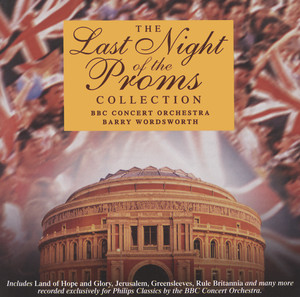 | Variations on an Original Theme, Op. 36 "Enigma": 9. Nimrod (Adagio) | Edward Elgar, BBC Concert Orchestra, Barry Wordsworth | E♭ Major | 1 | 5B | 80 BPM | |
 | Three American Sketches: II. Old Boston | George Martin, Berlin Music Ensemble, Craig Leon | B Minor | 1 | 10A | 91 BPM | |
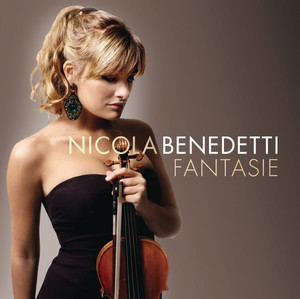 | Spiegel im Spiegel | Arvo Pärt, Nicola Benedetti, Alexei Grynyuk | F Major | 0 | 7B | 79 BPM | |
 | 3 Gymnopédies: 1. Lent et douloureux (Arr. for orchestra by Claude Debussy) | Erik Satie, Claude Debussy, Albert Rosen, West Australian Symphony Orchestra | G Major | 1 | 9B | 91 BPM | |
 | Panis Angelicus (Arr. Leopold Stokowski) | César Franck, Matthias Bamert, BBC Philharmonic | A Major | 1 | 11B | 65 BPM | |
 | Tchaikovsky: Swan Lake, Op. 20, Act I: No. 4d, Pas de trois. Moderato | Pyotr Ilyich Tchaikovsky, David Lloyd-Jones, The New London Orchestra | B Major | 3 | 1B | 132 BPM | |
 | Nocturne in E-Flat Major, Op. 148, D. 897 | Franz Schubert, Seraphim Trio | B♭ Major | 0 | 6B | 79 BPM | |
 | The Victorian Kitchen Garden - Suite: Prelude | Paul Reade, Emma Johnson, Skaila Kanga | B♭ Major | 0 | 6B | 67 BPM | |
 | Cello Concerto In B Flat: 2. Andante grazioso | Luigi Boccherini, Jian Wang, Camerata Salzburg | B♭ Major | 1 | 6B | 137 BPM | |
 | Romeo and Juliet, Op. 64, Act I: Juliet’s Variation | Sergei Prokofiev, Vasily Petrenko, Oslo Philharmonic Orchestra | F Major | 1 | 7B | 80 BPM | |
 | Spiegel im Spiegel | Arvo Pärt, Sally Maer, Sally Whitwell | F Major | 0 | 7B | 82 BPM | |
 | Abendlied, Op. 107 No. 6 | Robert Schumann, Neeme Järvi, Detroit Symphony Orchestra | D♭ Major | 0 | 3B | 78 BPM | |
 | Die Hebriden (The Hebrides), Op. 26, MWV P7 (Revised 1832) | Felix Mendelssohn, City Of Birmingham Symphony Orchestra, Edward Gardner | B Minor | 1 | 10A | 132 BPM | |
 | Norma: Casta Diva (Arr. for Saxophone and Orchestra) | Amy Dickson, Vincenzo Bellini, London Session Orchestra | F Major | 1 | 7B | 75 BPM |
- ISRC
- AUAB00850294
- Label
- L-M Records/RCA Records