- BPM
- 56
- Key
- A♭ Major
- Camelot
- 4B
Strauss, R: Also sprach Zarathustra, Op. 30: I. Introduction - Of the Backworldsmen - Of the Great Longing by Richard Strauss, Rudolf Kempe, Staatskapelle Dresden Song Details
"Strauss, R: Also sprach Zarathustra, Op. 30: I. Introduction - Of the Backworldsmen - Of the Great Longing" by Richard Strauss, Rudolf Kempe, Staatskapelle Dresden had its release date on 2013. Since This song is still less than 10 minute long, it is still considered a pretty long duration song compared to the average song length. This song does not appear to be explicit due to the lack of the "E" tag. There are a total of 103 in the song's album "Strauss, Richard: Complete Orchestral Works". In this album, this song's track order is #1. Furthermore, we believe that the track originated from United Kingdom. Strauss, R: Also sprach Zarathustra, Op. 30: I. Introduction - Of the Backworldsmen - Of the Great Longing is not that popular right now. In our opinion, the overall tone is not very danceable and projects negative sounds, such as being sad, depressed, or angry.
BPM and Tempo
With Strauss, R: Also sprach Zarathustra, Op. 30: I. Introduction - Of the Backworldsmen - Of the Great Longing by Richard Strauss, Rudolf Kempe, Staatskapelle Dresden having a BPM of 56 with a half-time of 28 BPM and a double-time of 112 BPM, we would consider this track to have a Lento (slowly) tempo marking. Because of this, we believe that the song has an overall slow tempo. The time signature for this track is 5/4.
Music Key
This song has a musical key of A♭ Major. Or for those who are familiar with the camelot wheel, this song has a camelot key of 4B. So, the perfect camelot match for 4B would be either 4B or 5A. While, 5B can give you a low energy boost. For moderate energy boost, you would use 1B and a high energy boost can either be 6B or 11B. Though, if you want a low energy drop, you should looking for songs with either a camelot key of 4A or 3B will give you a low energy drop, 7B would be a moderate one, and 2B or 9B would be a high energy drop. Lastly, 1A allows you to change the mood.
Want to find the BPM and music key for other songs? Check out our BPM and Key Finder page!
- Popularity
- 2%
- Loudness
- -28.348 dB
- Acousticness
- 72%
- Danceability
- 11%
- Energy
- 3%
- Instrumentalness
- 93%
- Liveness
- 54%
- Loudness
- 53%
- Speechiness
- 4%
- Valence
- 3%
Recommendations
| Track | Artist | Key | Energy | Camelot | BPM | ||
|---|---|---|---|---|---|---|---|
 | Nabucco: Overture | Giuseppe Verdi, Berliner Philharmoniker, Claudio Abbado | F Major | 2 | 7B | 100 BPM | |
 | Prince Igor: Polovtsian Dances (Version for Chorus) | Alexander Borodin, Kiev Chamber Choir, Ukraine National Radio Symphony Orchestra, Theodore Kuchar | A Major | 2 | 11B | 110 BPM | |
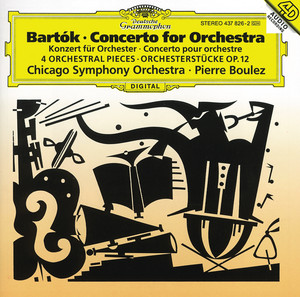 | Concerto for Orchestra, Sz. 116: I. Introduzione (Andante non troppo - Allegro vivace) | Béla Bartók, Chicago Symphony Orchestra, Pierre Boulez | D Major | 1 | 10B | 73 BPM | |
 | In the Steppes of Central Asia | Alexander Borodin, Royal Philharmonic Orchestra, Vladimir Ashkenazy | A Major | 0 | 11B | 69 BPM | |
 | Symphony No.7 in E Major, WAB 107: 3. Scherzo (Sehr schnell) | Anton Bruckner, Concertgebouworkest, Bernard Haitink | A Minor | 1 | 8A | 78 BPM | |
 | La Cenerentola: Overture (Sinfonia) | Gioachino Rossini, Orchestra del Teatro Comunale di Bologna, Riccardo Chailly | A Minor | 1 | 8A | 116 BPM | |
 | Warsaw Concerto | Richard Addinsell, Jean-Yves Thibaudet, BBC Symphony Orchestra, Hugh Wolff | B Major | 1 | 1B | 76 BPM | |
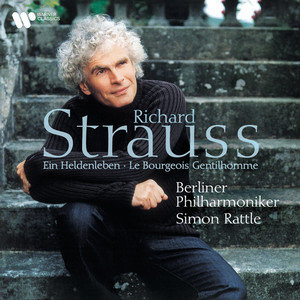 | Strauss, R: Ein Heldenleben, Op. 40: II. Des Helden Widersacher | Richard Strauss, Sir Simon Rattle, Berliner Philharmoniker, Guy Braunstein | E♭ Major | 0 | 5B | 83 BPM | |
 | Orpheo ed Euridice, Wq. 30, Act II: Dance of the Blessed Spirits | Christoph Willibald Gluck, Eugene Ormandy, Philadelphia Orchestra | D Minor | 1 | 7A | 67 BPM | |
 | Symphony No. 3 in C Minor, Op. 78, R. 176 "Organ Symphony": IIa. Allegro moderato - Presto - Allegro moderato | Camille Saint-Saëns, Gaston Litaize, Chicago Symphony Orchestra, Daniel Barenboim | D♭ Major | 1 | 3B | 110 BPM | |
| La forza del destino: Overture (Sinfonia) | Giuseppe Verdi, Berliner Philharmoniker, Claudio Abbado | E Minor | 2 | 9A | 80 BPM | |
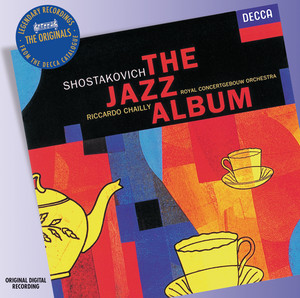 | Jazz Suite No. 2: II. Lyric Waltz | Dmitri Shostakovich, Royal Concertgebouw Orchestra, Riccardo Chailly | C Minor | 1 | 5A | 84 BPM | |
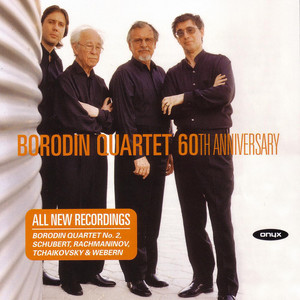 | Borodin - String Quartet No.2 in D major: Notturno: Andante | Alexander Borodin, Borodin Quartet | A Major | 2 | 11B | 74 BPM | |
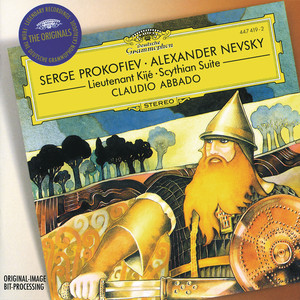 | Lieutenant Kijé Suite, Op. 60: II. Romance | Sergei Prokofiev, Chicago Symphony Orchestra, Claudio Abbado | C Minor | 0 | 5A | 109 BPM | |
 | Elektra: Ii. Allein! Weh, ganz allein | Hugo von Hofmannsthal, Richard Strauss, Laila Andersson-palme, Royal Swedish Opera Orchestra, Siegfried Köhler | D♭ Major | 5 | 3B | 118 BPM | |
 | Japanese Suite, Op. 33, H. 126: I. Prelude. Song of the Fisherman | Gustav Holst, Ulster Orchestra, Joann Falletta | C Minor | 3 | 5A | 103 BPM | |
 | Symphony No. 5 in E Minor, Op. 64: III. Valse. Allegro moderato | Pyotr Ilyich Tchaikovsky, Berliner Philharmoniker, Kirill Petrenko | A Major | 0 | 11B | 139 BPM | |
 | Serenade for String Orchestra in C Minor, Op. posth.: VI. Andante sostenuto | Max Bruch, George Hanson, Sinfonieorchester Wuppertal | E♭ Major | 0 | 5B | 87 BPM | |
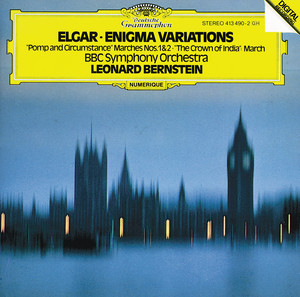 | Enigma Variations, Op. 36: Var. 9. Adagio "Nimrod" | Edward Elgar, BBC Symphony Orchestra, Leonard Bernstein | E♭ Major | 0 | 5B | 79 BPM | |
| In the Steppes of Central Asia | Alexander Borodin, Ukraine National Radio Symphony Orchestra, Theodore Kuchar | G Minor | 1 | 6A | 73 BPM | |
| Don Carlo, Act II: Prelude | Giuseppe Verdi, Berliner Philharmoniker, Claudio Abbado | C Major | 0 | 8B | 100 BPM | |
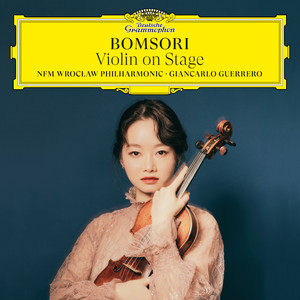 | Thaïs: Méditation | Jules Massenet, Bomsori, NFM Wrocław Philharmonic, Giancarlo Guerrero | D Major | 0 | 10B | 84 BPM | |
 | Suite No. 1, P. 109: III. Villanella: Andante Cantabile | Ottorino Respighi, RTÉ National Symphony Orchestra | B Minor | 0 | 10A | 88 BPM | |
 | Orfeo ed Euridice, Wq. 30: Dance of the Blessed Spirits "Melody" (Arr. Sgambati for Piano) | Christoph Willibald Gluck, Yuja Wang | D Minor | 0 | 7A | 70 BPM | |
| Symphony No. 5 in E Minor, Op. 64: I. Andante – Allegro con anima | Pyotr Ilyich Tchaikovsky, Berliner Philharmoniker, Kirill Petrenko | E Minor | 1 | 9A | 90 BPM |
- ISRC
- GBAYC1201629
- Label
- L-M Records/RCA Records