- BPM
- 114
- Key
- C Minor
- Camelot
- 5A
Symphony No. 5, "The Reformation", Op. 107: I. Andante - Allegro con fuoco by Felix Mendelssohn, London Symphony Orchestra, John Eliot Gardiner Song Details
Felix Mendelssohn, London Symphony Orchestra, John Eliot Gardiner's 'Symphony No. 5, "The Reformation", Op. 107: I. Andante - Allegro con fuoco' had a release date set for May 4, 2015. This song appears to be safe for all ages as it is not explicit. The track order of this song in Felix Mendelssohn, London Symphony Orchestra, John Eliot Gardiner's "Mendelssohn: Symphony No. 5 "Reformation", Overture Ruy Blas, Calm Sea & Prosperous Voyage" album is number 3 out of 6. On top of that, United Kingdom appears to be the country where this track was created. In terms of popularity, Symphony No. 5, "The Reformation", Op. 107: I. Andante - Allegro con fuoco is currently not that popular. In our opinion, the overall tone is not very danceable and projects negative sounds, such as being sad, depressed, or angry.
BPM and Tempo
We consider the tempo marking of Symphony No. 5, "The Reformation", Op. 107: I. Andante - Allegro con fuoco by Felix Mendelssohn, London Symphony Orchestra, John Eliot Gardiner to be Moderato (at a moderate speed) because the track has a tempo of 114 BPM, a half-time of 57BPM, and a double-time of 228 BPM. Based on that, the speed of the song's tempo is moderate. The time signature for this track is 3/4.
Music Key
C Minor is the music key of this track. Because this track belongs in the C Minor key, the camelot key is 5A. So, the perfect camelot match for 5A would be either 5A or 4B. While, a low energy boost can consist of either 5B or 6A. For moderate energy boost, you would use 2A and a high energy boost can either be 7A or 12A. However, if you are looking for a low energy drop, finding a song with a camelot key of 4A would be a great choice. Where 8A would give you a moderate drop, and 3A or 10A would be a high energy drop. Lastly, 8B allows you to change the mood.
Want to find the BPM and music key for other songs? Check out our BPM and Key Finder page!
- Popularity
- 14%
- Loudness
- -17.664 dB
- Acousticness
- 72%
- Danceability
- 34%
- Energy
- 13%
- Instrumentalness
- 68%
- Liveness
- 60%
- Loudness
- 71%
- Speechiness
- 4%
- Valence
- 24%
Recommendations
| Track | Artist | Key | Energy | Camelot | BPM | ||
|---|---|---|---|---|---|---|---|
 | Sechs Klavierstücke, Op. 118: II. Intermezzo in A Major | Johannes Brahms, Arcadi Volodos | A Major | 0 | 11B | 69 BPM | |
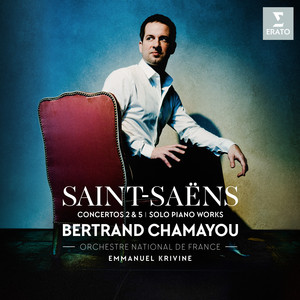 | Saint-Saëns: Piano Concerto No. 5 in F Major, Op. 103 "Egyptian": II. Andante | Camille Saint-Saëns, Bertrand Chamayou, Emmanuel Krivine, Orchestre National De France | D Major | 1 | 10B | 129 BPM | |
 | Bach, JS: Concerto for 4 Pianos in A Minor, BWV 1065: III. Allegro | Johann Sebastian Bach, David Fray, Orchestre National Du Capitole De Toulouse | A Minor | 3 | 8A | 123 BPM | |
 | Souvenir de Florence, Op. 70: I. Allegro con spirito | Pyotr Ilyich Tchaikovsky, Vienna Chamber Orchestra, Philippe Entremont | D♭ Major | 1 | 3B | 82 BPM | |
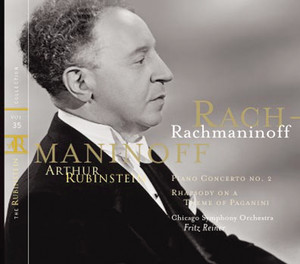 | Piano Concerto No. 2 in C Minor, Op. 18: I. Moderato | Sergei Rachmaninoff, Arthur Rubinstein, Fritz Reiner | C Minor | 1 | 5A | 71 BPM | |
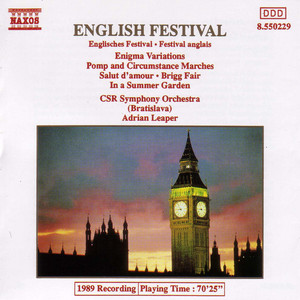 | Salut d'amour, Op. 12 (version for orchestra) | Edward Elgar, Slovak Radio Symphony Orchestra, Adrian Leaper | B♭ Major | 1 | 6B | 82 BPM | |
 | 2 Pieces for the Left Hand, Op. 9: No. 1, Prelude in C-Sharp Minor | Alexander Scriabin, Maria Lettberg | A Major | 0 | 11B | 126 BPM | |
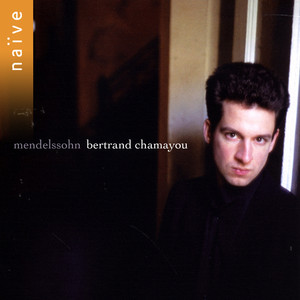 | Songs Without Words, Book VI Opus 67: No. 2 in F-Sharp Minor | Felix Mendelssohn, Bertrand Chamayou | F♯ Minor | 1 | 11A | 69 BPM | |
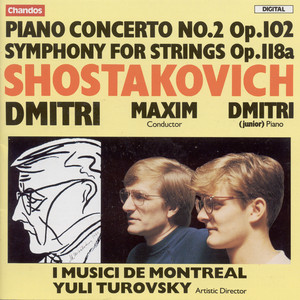 | Piano Concerto No. 2 in F Major, Op. 102: III. Allegro | Dmitri Shostakovich, I Musici de Montréal, Maxim Shostakovich | F Major | 3 | 7B | 164 BPM | |
 | Orfeo ed Euridice, Wq. 30 / Act II: Dance of the Blessed Spirits (Arr. by Mathieu Herzog for Cello and Strings) | Christoph Willibald Gluck, Camille Thomas, Brussels Philharmonic, Mathieu Herzog | B Minor | 1 | 10A | 87 BPM | |
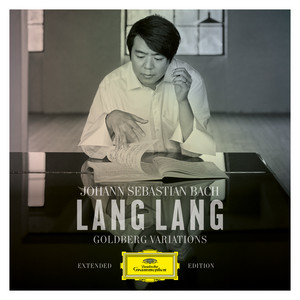 | Hunting Cantata, BWV 208: No. 9. Sheep May Safely Graze (Transc. Duck for 4 Hands) | Johann Sebastian Bach, Lang Lang, Gina Alice | B♭ Major | 1 | 6B | 101 BPM | |
| Piano Concerto No. 2 in F Major, Op. 102: II. Andante | Dmitri Shostakovich, I Musici de Montréal, Maxim Shostakovich | C Minor | 0 | 5A | 177 BPM | |
 | Gli uccelli (The Birds), P. 154: V. Il cucu. Allegro | Ottorino Respighi, Chamber Orchestra of New York, Salvatore Di Vittorio | A Major | 1 | 11B | 181 BPM | |
 | Grieg: Violin Sonata No. 3 in C Minor, Op. 45: II. Allegretto espressivo alla romanza | Renaud Capuçon, Khatia Buniatishvili | E Major | 1 | 12B | 78 BPM | |
 | Recueil de Chants, Op. 65: No. 6, Barcarolle in G Minor | Charles-Valentin Alkan, Pascal Amoyel | G Minor | 0 | 6A | 112 BPM | |
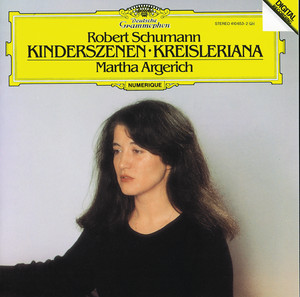 | Kinderszenen, Op. 15: I. Von fremden Ländern und Menschen | Robert Schumann, Martha Argerich | G Major | 0 | 9B | 128 BPM | |
 | Piano Concerto No. 1 in F-Sharp Minor, Op. 1 (1917 Final Version): II. Andante | Sergei Rachmaninoff, Yuja Wang, Los Angeles Philharmonic, Gustavo Dudamel | D Major | 1 | 10B | 100 BPM | |
 | Kinderszenen | Robert Schumann, Ivan Moravec | F Major | 0 | 7B | 131 BPM | |
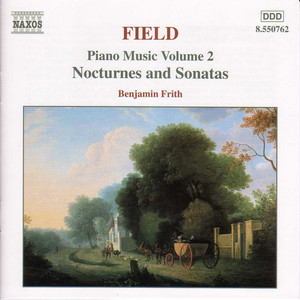 | Nocturne No. 16 In F Major, H. 62: Nocturne No. 16 In F Major | Benjamin Frith, John Field | F Major | 0 | 7B | 71 BPM | |
 | Finlandia, Op. 26 | Jean Sibelius, Berliner Philharmoniker, Herbert von Karajan | A♭ Major | 3 | 4B | 67 BPM | |
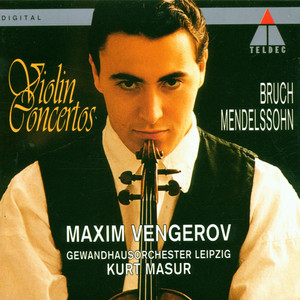 | Mendelssohn: Violin Concerto in E Minor, Op. 64, MWV O14: II. Andante | Felix Mendelssohn, Maxim Vengerov, Kurt Masur, Gewandhausorchester | C Major | 1 | 8B | 96 BPM | |
 | In the Steppes of Central Asia | Alexander Borodin, Royal Philharmonic Orchestra, Vladimir Ashkenazy | A Major | 0 | 11B | 69 BPM | |
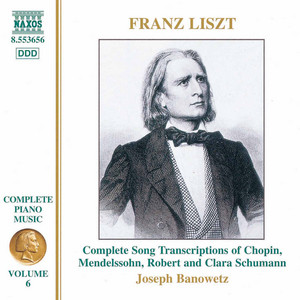 | Chopin - 6 Chants Polonais, S480/R145: No. 2. Fruhling(Wiosna, Spring) | Joseph Banowetz, Franz Liszt | G Major | 1 | 9B | 108 BPM | |
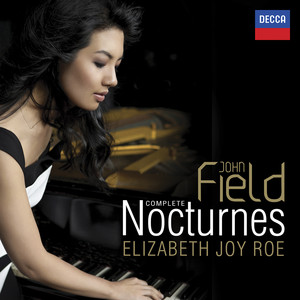 | Nocturne No.18 in F Major, H.62 | John Field, Elizabeth Joy Roe | F Major | 0 | 7B | 72 BPM | |
| Bach, JS: Concerto for 4 Pianos in A Minor, BWV 1065: I. Allegro | Johann Sebastian Bach, David Fray, Audrey Vigoureux, Emmanuel Christien, Jacques Rouvier, Orchestre National Du Capitole De Toulouse | A Minor | 3 | 8A | 108 BPM |
- ISRC
- GBDGQ1527501
- Label
- L-M Records/RCA Records