- BPM
- 75
- Key
- G Minor
- Camelot
- 6A
Simple Symphony, Op. 4: Sentimental Sarabande by Benjamin Britten, Royal Northern Sinfonia, Steuart Bedford Song Details
"Simple Symphony, Op. 4: Sentimental Sarabande" by Benjamin Britten, Royal Northern Sinfonia, Steuart Bedford had its release date on January 2, 2005. Since This song is still less than 10 minute long, it is still considered a pretty long duration song compared to the average song length. This song does not appear to be explicit due to the lack of the "E" tag. The song is number 3 out of 34 in Britten: Simple Symphony / Temporal Variations / Suite On English Folk Tunes by Benjamin Britten, Steuart Bedford. Simple Symphony, Op. 4: Sentimental Sarabande is not that popular right now. In our opinion, the overall tone is not very danceable and projects negative sounds, such as being sad, depressed, or angry.
BPM and Tempo
The tempo marking of Simple Symphony, Op. 4: Sentimental Sarabande by Benjamin Britten, Royal Northern Sinfonia, Steuart Bedford is Adagio (slowly with great expression), since this song has a tempo of 75 BPM. With that information, we can conclude that the song has a slow tempo. The time signature for this track is 3/4.
Music Key
G Minor is the music key of this track. Because this track belongs in the G Minor key, the camelot key is 6A. So, the perfect camelot match for 6A would be either 6A or 5B. While, a low energy boost can consist of either 6B or 7A. For moderate energy boost, you would use 3A and a high energy boost can either be 8A or 1A. However, if you are looking for a low energy drop, finding a song with a camelot key of 5A would be a great choice. Where 9A would give you a moderate drop, and 4A or 11A would be a high energy drop. Lastly, 9B allows you to change the mood.
Want to find the BPM and music key for other songs? Check out our BPM and Key Finder page!
- Popularity
- 10%
- Loudness
- -27.617 dB
- Acousticness
- 85%
- Danceability
- 7%
- Energy
- 2%
- Instrumentalness
- 84%
- Liveness
- 24%
- Loudness
- 54%
- Speechiness
- 5%
- Valence
- 4%
Recommendations
| Track | Artist | Key | Energy | Camelot | BPM | ||
|---|---|---|---|---|---|---|---|
 | Horn Trio in E-Flat Major, Op. 40: III. Adagio mesto | Johannes Brahms, Isabelle Faust, Alexander Melnikov, Teunis van der Zwart | E♭ Minor | 0 | 2A | 68 BPM | |
 | Piano Trio in G Minor, Op. 3: I. Pas trop lent – Animé | Ernest Chausson, Beaux Arts Trio | E♭ Major | 1 | 5B | 111 BPM | |
 | Pelléas et Mélisande, Op. 80, Suite: I. Prélude | Gabriel Fauré, Academy of St. Martin in the Fields, Sir Neville Marriner | G Major | 1 | 9B | 134 BPM | |
 | Scheherazade, Op. 35: I. The Sea and Sinbad's Ship | Nikolai Rimsky-Korsakov, Aleksandar Sedlar, Nemanja Radulović, Double Sens, Stéphanie Fontanarosa | C Major | 1 | 8B | 74 BPM | |
 | Orfeo ed Euridice, Wq. 30 / Act II: Dance of the Blessed Spirits (Arr. by Mathieu Herzog for Cello and Strings) | Christoph Willibald Gluck, Camille Thomas, Brussels Philharmonic, Mathieu Herzog | B Minor | 1 | 10A | 87 BPM | |
 | Violin Sonata No. 3 in C Minor, Op. 45: III. Allegro animato | Edvard Grieg, Frederic Chiu, Pierre Amoyal | D Minor | 2 | 7A | 148 BPM | |
 | The Firebird (L'oiseau De Feu) - Suite (1919): Berceuse | Igor Stravinsky, Orchestre de l'Opéra Bastille, Myung-Whun Chung | A♭ Minor | 0 | 1A | 135 BPM | |
 | Piano Concerto No. 1, Op. 45: II. Andante (ma rubato) | Einojuhani Rautavaara, Laura Mikkola, Royal Scottish National Orchestra, Hannu Lintu | D♭ Major | 0 | 3B | 104 BPM | |
 | String Quartet No. 12 in F Major, Op. 96 'The American': II. Lento | Antonín Dvořák, Škampa Quartet | D Minor | 0 | 7A | 87 BPM | |
 | Divertimento for Strings, Sz. 113: III. Allegro assai | Béla Bartók, Orpheus Chamber Orchestra | B♭ Major | 1 | 6B | 105 BPM | |
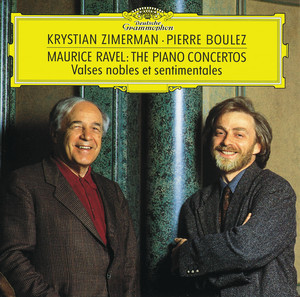 | Piano Concerto in G Major, M. 83: II. Adagio assai | Maurice Ravel, Krystian Zimerman, Cleveland Orchestra, Pierre Boulez | E Major | 0 | 12B | 74 BPM | |
 | Sonata No. 4 for Violin and Piano "From the Window": II. The Sky | Julian Lawrence Gargiulo, María Dueñas | G Major | 1 | 9B | 181 BPM | |
 | Piano Concerto No. 5 In C Major, H. 39, "L'incendie Par L'orage": III. Rondo Allegro | Benjamin Frith, Royal Northern Sinfonia, John Field | C Major | 1 | 8B | 107 BPM | |
 | Symphony No. 9 in E Minor, Op. 95, B. 178 "From the New World": II. Largo (Arr. for String Quartet by Rafael Rosenfeld) | Antonín Dvořák, Merel Quartet | D♭ Major | 0 | 3B | 79 BPM | |
 | String Quartet No. 1 in D Major, Op. 11: II. Andante cantabile | Pyotr Ilyich Tchaikovsky, Emerson String Quartet | D Minor | 5 | 7A | 65 BPM | |
 | Suite for Harp, Op. 83: III. Nocturne. Slow and quiet | Benjamin Britten, Magdalena Hoffmann | D♭ Major | 0 | 3B | 135 BPM | |
 | Symphony in C Major, GB 115: II. Adagio | Georges Bizet, Marc Soustrot, Aarhus Symphony Orchestra | A Minor | 0 | 8A | 117 BPM | |
 | Gluck / Arr. Kreisler: Mélodie (From Orfeo ed Euricide, Wq. 30) | Christoph Willibald Gluck, Vilde Frang | D Minor | 0 | 7A | 164 BPM | |
 | Beach: Romance for Violin and Piano, Op. 23 | Amy Beach, Augustin Hadelich, Orion Weiss | A Major | 1 | 11B | 84 BPM | |
 | String Quartet No. 2 in D Major: I. Allegro moderato | Alexander Borodin, Budapest Haydn Quartet | D Major | 1 | 10B | 75 BPM | |
 | Serenade for String Orchestra in C Minor, Op. posth.: VI. Andante sostenuto | Max Bruch, George Hanson, Sinfonieorchester Wuppertal | E♭ Major | 0 | 5B | 87 BPM | |
 | Piano Concerto in A Minor, Op. 17: II. Romanza: Andante | Ignacy Jan Paderewski, Janina Fialkowska, Polish National Radio Symphony Orchestra, Antoni Wit | C Major | 0 | 8B | 111 BPM | |
 | Symphony No. 3 in C Major, Op. 52: II. Andantino con moto, quasi allegretto - Un pocchettino con moto - Tempo primo | Jean Sibelius, Berliner Philharmoniker, Sir Simon Rattle | A♭ Minor | 0 | 1A | 136 BPM | |
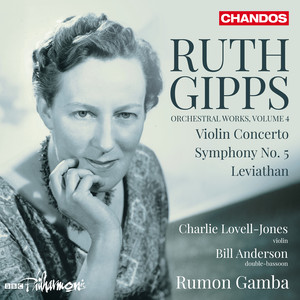 | Symphony No. 5, Op. 64: IVc. Missa brevis. Credo in unum Deum | Ruth Gipps, BBC Philharmonic, Rumon Gamba | F♯ Minor | 1 | 11A | 81 BPM | |
 | Piano Trio No. 1 in B Major, Op. 8: III. Adagio | Johannes Brahms, Maria João Pires, Augustin Dumay, Jian Wang | B Major | 0 | 1B | 84 BPM |
- ISRC
- This song does not have an ISRC.
- Label
- L-M Records/RCA Records