- BPM
- 156
- Key
- E♭ Major
- Camelot
- 5B
Manon: 'Je marche sur tous les chemins' by Jules Massenet, Renée Fleming, Marcelo Álvarez, Jesús López-Cobos Song Details
"Manon: 'Je marche sur tous les chemins'" by Jules Massenet, Renée Fleming, Marcelo Álvarez, Jesús López-Cobos had its release date on October 3, 2003. The duration of This song is about two minutes long, specifically at 2:40. This song does not appear to have any foul language. Manon: 'Je marche sur tous les chemins''s duration is considered a little bit shorter than the average duration of a typical track. The track order of this song in Jules Massenet, Marcelo Álvarez, Renée Fleming, The Orchestra and Chorus of the Opéra National de Paris's "Manon" album is number 6 out of 72. On top of that, United States appears to be the country where this track was created. Based on our statistics, Manon: 'Je marche sur tous les chemins''s popularity is not that popular right now. In our opinion, the overall tone is not very danceable and projects negative sounds, such as being sad, depressed, or angry.
BPM and Tempo
We consider the tempo marking of Manon: 'Je marche sur tous les chemins' by Jules Massenet, Renée Fleming, Marcelo Álvarez, Jesús López-Cobos to be Allegro (fast, quick, and bright) because the track has a tempo of 156 BPM, a half-time of 78BPM, and a double-time of 312 BPM. Based on that, the speed of the song's tempo is fast. Activities such as, running, can go well with this song. The time signature for this track is 5/4.
Music Key
This song is in the music key of E♭ Major. This also means that this song has a camelot key of 5B. So, the perfect camelot match for 5B would be either 5B or 6A. While, 6B can give you a low energy boost. For moderate energy boost, you would use 2B and a high energy boost can either be 7B or 12B. Though, if you want a low energy drop, you should looking for songs with either a camelot key of 5A or 4B will give you a low energy drop, 8B would be a moderate one, and 3B or 10B would be a high energy drop. Lastly, 2A allows you to change the mood.
Want to find the BPM and music key for other songs? Check out our BPM and Key Finder page!
- Popularity
- 2%
- Loudness
- -19.756 dB
- Acousticness
- 92%
- Danceability
- 18%
- Energy
- 13%
- Instrumentalness
- 0%
- Liveness
- 14%
- Loudness
- 67%
- Speechiness
- 4%
- Valence
- 7%
Recommendations
| Track | Artist | Key | Energy | Camelot | BPM | ||
|---|---|---|---|---|---|---|---|
 | Consolation No. 3 in D-Flat Major, S. 172/3 | Franz Liszt, Vladimir Horowitz | D♭ Major | 0 | 3B | 70 BPM | |
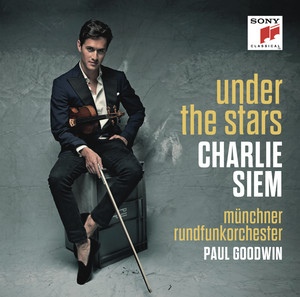 | Als die alte Mutter mich noch lehrte singen, Op. 55, No. 4 (Arr. for Violin and Orchestra) | Antonín Dvořák, Charlie Siem, Munich Radio Orchestra, Paul Goodwin | B♭ Major | 1 | 6B | 107 BPM | |
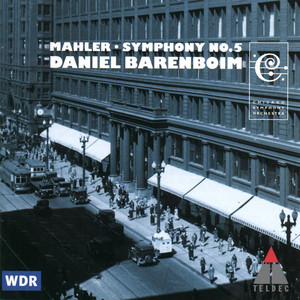 | Mahler: Symphony No. 5 in C-Sharp Minor: IV. Adagietto. Sehr langsam | Gustav Mahler, Daniel Barenboim, Chicago Symphony Orchestra | F Major | 1 | 7B | 82 BPM | |
 | Cendrillon: Enfin, je connaîtrai | Jules Massenet, Frederica von Stade, Ruth Welting, Ambrosian Opera Chorus, Philharmonia Orchestra, Julius Rudel, Elizabeth Bainbridge, Christian Johannes Du Plessis, Claude Meloni, Jane Berbié, Nicolai Gedda, Teresa Cahill, Jules Bastin, Paul Crook, John Noble | G Major | 1 | 9B | 84 BPM | |
 | Saint-Saëns: Le carnaval des animaux, R 125: XIII. Le cygne | Camille Saint-Saëns, Güher Pekinel, Éric Levionnais, Süher Pekinel | E♭ Major | 1 | 5B | 82 BPM | |
 | Bagatelles, Op. 47, B. 79: No. 1 in G Minor, Allegretto scherzando | Antonín Dvořák, Josef Suk, Miroslav Ambroš, Jiří Bárta, Jan Simon | G Minor | 1 | 6A | 99 BPM | |
| Cendrillon: Félicitez-moi donc | Jules Massenet, Philharmonia Orchestra, Julius Rudel | G Major | 1 | 9B | 84 BPM | |
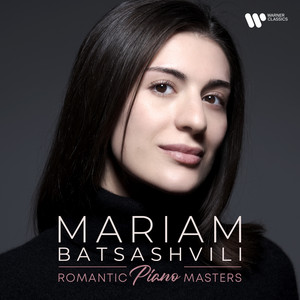 | Liszt: Lieder aus Franz Schubert's "Schwanengesang", S. 560: No. 7 Ständchen | Franz Liszt, Mariam Batsashvili | A Minor | 1 | 8A | 120 BPM | |
 | Warsaw Concerto | Richard Addinsell, Jean-Yves Thibaudet, BBC Symphony Orchestra, Hugh Wolff | B Major | 1 | 1B | 76 BPM | |
 | Andante Cantabile from String Quartet No. 1 in D Major, Op. 11 (Arr. Leopold Stokowski) | Pyotr Ilyich Tchaikovsky, Matthias Bamert, BBC Philharmonic | F Major | 0 | 7B | 90 BPM | |
 | Polovetsian Dances from Prince Igor: Introduzione | Alexander Borodin, George Szell, The Cleveland Orchestra | A Major | 1 | 11B | 83 BPM | |
 | Adagio in G Minor | Tomaso Albinoni, Vladimir Fedoseyev, Moscow RTV Symphony Orchestra | A Minor | 0 | 8A | 129 BPM | |
 | Massenet: Thaïs, Act II: Méditation | Jules Massenet, Sarah Chang, Plácido Domingo, Berliner Philharmoniker | D Major | 1 | 10B | 99 BPM | |
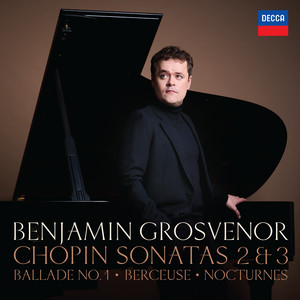 | Berceuse in D-Flat Major, Op. 57 | Frédéric Chopin, Benjamin Grosvenor | B Major | 2 | 1B | 122 BPM | |
 | Gianni Schicchi, Act I: "O mio babbino caro" (Arr. For Orchestra) | Giacomo Puccini, Jules Massenet, Sofia Philharmonic Orchestra, Emil Tabakov | A♭ Major | 1 | 4B | 109 BPM | |
 | Serenade for String Orchestra in C Major, Op. 48, TH 48: II. Valse | Pyotr Ilyich Tchaikovsky, The Russian Virtuosi of Europe, Yuri Zhislin | G Major | 2 | 9B | 98 BPM | |
 | Nisi Dominus, RV 608 - Arr. Cello: 4. Cum dederit dilectis suis (Arr. Cello) | Antonio Vivaldi, Harriet Krijgh, Amsterdam Sinfonietta, Candida Thompson | G Minor | 0 | 6A | 106 BPM | |
 | Adagio from Violin Sonata in G Minor, Op. 5 No. 5 (Arr. Leopold Stokowski) | Arcangelo Corelli, Matthias Bamert, BBC Philharmonic | G Minor | 0 | 6A | 175 BPM | |
 | Orfeo ed Euridice, Wq. 30 / Act II: Dance of the Blessed Spirits (Arr. by Mathieu Herzog for Cello and Strings) | Christoph Willibald Gluck, Camille Thomas, Brussels Philharmonic, Mathieu Herzog | B Minor | 1 | 10A | 87 BPM | |
 | Scottish Fantasy for Violin and Orchestra, Op. 46: I. Introduction: Grave, Adagio cantabile | Max Bruch, Joshua Bell, Academy of St. Martin in the Fields | E♭ Major | 2 | 5B | 60 BPM | |
 | Orfeo ed Euridice: Melody (Arr. G. Sgambati) | Christoph Willibald Gluck, Jura Margulis | D Minor | 0 | 7A | 73 BPM | |
 | Pourquoi me réveiller? from Werther - Vocal | Jules Massenet, Michael Bolton, Philharmonia Orchestra, Steven Mercurio | F♯ Minor | 2 | 11A | 157 BPM | |
 | Wiegenlied, AV 41 | Richard Strauss, James Ehnes, Andrew Armstrong | D Major | 1 | 10B | 88 BPM | |
 | Stille Musik: III. Augenblicke der Serenade | Valentin Silvestrov | C Major | 0 | 8B | 86 BPM | |
 | Mozart: Piano Concerto No. 20 in D Minor, K.466: II. Romance | Wolfgang Amadeus Mozart, Khatia Buniatishvili, Academy of St. Martin in the Fields | B♭ Major | 0 | 6B | 79 BPM |
- ISRC
- USSM10309982
- Label
- L-M Records/RCA Records