- BPM
- 83
- Key
- G Minor
- Camelot
- 6A
Rhapsody: II. Adagio e molto calmato by Rebecca Clarke, Raphael Wallfisch, John York Song Details
"Rhapsody: II. Adagio e molto calmato" by Rebecca Clarke, Raphael Wallfisch, John York had its release date on August 12, 2016. Since This song is still less than 10 minute long, it is still considered a pretty long duration song compared to the average song length. This song does not appear to be explicit due to the lack of the "E" tag. There are a total of 12 in the song's album "Rebecca Clarke: Music for Cello & Piano". In this album, this song's track order is #2. Furthermore, we believe that the track originated from United Kingdom. Rhapsody: II. Adagio e molto calmato is unknown right now. In our opinion, the overall tone is not very danceable and projects negative sounds, such as being sad, depressed, or angry.
BPM and Tempo
With Rhapsody: II. Adagio e molto calmato by Rebecca Clarke, Raphael Wallfisch, John York having a BPM of 83 with a half-time of 42 BPM and a double-time of 166 BPM, we would consider this track to have a Andante (at a walking pace) tempo marking. Because of this, we believe that the song has an overall slow tempo. The time signature for this track is 4/4.
Music Key
This song has a musical key of G Minor. Which also means that the camelot key for this song is 6A. So, the perfect camelot match for 6A would be either 6A or 5B. While, a low energy boost can consist of either 6B or 7A. For moderate energy boost, you would use 3A and a high energy boost can either be 8A or 1A. However, if you are looking for a low energy drop, finding a song with a camelot key of 5A would be a great choice. Where 9A would give you a moderate drop, and 4A or 11A would be a high energy drop. Lastly, 9B allows you to change the mood.
Want to find the BPM and music key for other songs? Check out our BPM and Key Finder page!
- Popularity
- 0%
- Loudness
- -26.763 dB
- Acousticness
- 99%
- Danceability
- 16%
- Energy
- 2%
- Instrumentalness
- 72%
- Liveness
- 10%
- Loudness
- 55%
- Speechiness
- 4%
- Valence
- 3%
Recommendations
| Track | Artist | Key | Energy | Camelot | BPM | ||
|---|---|---|---|---|---|---|---|
 | Suite Italienne: II. Serenata | Igor Stravinsky, Anastasia Kobekina, Jean-Sélim Abdelmoula | C Minor | 1 | 5A | 88 BPM | |
 | 33 Miniatures: No. 22, Valse from "Don't Grieve" | Giya Kancheli, Ketevan Sepashvili | N/A | N/A | N/A | 0 BPM | |
 | Cello Solo Sonata, Op. 8: I. Allegro maestoso ma appassionato | Zoltán Kodály, Johannes Przygodda | B Minor | 1 | 10A | 65 BPM | |
 | String Quartet in E-Flat Major (Version for String Orchestra): III. Romanza | Fanny Mendelssohn, Lina Tur Bonet, Orchestre De Chambre De Toulouse | A Minor | 3 | 8A | 82 BPM | |
 | Violin Concerto No. 2 "The American Four Seasons": Song No. 2 | Delirium Musicum, Étienne Gara | A Minor | 0 | 8A | 95 BPM | |
 | Piano Trio in G: IV. Finale (Appassionato) | Claude Debussy, Trio Parnassus | E Minor | 0 | 9A | 177 BPM | |
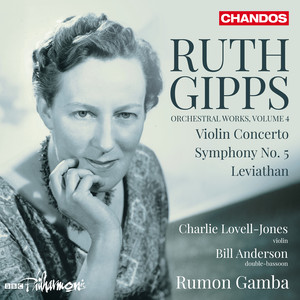 | Symphony No. 5, Op. 64: IVc. Missa brevis. Credo in unum Deum | Ruth Gipps, BBC Philharmonic, Rumon Gamba | F♯ Minor | 1 | 11A | 81 BPM | |
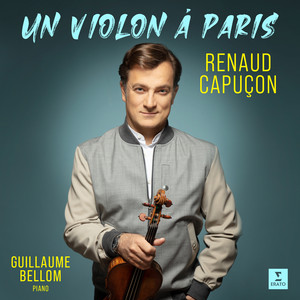 | Ysaÿe: Rêve d’enfant, Op. 14 | Eugène Ysaÿe, Renaud Capuçon | B♭ Minor | 1 | 3A | 67 BPM | |
 | The Tiger | Rebecca Clarke, Patricia Wright, Jonathan Rees, Kathron Sturrock | E♭ Major | 3 | 5B | 128 BPM | |
 | Suite, Op. 23: IV. Lied. Schlicht und innig, nicht zu langsam | Erich Wolfgang Korngold, Boris Brovtsyn, Clara Jumi Kang, Eldar Nebolsin, Spectrum Concerts Berlin, Torleif Thedéen | C Minor | 0 | 5A | 111 BPM | |
 | Langsamer Satz | Anton Webern, Leonkoro Quartet | A Major | 1 | 11B | 90 BPM | |
 | 6 Sonatas for Violin Solo, Op. 27 / Sonata No. 5 in G Major: I. L'Aurore | Eugène Ysaÿe, Hilary Hahn | G Major | 1 | 9B | 97 BPM | |
 | Prelude in F Minor (Arr. for Wind Quintet by Kara LaMoure) | Nadia Boulanger, WindSync | F Minor | 0 | 4A | 70 BPM | |
 | Prelude a l'apres-midi d'un faune (feat. Andrew Davis) | Jeanne Baxtresser | A♭ Minor | 2 | 1A | 169 BPM | |
 | 4. Nicht Zu Rasch | Josef Karlicek, Petr Karlicek | A Major | 1 | 11B | 90 BPM | |
 | Haydn: String Quartet in C Major, Op. 76 No. 3, Hob. III:77 "Emperor": II. (c) Variation II | Joseph Haydn, Quatuor Arod | C Minor | 2 | 5A | 82 BPM | |
 | Introduction and Allegro appassionato, Op. 92, for Piano and Orchestra in G Major: I. Langsam | Robert Schumann, Christian Zacharias, Orchestre de Chambre de Lausanne | G Major | 0 | 9B | 132 BPM | |
 | Piano Quintet in C Minor: II. Scherzo: Allegro non troppo | Alexander Borodin, Ilona Prunyi, New Budapest Quartet | C Major | 1 | 8B | 115 BPM | |
 | 3 Melodies, Op. 7: No. 1, Après un rêve (Transc. for Cello by Camille Thomas) | Gabriel Fauré, Camille Thomas, Julien Libeer | E♭ Major | 1 | 5B | 81 BPM | |
 | Lux aeterna (Arr. for Viola & Piano by Dana Dörken and Adrien La Marca) | Nadia Boulanger, Danae Dörken, Adrien La Marca | F Major | 0 | 7B | 82 BPM | |
 | Rachmaninoff: 12 Romances, Op. 21: No. 9, Melody (Transcr. Kadouch & Moreau for Cello and Piano) | Sergei Rachmaninoff, Edgar Moreau, David Kadouch | B♭ Major | 1 | 6B | 77 BPM | |
 | Kodály: Duo for Violin and Cello, Op. 7: II. Adagio (Live at Saratoga Performing Arts Centre, 1998) | Zoltán Kodály, Truls Mørk, Chantal Juillet | A Major | 1 | 11B | 90 BPM | |
 | Lied in F Minor | Sergei Rachmaninoff, Lynn Harrell, Vladimir Ashkenazy | F Minor | 0 | 4A | 131 BPM | |
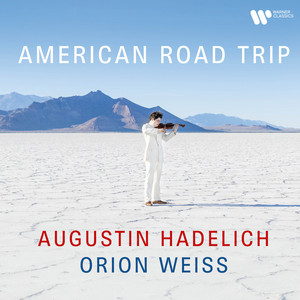 | Ponce: Estrellita (Arr. Heifetz for Violin and Piano) | Manuel Ponce, Augustin Hadelich, Orion Weiss | C Major | 3 | 8B | 100 BPM | |
 | Cavalleria rusticana: Preludio - Intermezzo | Yoko Ara, Takehiko Yamada | G Major | 1 | 9B | 92 BPM |
- ISRC
- GBAET1600101
- Label
- L-M Records/RCA Records