- BPM
- 82
- Key
- A Minor
- Camelot
- 8A
Le roi s'amuse: VII. Passepied (Arr. Elman) by Léo Delibes, Mela Tenenbaum, Richard Kapp Song Details
Léo Delibes, Mela Tenenbaum, Richard Kapp's ' "Le roi s'amuse: VII. Passepied (Arr. Elman)" was released on its scheduled release date, June 27, 2014. With This song being less than two minutes long, at 1:58, we are fairly confident that this song is not explicit and is safe for all ages. Based on the duration of this song, this song duration is much smaller than the average song duration. There are a total of 50 in the song's album "Top 50 Most Popular Classical Violin". In this album, this song's track order is #33. Furthermore, we believe that the track originated from Netherlands. Le roi s'amuse: VII. Passepied (Arr. Elman) is not that popular right now. Since there is more of a neutral sound being played, this makes the track somewhat danceable.
BPM and Tempo
With Le roi s'amuse: VII. Passepied (Arr. Elman) by Léo Delibes, Mela Tenenbaum, Richard Kapp having a BPM of 82 with a half-time of 41 BPM and a double-time of 164 BPM, we would consider this track to have a Andante (at a walking pace) tempo marking. Because of this, we believe that the song has an overall slow tempo. The time signature for this track is 4/4.
Music Key
This song is in the music key of A Minor. Which also means that the camelot key for this song is 8A. So, the perfect camelot match for 8A would be either 8A or 7B. While, a low energy boost can consist of either 8B or 9A. For moderate energy boost, you would use 5A and a high energy boost can either be 10A or 3A. However, if you are looking for a low energy drop, finding a song with a camelot key of 7A would be a great choice. Where 11A would give you a moderate drop, and 6A or 1A would be a high energy drop. Lastly, 11B allows you to change the mood.
Want to find the BPM and music key for other songs? Check out our BPM and Key Finder page!
- Popularity
- 15%
- Loudness
- -26.718 dB
- Acousticness
- 99%
- Danceability
- 59%
- Energy
- 5%
- Instrumentalness
- 21%
- Liveness
- 8%
- Loudness
- 55%
- Speechiness
- 5%
- Valence
- 43%
Recommendations
| Track | Artist | Key | Energy | Camelot | BPM | ||
|---|---|---|---|---|---|---|---|
 | Piano Concerto No. 23 in A Major, K. 488: II. Adagio | Wolfgang Amadeus Mozart, Vladimir Horowitz, Orchestra Del Teatro Alla Scala, Milano, Carlo Maria Giulini | F♯ Minor | 0 | 11A | 108 BPM | |
 | Scheherazade: The princess in a palanquin | Nikolai Rimsky-Korsakov, Lars Hjalmar Joakim | G Major | 1 | 9B | 166 BPM | |
 | Carmen Suite No. 1: 2. Aragonaise | Georges Bizet, Orchestre de Paris, Semyon Bychkov | D Minor | 0 | 7A | 120 BPM | |
 | Coppelia: Act I - Valse | Léo Delibes, Slovak Radio Symphony Orchestra, Andrew Mogrelia | E♭ Major | 0 | 5B | 89 BPM | |
 | Lyric Suite, Op. 54: III. Notturno (Nocturne) | Edvard Grieg, Malmö Symphony Orchestra, Bjarte Engeset | C Major | 0 | 8B | 118 BPM | |
 | Frühlingsstimmen, Op. 410: Frühlingsstimmen (Voices of Spring), Op. 410 | Johann Strauss II, Hungarian State Orchestra, Janos Ferencsik | E♭ Major | 1 | 5B | 96 BPM | |
 | Grieg: Peer Gynt, Op. 23, Act 4: No. 16, Anitra's Dance | Edvard Grieg, Thomas Beecham, Royal Philharmonic Orchestra | A Major | 2 | 11B | 95 BPM | |
 | Petite suite de concert, Op. 77: III. Un sonnet d'amour | Samuel Coleridge-Taylor, Chicago Sinfonietta, Paul Freeman | A Major | 0 | 11B | 70 BPM | |
 | Gianni Schicchi: "O mio babbino caro" | Giacomo Puccini, Mirella Freni, Orchestra del Maggio Musicale Fiorentino, Bruno Bartoletti | A♭ Major | 1 | 4B | 171 BPM | |
 | Albinoni: Adagio in G Minor | Tomaso Albinoni, Sir Neville Marriner, Academy of St. Martin in the Fields | C Minor | 1 | 5A | 90 BPM | |
 | Bizet: Carmen: No. 1 Prélude | Georges Bizet, Michel Plasson, Orchestre National Du Capitole De Toulouse, Wolff | D Minor | 3 | 7A | 129 BPM | |
 | String Quintet in E Major, Op. 13, No. 5: III. Minuetto | Luigi Boccherini, Lazar Gosman | A Major | 1 | 11B | 99 BPM | |
 | J.S. Bach: J.S. Bach: Orchestral Suite No. 3 in D Major, BWV 1068: 2. Air | Johann Sebastian Bach, Orpheus Chamber Orchestra | D Major | 3 | 10B | 65 BPM | |
 | Shéhérazade, Op. 35: I. The Sea and Sinbad's Ship | Nikolai Rimsky-Korsakov, Sergej Galaktionov, Gianandrea Noseda, Filarmonica Teatro Regio Torino | E Major | 1 | 12B | 136 BPM | |
 | Peer Gynt, Op. 23: No. 16, Anitra's Dance | Edvard Grieg, San Francisco Symphony, Herbert Blomstedt | A Minor | 0 | 8A | 82 BPM | |
 | Handel / Orch. Hale: Keyboard Suite No. 4 in D Minor, HWV 437: III. Sarabande | George Frideric Handel, Alexander Briger, Academy of St. Martin in the Fields | D Minor | 0 | 7A | 116 BPM | |
 | El Amor Brujo: Danza ritual del fuego | Manuel de Falla, Kazuki Yamada, Orchestre de la Suisse Romande | E Minor | 1 | 9A | 135 BPM | |
 | 6 Consolations, S. 172: No. 3 in D-Flat Major (Lento, placido) | Franz Liszt, Daniel Barenboim | D♭ Major | 0 | 3B | 69 BPM | |
 | Orpheo ed Euridice, Wq. 30, Act II: Dance of the Blessed Spirits | Christoph Willibald Gluck, Eugene Ormandy, Philadelphia Orchestra | D Minor | 1 | 7A | 67 BPM | |
 | Pavane, Op. 50 (Version for Orchestra) | Gabriel Fauré, Orchestre de Chambre de Lausanne, Renaud Capuçon | F♯ Minor | 0 | 11A | 70 BPM | |
 | Gianni Schicchi: O mio babbino caro | Giacomo Puccini, Maria Callas, RAI Symphony Orchestra, Rome, Tullio Serafin | A♭ Major | 1 | 4B | 136 BPM | |
 | Notturno for Strings and Harp | Arnold Schoenberg, Daniel Hope, Zürcher Kammerorchester, Jane Berthe | A♭ Major | 1 | 4B | 75 BPM | |
 | Jazz Suite No. 2: II. Lyric Waltz | Dmitri Shostakovich, Royal Concertgebouw Orchestra, Riccardo Chailly | C Minor | 1 | 5A | 84 BPM | |
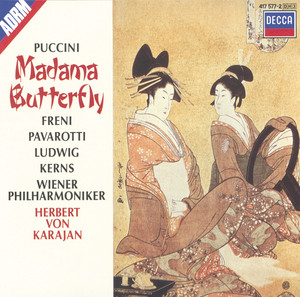 | Madama Butterfly, Act II: Coro a bocca chiusa "Humming Chorus" | Giacomo Puccini, Wiener Staatsopernchor, Wiener Philharmoniker, Herbert von Karajan | B♭ Major | 0 | 6B | 78 BPM | |
 | Raymonda, Op. 57: Act III - Variation IV | Alexander Glazunov, Moscow Symphony Orchestra, Alexander Anissimov | D Minor | 0 | 7A | 90 BPM |
- ISRC
- NLY331405875
- Label
- L-M Records/RCA Records