- BPM
- 144
- Key
- A Major
- Camelot
- 11B
Maria Marì by Pene Pati, Antonello Paliotti, Raffaele La Ragione, Giulio d'Alessio, Il Pomo D'oro Song Details
On September 26, 2025, the song "Maria Marì" was released by Pene Pati, Antonello Paliotti, Raffaele La Ragione, Giulio d'Alessio, Il Pomo D'oro. The duration of This song is about 3 minutes long, at 3:08. Based on our data, This song appears to be safe for all ages and is not considered explicit. This track is about the average length of a typical track. There are a total of 23 in the song's album "Serenata a Napoli". In this album, this song's track order is #3. Furthermore, we believe that the track originated from United Kingdom. Based on our statistics, Maria Marì's popularity is not that popular right now. The overall mood can be danceable to some, especially with it's high amount of postive energy.
BPM and Tempo
With Maria Marì by Pene Pati, Antonello Paliotti, Raffaele La Ragione, Giulio d'Alessio, Il Pomo D'oro having a BPM of 144 with a half-time of 72 BPM and a double-time of 288 BPM, we would consider this track to have a Allegro (fast, quick, and bright) tempo marking. Because of this, we believe that the song has an overall fast tempo. Looking at the BPM of this song, this song might go great with jogging or cycling. The time signature for this track is 3/4.
Music Key
This song has a musical key of A Major. Or for those who are familiar with the camelot wheel, this song has a camelot key of 11B. So, the perfect camelot match for 11B would be either 11B or 12A. While, 12B can give you a low energy boost. For moderate energy boost, you would use 8B and a high energy boost can either be 1B or 6B. Though, if you want a low energy drop, you should looking for songs with either a camelot key of 11A or 10B will give you a low energy drop, 2B would be a moderate one, and 9B or 4B would be a high energy drop. Lastly, 8A allows you to change the mood.
Want to find the BPM and music key for other songs? Check out our BPM and Key Finder page!
- Popularity
- 12%
- Loudness
- -11.276 dB
- Acousticness
- 77%
- Danceability
- 49%
- Energy
- 51%
- Instrumentalness
- 0%
- Liveness
- 8%
- Loudness
- 81%
- Speechiness
- 4%
- Valence
- 97%
Recommendations
| Track | Artist | Key | Energy | Camelot | BPM | ||
|---|---|---|---|---|---|---|---|
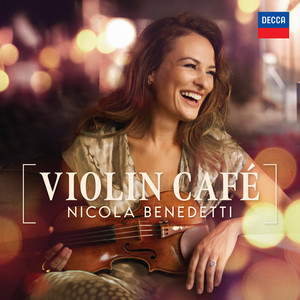 | Carmen Fantasy, Op. 25 (Arr. Goss for Violin, Guitar, Accordion & Cello): III. Seguidilla – Canto gitano | Pablo de Sarasate, Nicola Benedetti, Plínio Fernandes, Samuele Telari, Thomas Carroll | E Minor | 3 | 9A | 161 BPM | |
 | Le nozze di Figaro, K. 492: Deh vieni, non tardar | Wolfgang Amadeus Mozart, Hera Hyesang Park, Wiener Symphoniker, Bertrand de Billy | F Major | 0 | 7B | 88 BPM | |
 | Santa Lucia | Teodoro Cottrau, Enrico Caruso, La Scala | E♭ Major | 1 | 5B | 101 BPM | |
 | Così fan tutte, K. 588 / Act I: "Soave sia il vento" | Wolfgang Amadeus Mozart, Miah Persson, Angela Brower, Alessandro Corbelli, Chamber Orchestra of Europe, Yannick Nézet-Séguin | G Minor | 1 | 6A | 88 BPM | |
 | Tu ne peux pas comprendre | Fabienne Carreira | F♯ Minor | 1 | 11A | 60 BPM | |
 | Bachianas brasileiras No. 5 for Soprano and Cellos: Aria (Cantilena) | Heitor Villa-Lobos, Elina Garanca, Staatskapelle Dresden, Fabio Luisi | F Major | 0 | 7B | 139 BPM | |
 | Arianna: Aria. Nell'onda chiara | Giovanni Alberto Ristori, Adèle Charvet, Le Consort | B Minor | 0 | 10A | 103 BPM | |
 | Era de maggio | Pene Pati, Antonello Paliotti, Raffaele La Ragione, Giulio d'Alessio, Il Pomo D'oro | F Major | 2 | 7B | 108 BPM | |
 | Tosca, Act III: E lucevan le stelle (Arr. for Saxophone Quartet & Piano by Stefan Malzew) | Giacomo Puccini, Giuseppe Giacosa, Luigi Illica, Daniel Behle, Alliage Quintett | B Minor | 1 | 10A | 166 BPM | |
 | Giacomo Puccini: Madame Butterfly - Summchor | Chor der Staatsoper Wien, Vienna Volksoper Orchestra, Wilhelm Loibner | B♭ Major | 0 | 6B | 85 BPM | |
 | Roig: Cecilia Valdés: "Salida de Cecilia" | Lisette Oropesa, Óliver Díaz, Orquesta Sinfonica de Madrid | C Major | 2 | 8B | 111 BPM | |
 | Cuatro canciones antiguas sobre textos sefardíes: IV. Juego de niños | Borja Mariño, Mar Morán, Aurelio Viribay | C Major | 3 | 8B | 79 BPM | |
 | Catone in Utica / Act 2: "Se in campo armato" | Leonardo Vinci, Franco Fagioli, Il Pomo D'oro, Riccardo Minasi | B Major | 2 | 1B | 143 BPM | |
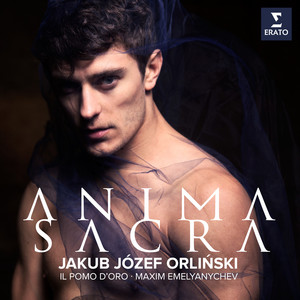 | Fago: Il Faraone sommerso: "Alla gente a Dio diletta" | Francesco Nicola Fago, Jakub Józef Orliński, Maxim Emelyanychev, Il Pomo D'oro | E Major | 1 | 12B | 92 BPM | |
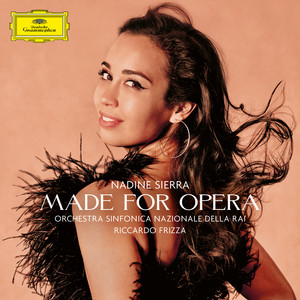 | La traviata / Act 1: Sempre libera | Giuseppe Verdi, Nadine Sierra, Paolo Fanale, Orchestra Sinfonica Nazionale Della RAI, Riccardo Frizza | A♭ Major | 1 | 4B | 78 BPM | |
 | Juditha triumphans, RV 644: Agitata infido flatu - Arr. for Voice & Piano | Antonio Vivaldi, Théophile Alexandre, Guillaume Vincent | D♭ Minor | 3 | 12A | 76 BPM | |
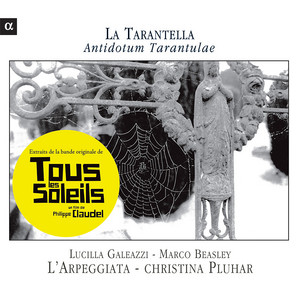 | Ah, vita bella ! | Lucilla Galeazzi, L'Arpeggiata, Christina Pluhar, Marco Beasley | G Minor | 4 | 6A | 74 BPM | |
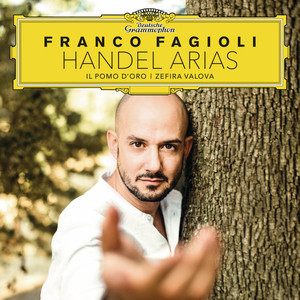 | Serse, HWV 40 / Act 1: "Ombra mai fu" | George Frideric Handel, Franco Fagioli, Il Pomo D'oro, Zefira Valova | E Major | 2 | 12B | 114 BPM | |
 | III. Soprano | Michael Stephen Brown, Susanna Phillips, Paul Neubauer, Anne-Marie McDermott | A Minor | 2 | 8A | 104 BPM | |
 | Deux chansons: No. 2, Chanson de l'adieu | Dilyana Georgieva, Galina Apostolova | E Major | 1 | 12B | 79 BPM | |
 | 7 Chansons grises: No. 5, L'heure exquise | Reynaldo Hahn, Anne Sofie von Otter, Bengt Forsberg | B♭ Major | 0 | 6B | 67 BPM | |
 | Abandon | Flygmaskin | C Major | 4 | 8B | 135 BPM | |
 | Mademoiselle de Paris (Arr. Goss for Guitar & String Ensemble) | Paul Durand, Alexandra Whittingham, Carducci String Quartet, Thea Sayer | D Major | 3 | 10B | 180 BPM | |
 | Entreveo | Daniel Ariño, Mercedes Gancedo | B Major | 1 | 1B | 73 BPM | |
 | Handel: Agrippina, HWV 6, Act 1: "Qual piacer" (Nerone) | George Frideric Handel, Joyce DiDonato, Franco Fagioli, Maxim Emelyanychev, Il Pomo D'oro | G Major | 1 | 9B | 92 BPM |
- ISRC
- GBAYC2500564
- Label
- L-M Records/RCA Records