- BPM
- 78
- Key
- A♭ Major
- Camelot
- 4B
Carnaval, Op. 9: 5. Eusebius by Robert Schumann, Alicia de Larrocha Song Details
"Carnaval, Op. 9: 5. Eusebius" by Robert Schumann, Alicia de Larrocha had its release date on February 5, 1980. With This song being less than two minutes long, at 1:49, we are fairly confident that this song is not explicit and is safe for all ages. Based on the duration of this song, this song duration is much smaller than the average song duration. There are a total of 24 in the song's album "Schumann: Carnaval / Schubert: Piano Sonata No. 13; Impromptu in A Flat Major". In this album, this song's track order is #5. Furthermore, we believe that the track originated from United Kingdom. Carnaval, Op. 9: 5. Eusebius is unknown right now. In our opinion, the overall tone is not very danceable and projects negative sounds, such as being sad, depressed, or angry.
BPM and Tempo
With Carnaval, Op. 9: 5. Eusebius by Robert Schumann, Alicia de Larrocha having a BPM of 78 with a half-time of 39 BPM and a double-time of 156 BPM, we would consider this track to have a Andante (at a walking pace) tempo marking. Because of this, we believe that the song has an overall slow tempo. The time signature for this track is 3/4.
Music Key
This song has a musical key of A♭ Major. Or for those who are familiar with the camelot wheel, this song has a camelot key of 4B. So, the perfect camelot match for 4B would be either 4B or 5A. While, 5B can give you a low energy boost. For moderate energy boost, you would use 1B and a high energy boost can either be 6B or 11B. Though, if you want a low energy drop, you should looking for songs with either a camelot key of 4A or 3B will give you a low energy drop, 7B would be a moderate one, and 2B or 9B would be a high energy drop. Lastly, 1A allows you to change the mood.
Want to find the BPM and music key for other songs? Check out our BPM and Key Finder page!
- Popularity
- 0%
- Loudness
- -25.923 dB
- Acousticness
- 99%
- Danceability
- 27%
- Energy
- 3%
- Instrumentalness
- 92%
- Liveness
- 15%
- Loudness
- 57%
- Speechiness
- 4%
- Valence
- 6%
Recommendations
| Track | Artist | Key | Energy | Camelot | BPM | ||
|---|---|---|---|---|---|---|---|
 | Orfeo ed Euridice, Wq. 30 / Act II: Dance of the Blessed Spirits (Arr. by Mathieu Herzog for Cello and Strings) | Christoph Willibald Gluck, Camille Thomas, Brussels Philharmonic, Mathieu Herzog | B Minor | 1 | 10A | 87 BPM | |
 | Sonata in E Major, K. 380 | Domenico Scarlatti, Khatia Buniatishvili | B Major | 0 | 1B | 84 BPM | |
 | Chanson triste, Op. 40: No. 2 | Pyotr Ilyich Tchaikovsky, Sviatoslav Richter | G Minor | 0 | 6A | 101 BPM | |
 | 10 Pieces, Op. 12: No. 7, Prelude | Sergei Prokofiev, Olli Mustonen | C Major | 1 | 8B | 76 BPM | |
 | Franck: Prélude, fugue et variation, Op. 18, FWV 30: Prélude | César Franck, Aldo Ciccolini | B Minor | 0 | 10A | 127 BPM | |
 | Piano Sonata in G Minor: I. Allegro molto agitato | Fanny Mendelssohn, Heather Schmidt | B Minor | 3 | 10A | 87 BPM | |
 | Andante spianato et Grande polonaise brillante, Op. 22: Andante spianato. Tranquillo | Frédéric Chopin, Martha Argerich | G Major | 0 | 9B | 83 BPM | |
 | Schumann: Kinderszenen, Op. 15: I Von fremden Ländern und Menschen | Robert Schumann, Maria João Pires | G Major | 0 | 9B | 67 BPM | |
 | Berceuse in D Major, Op. 16 | Gabriel Fauré, Xavier Phillips, Cédric Tiberghien | D Major | 0 | 10B | 67 BPM | |
 | 24 Preludes & Fugues, Op. 87: Prelude no.13 in F sharp minor. Moderato con moto | Dmitri Shostakovich, Alexander Melnikov | F♯ Major | 0 | 2B | 72 BPM | |
 | 10 Preludes, Op. 23: No. 10 in G-Flat Major: Largo | Sergei Rachmaninoff, Vladimir Ashkenazy | F♯ Major | 0 | 2B | 109 BPM | |
 | Pavane pour une infante défunte, M. 19 | Maurice Ravel, Alexandre Tharaud | E Minor | 0 | 9A | 63 BPM | |
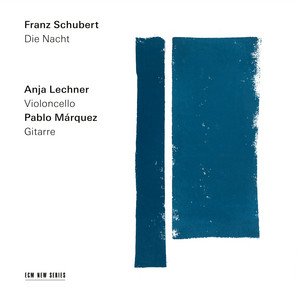 | Die Nacht, D. deest (Arr. Lechner/Márquez for Cello & Guitar) | Franz Schubert, Anja Lechner, Pablo Marquez | G Major | 0 | 9B | 85 BPM | |
| Allegro molto agitato in D Minor | Fanny Mendelssohn, Heather Schmidt | D Major | 1 | 10B | 111 BPM | |
 | I. Prélude. Andantino | César Franck, Jean-Pierre Armengaud | D Major | 0 | 10B | 66 BPM | |
 | Nocturnes, Op. 15: No. 3 in G Minor. Lento | Frédéric Chopin, Jan Lisiecki | D Minor | 0 | 7A | 133 BPM | |
 | 8 Nocturnes, Op. 368: No. 5, Allegretto grazioso e con anima | Carl Czerny, Roberte Mamou | E Major | 1 | 12B | 137 BPM | |
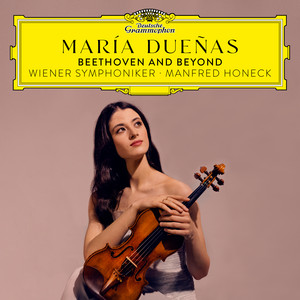 | 3 Old Viennese Dances: No. 2, Liebesleid (Transcr. for Violin and Orchestra) | Fritz Kreisler, María Dueñas, Wiener Symphoniker, Manfred Honeck | G Major | 0 | 9B | 103 BPM | |
 | Melodie From "Orfeo ed Euridice", Wq. 30 (Arr. Giovanni Sgambati) | Christoph Willibald Gluck, Hélène Grimaud | D Minor | 0 | 7A | 70 BPM | |
 | Piano Quintet in C Minor: I. Andante | Alexander Borodin, Ilona Prunyi, New Budapest Quartet | C Minor | 1 | 5A | 68 BPM | |
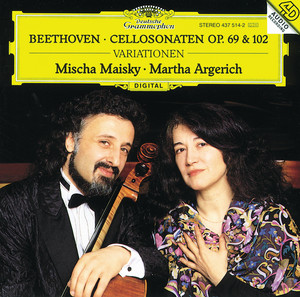 | Sonata for Cello and Piano No. 4 in C Major, Op. 102 No. 1: I. Andante | Ludwig van Beethoven, Mischa Maisky, Martha Argerich | C Major | 0 | 8B | 66 BPM | |
 | Bist du bei mir (Formerly Attrib. J.S. Bach as BWV 508, Notebook for Anna Magdalena Bach, 1725) | Gottfried Heinrich Stölzel, Daniil Trifonov | E♭ Major | 0 | 5B | 133 BPM | |
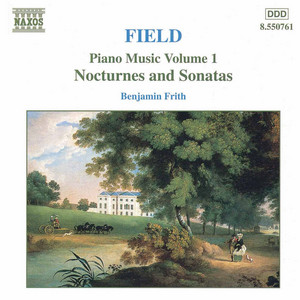 | Nocturne No. 2 in C Minor, H. 25 | John Field, Benjamin Frith | C Minor | 0 | 5A | 98 BPM | |
 | Orfeo ed Euridice, Act II: Dance of the Blessed Spirits, "Melodie" (Arr. I. Friedman) | Christoph Willibald Gluck, Yoonie Han | D Minor | 0 | 7A | 77 BPM | |
 | 3 Études de Concert, S. 144: No. 3 in D-Flat Major "Un sospiro" | Franz Liszt, Daniil Trifonov | D♭ Major | 1 | 3B | 76 BPM |
- ISRC
- GBF077843105
- Label
- L-M Records/RCA Records