- BPM
- 123
- Key
- C Minor
- Camelot
- 5A
Suite la triomphante: Allemande by Jean-Philippe Rameau, Calefax Reed Quintet Song Details
"Suite la triomphante: Allemande" by Jean-Philippe Rameau, Calefax Reed Quintet had its release date on January 1, 2006. With this song being about 5 minutes long, at This song is fairly a long song compared to the average song length. This song does not have an "Explicit" tag, making it safe for all ages. There are a total of 23 in the song's album "Rameau: Nouvelles Suites". In this album, this song's track order is #2. Furthermore, we believe that the track originated from Germany. Based on our statistics, Suite la triomphante: Allemande's popularity is not that popular right now. In our opinion, the overall tone is not very danceable and projects negative sounds, such as being sad, depressed, or angry.
BPM and Tempo
With Suite la triomphante: Allemande by Jean-Philippe Rameau, Calefax Reed Quintet having a BPM of 123 with a half-time of 62 BPM and a double-time of 246 BPM, we would consider this track to have a Allegro (fast, quick, and bright) tempo marking. Because of this, we believe that the song has an overall fast tempo. Looking at the BPM of this song, this song might go great with walking. The time signature for this track is 4/4.
Music Key
This song is in the music key of C Minor. Which also means that the camelot key for this song is 5A. So, the perfect camelot match for 5A would be either 5A or 4B. While, a low energy boost can consist of either 5B or 6A. For moderate energy boost, you would use 2A and a high energy boost can either be 7A or 12A. However, if you are looking for a low energy drop, finding a song with a camelot key of 4A would be a great choice. Where 8A would give you a moderate drop, and 3A or 10A would be a high energy drop. Lastly, 8B allows you to change the mood.
Want to find the BPM and music key for other songs? Check out our BPM and Key Finder page!
- Popularity
- 4%
- Loudness
- -24.648 dB
- Acousticness
- 99%
- Danceability
- 31%
- Energy
- 4%
- Instrumentalness
- 94%
- Liveness
- 10%
- Loudness
- 59%
- Speechiness
- 4%
- Valence
- 16%
Recommendations
| Track | Artist | Key | Energy | Camelot | BPM | ||
|---|---|---|---|---|---|---|---|
 | Adagio pour violon et orgue | André Caplet, Chouchane Siranossian, François Saint-Yves | C Major | 1 | 8B | 53 BPM | |
 | Concerto for 2 Violins in D Minor, Op. 6, No. 10: I. Adagio | Giuseppe Torelli, Berliner Barock Compagney | F♯ Major | 2 | 2B | 103 BPM | |
 | La divisione del Mondo: Aria "Occhi miei si dormire" | Giovanni Legrenzi, Théotime Langlois de Swarte, Le Consort | B♭ Minor | 1 | 3A | 173 BPM | |
 | Symphony No. 5 in D Major, Op. 2, "St. Cecilia's Day Ode": I. Allegro ma non troppo - Allegro assai | William Boyce, Aradia Ensemble, Kevin Mallon | D♭ Major | 2 | 3B | 126 BPM | |
 | Suite in E Minor, RCT 2: V. Le Rappel des oiseaux - Live | Jean-Philippe Rameau, Grigory Sokolov | C Major | 0 | 8B | 84 BPM | |
 | Dvořák: Rusalka, Op. 114, B. 203, Act 1: Song to the Moon | Antonín Dvořák, Edgar Moreau, Jérémie Moreau | F♯ Major | 0 | 2B | 138 BPM | |
 | A Chloris in E Major (Arr. for Piano by William Youn) | Reynaldo Hahn, William Youn | E Major | 0 | 12B | 105 BPM | |
| Symphony No. 1 in B-Flat Major, Op. 2: I. Allegro | William Boyce, Aradia Ensemble, Kevin Mallon | A Major | 1 | 11B | 86 BPM | |
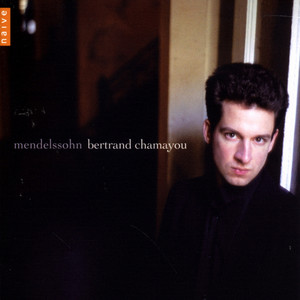 | Lied opus 34 no.2, transcription Franz Liszt: Auf Flügeln Des Gesanges | Felix Mendelssohn, Bertrand Chamayou | A♭ Major | 0 | 4B | 71 BPM | |
 | Orfeo ed Euridice, Wq. 30 / Act II: Dance of the Blessed Spirits (Arr. by Mathieu Herzog for Cello and Strings) | Christoph Willibald Gluck, Camille Thomas, Brussels Philharmonic, Mathieu Herzog | B Minor | 1 | 10A | 87 BPM | |
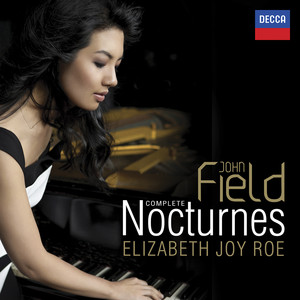 | Nocturne No. 5 in B-Flat Major, H. 37 | John Field, Elizabeth Joy Roe | B♭ Major | 0 | 6B | 65 BPM | |
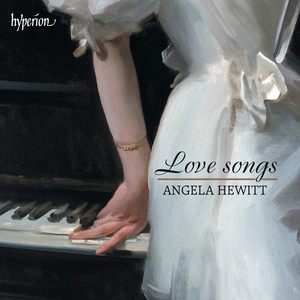 | Morgen, Op. 27 No. 4 (Arr. Reger for Piano) | Richard Strauss, Angela Hewitt | A Major | 2 | 11B | 143 BPM | |
 | Sechs Klavierstücke, Op. 118: II. Intermezzo in A Major | Johannes Brahms, Arcadi Volodos | A Major | 0 | 11B | 69 BPM | |
 | 3 Chorales, P. 167: No. 3, Andante (After J.S. Bach's BWV 645) | Ottorino Respighi, Seattle Symphony Orchestra, Gerard Schwarz | E♭ Major | 0 | 5B | 84 BPM | |
 | Lieder ohne Worte (Songs without Words), Book 2, Op. 30: No. 7 in E-Flat Major, Op. 30, No. 1, MWV U103 | Felix Mendelssohn, Péter Nagy | E♭ Major | 0 | 5B | 65 BPM | |
 | Sinfonia No. 6 in G Minor, Op. 5: I. Allegro | Johann Adolf Hasse, Le Concert de l'Hostel Dieu, Franck-Emmanuel Comte | B Major | 3 | 1B | 151 BPM | |
 | Lo frate 'nnamorato: II. Andante | Giovanni Battista Pergolesi, Orchestra da Camera di Napoli, Enzo Amato | E Minor | 5 | 9A | 165 BPM | |
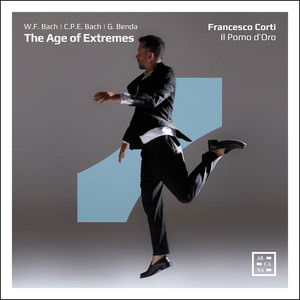 | Sinfonia in D Minor, Fk. 65: I. Adagio | Wilhelm Friedemann Bach, Il Pomo D'oro, Francesco Corti | D♭ Minor | 0 | 12A | 86 BPM | |
 | Sonata in D Minor, Kk. 32 | Domenico Scarlatti, Racha Arodaky | D Minor | 4 | 7A | 132 BPM | |
 | Franck: Prélude, fugue et variation, Op. 18, FWV 30: Prélude | César Franck, Aldo Ciccolini | B Minor | 0 | 10A | 127 BPM | |
 | Concerto Grosso in D Major, Op. 1, No. 5: I. Largo | Pietro Locatelli, Capella Istropolitana, Jaroslav Krcek | F Major | 1 | 7B | 71 BPM | |
 | I. Prélude. Andantino | César Franck, Jean-Pierre Armengaud | D Major | 0 | 10B | 66 BPM | |
 | Sonata da camera in G Minor, "O Haupt voll Blut und Wunden": I. Largo | Johann Gottlieb Janitsch, Il Gardellino | F♯ Minor | 2 | 11A | 171 BPM | |
 | Troisième livre: La Forqueray | Jacques Duphly, Christophe Rousset | E Minor | 5 | 9A | 105 BPM | |
 | Cantata, BWV 159: Es ist vollbracht (Arr. Ólafsson for Piano) | Johann Sebastian Bach, Víkingur Ólafsson | B♭ Major | 0 | 6B | 136 BPM |
- ISRC
- DEB240537402
- Label
- L-M Records/RCA Records