- BPM
- 94
- Key
- D Major
- Camelot
- 10B
Hallelujah, Amen from Judas Maccabaeus by George Frideric Handel, Mormon Tabernacle Choir, Eugene Ormandy, Philadelphia Orchestra Song Details
George Frideric Handel, Mormon Tabernacle Choir, Eugene Ormandy, Philadelphia Orchestra's ' "Hallelujah, Amen from Judas Maccabaeus" was released on its scheduled release date, 1960. The duration of This song is about two minutes long, specifically at 2:16. This song does not appear to have any foul language. Hallelujah, Amen from Judas Maccabaeus's duration is considered a little bit shorter than the average duration of a typical track. There are a total of 25 in the song's album "The Handel Collection". In this album, this song's track order is #21. In terms of popularity, Hallelujah, Amen from Judas Maccabaeus is currently unknown. The overall mood can be danceable to some, especially with it's high amount of postive energy.
BPM and Tempo
With Hallelujah, Amen from Judas Maccabaeus by George Frideric Handel, Mormon Tabernacle Choir, Eugene Ormandy, Philadelphia Orchestra having a BPM of 94 with a half-time of 47 BPM and a double-time of 188 BPM, we would consider this track to have a Andante (at a walking pace) tempo marking. Because of this, we believe that the song has an overall slow tempo. Looking at the BPM of this song, this song might go great with yoga or pilates. The time signature for this track is 4/4.
Music Key
This song is in the music key of D Major. Or for those who are familiar with the camelot wheel, this song has a camelot key of 10B. So, the perfect camelot match for 10B would be either 10B or 11A. While, 11B can give you a low energy boost. For moderate energy boost, you would use 7B and a high energy boost can either be 12B or 5B. Though, if you want a low energy drop, you should looking for songs with either a camelot key of 10A or 9B will give you a low energy drop, 1B would be a moderate one, and 8B or 3B would be a high energy drop. Lastly, 7A allows you to change the mood.
Want to find the BPM and music key for other songs? Check out our BPM and Key Finder page!
- Popularity
- 0%
- Loudness
- -17.249 dB
- Acousticness
- 95%
- Danceability
- 59%
- Energy
- 43%
- Instrumentalness
- 6%
- Liveness
- 23%
- Loudness
- 71%
- Speechiness
- 3%
- Valence
- 63%
Recommendations
| Track | Artist | Key | Energy | Camelot | BPM | ||
|---|---|---|---|---|---|---|---|
 | Symphony No. 5 in D Major: 1. Allegro ma non troppo - Allegro assai | William Boyce, Academy of Ancient Music, Christopher Hogwood | D♭ Major | 2 | 3B | 131 BPM | |
 | Cello Concerto No. 3 in A Major, Wq. 172: III. Allegro assai | Carl Philipp Emanuel Bach, Daniel Müller-Schott, L'Arte del mondo, Werner Ehrhardt | E Major | 2 | 12B | 142 BPM | |
 | Concerto grosso in C Minor, Op. 2, No. 1: IV. Allegro | Francesco Geminiani, Capella Istropolitana, Jaroslav Krcek | C Minor | 1 | 5A | 180 BPM | |
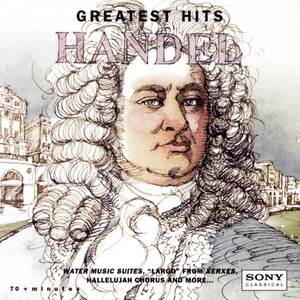 | Serse, HWV 40: Largo "Ombra mai fu" | George Frideric Handel, Eugene Ormandy, Philadelphia Orchestra | G Major | 1 | 9B | 82 BPM | |
 | Flute Concerto in A Minor, QV 5:238: III. Allegro assai | Johann Joachim Quantz, Mary Oleskiewicz, Concerto Armonico Budapest, Miklós Spányi | C Minor | 1 | 5A | 92 BPM | |
 | Armide: Passacaille | Jean-Baptiste Lully, Véronique Gens/Les Talens Lyriques/Christophe Rousset, Christophe Rousset, Les Talens Lyriques | F Minor | 1 | 4A | 122 BPM | |
 | Purcell: Chacony in G Minor, Z. 730 | Henry Purcell, Sir Neville Marriner, Academy of St. Martin in the Fields | B♭ Major | 4 | 6B | 113 BPM | |
 | Orpheo ed Euridice, Wq. 30, Act II: Dance of the Blessed Spirits | Christoph Willibald Gluck, Eugene Ormandy, Philadelphia Orchestra | D Minor | 1 | 7A | 67 BPM | |
 | Fauré: Pavane, Op. 50 (Instrumental Version) | Gabriel Fauré, Sir Neville Marriner, Academy of St. Martin in the Fields | F♯ Minor | 1 | 11A | 70 BPM | |
 | Violin Sonata in B-Flat Major, Op. 5 No. 2: III. Vivace | Arcangelo Corelli, Lina Tur Bonet, Musica Alchemica | A♭ Major | 3 | 4B | 83 BPM | |
 | Lo frate 'nnamorato: II. Andante | Giovanni Battista Pergolesi, Orchestra da Camera di Napoli, Enzo Amato | E Minor | 5 | 9A | 165 BPM | |
 | Recorder Concerto in C Major, TWV 51:C1: IV. Tempo di Minuet | Georg Philipp Telemann, Dan Laurin, Arte dei Suonatori | B Major | 2 | 1B | 141 BPM | |
 | Trio Sonata in F Major, HWV 392: IV. Allegro assai | George Frideric Handel, The Brook Street Band | E Major | 4 | 12B | 144 BPM | |
 | Oboe Concerto in D Minor: II. Adagio | Alessandro Marcello, Jozsef Kiss, Budapest Ferenc Erkel Chamber Orchestra | D Minor | 1 | 7A | 131 BPM | |
 | Serenata notturna in D Major, K. 239: I. Marcia. Maestoso | Wolfgang Amadeus Mozart, Thomas Brandis, Emil Maas, Neithart Resa, Rainer Zepperitz, Berliner Philharmoniker, Herbert von Karajan | A Major | 0 | 11B | 118 BPM | |
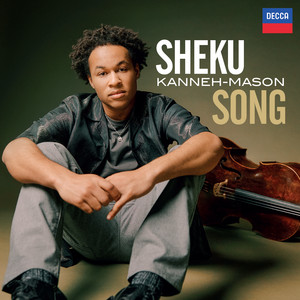 | Savior of the Nations, Come, BWV 659 (Arr. for 4 Cellos) | Johann Sebastian Bach, Sheku Kanneh-Mason, Hannah Roberts, Ben Davies, Max Ruisi | C Major | 0 | 8B | 122 BPM | |
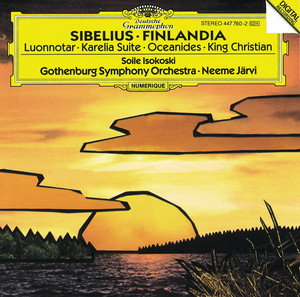 | Andante Festivo | Jean Sibelius, Gothenburg Symphony Orchestra, Neeme Järvi | G Major | 1 | 9B | 86 BPM | |
 | L'Allegro, Il Penseroso, ed il Moderato, HWV 55, Part III: "As steals the morn" | George Frideric Handel, Lucy Crowe, Mark Padmore, The English Concert, Andrew Manze | A Major | 1 | 11B | 84 BPM | |
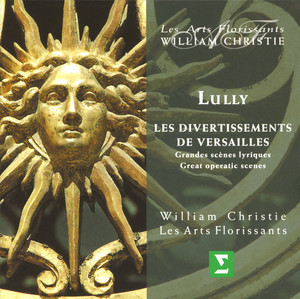 | Lully: Ballet des muses, LWV 32: Air. "Trop indiscret Amour" (Euridice) | Jean-Baptiste Lully, Les Arts Florissants, William Christie, Sophie Daneman | F Minor | 1 | 4A | 71 BPM | |
 | Enigma Variations, Op. 36: Theme. Andante | Edward Elgar, BBC Symphony Orchestra, Leonard Bernstein | G Minor | 0 | 6A | 113 BPM | |
 | Oboe Concerto in C: 3. Siciliana | Domenico Cimarosa, Heinz Holliger, I Musici | A Minor | 1 | 8A | 84 BPM | |
 | Concerto in F Major, S. 234: I. Vivace | Johann David Heinichen, Musica Antiqua Köln, Reinhard Goebel | A Major | 0 | 11B | 118 BPM | |
 | Scottish Fantasy for Violin and Orchestra, Op. 46: I. Introduction: Grave, Adagio cantabile | Max Bruch, Joshua Bell, Academy of St. Martin in the Fields | E♭ Major | 2 | 5B | 60 BPM | |
 | Capriol Suite: 5. Pied-en- l'air | Peter Warlock, Academy of St. Martin in the Fields, Nicholas Kraemer, Sir Neville Marriner | G Major | 1 | 9B | 113 BPM | |
| Flute Concerto in D Minor, QV 5:81: II. Arioso | Johann Joachim Quantz, Mary Oleskiewicz, Concerto Armonico Budapest, Miklós Spányi | G Minor | 2 | 6A | 77 BPM |
- ISRC
- This song does not have an ISRC.
- Label
- L-M Records/RCA Records