- BPM
- 83
- Key
- F Minor
- Camelot
- 4A
Messiah, HWV 56: And with His Stripes We Are Healed by George Frideric Handel, Eugene Ormandy, Philadelphia Orchestra Song Details
George Frideric Handel, Eugene Ormandy, Philadelphia Orchestra's 'Messiah, HWV 56: And with His Stripes We Are Healed' had a release date set for 1959. The duration of This song is about two minutes long, specifically at 2:19. This song does not appear to have any foul language. Messiah, HWV 56: And with His Stripes We Are Healed's duration is considered a little bit shorter than the average duration of a typical track. The track order of this song in George Frideric Handel, Mormon Tabernacle Choir, Philadelphia Orchestra, Eugene Ormandy, Richard P. Condie's "Handel: Messiah, HWV 56" album is number 5 out of 32. On top of that, United States appears to be the country where this track was created. Messiah, HWV 56: And with His Stripes We Are Healed is not that popular right now. In our opinion, the overall tone is not very danceable and projects negative sounds, such as being sad, depressed, or angry.
BPM and Tempo
We consider the tempo marking of Messiah, HWV 56: And with His Stripes We Are Healed by George Frideric Handel, Eugene Ormandy, Philadelphia Orchestra to be Andante (at a walking pace) because the track has a tempo of 83 BPM, a half-time of 42BPM, and a double-time of 166 BPM. Based on that, the speed of the song's tempo is slow. The time signature for this track is 4/4.
Music Key
This song is in the music key of F Minor. Because this track belongs in the F Minor key, the camelot key is 4A. So, the perfect camelot match for 4A would be either 4A or 3B. While, a low energy boost can consist of either 4B or 5A. For moderate energy boost, you would use 1A and a high energy boost can either be 6A or 11A. However, if you are looking for a low energy drop, finding a song with a camelot key of 3A would be a great choice. Where 7A would give you a moderate drop, and 2A or 9A would be a high energy drop. Lastly, 7B allows you to change the mood.
Want to find the BPM and music key for other songs? Check out our BPM and Key Finder page!
- Popularity
- 10%
- Loudness
- -21.059 dB
- Acousticness
- 99%
- Danceability
- 23%
- Energy
- 18%
- Instrumentalness
- 91%
- Liveness
- 18%
- Loudness
- 65%
- Speechiness
- 3%
- Valence
- 29%
Recommendations
| Track | Artist | Key | Energy | Camelot | BPM | ||
|---|---|---|---|---|---|---|---|
 | Bach, C.P.E.: Cello Concerto No. 3 in A Major, Wq. 172, H. 439 (Cadenzas by Anner Bylsma): III. Allegro assai | Carl Philipp Emanuel Bach, Anner Bylsma, Orchestra of the Age of Enlightenment, Gustav Leonhardt | A♭ Minor | 1 | 1A | 75 BPM | |
 | Orfeo ed Euridice: Act II, Scene 2, Ballo. Andante | Christoph Willibald Gluck, René Jacobs, Freiburger Barockorchester | C Major | 0 | 8B | 74 BPM | |
 | Armide: Passacaille | Jean-Baptiste Lully, Véronique Gens/Les Talens Lyriques/Christophe Rousset, Christophe Rousset, Les Talens Lyriques | F Minor | 1 | 4A | 122 BPM | |
 | Magnificat, Wq. 215: Magnificat, Wq. 215: 1. Chor. Magnificat anima mea Dominum | Carl Philipp Emanuel Bach, RIAS Kammerchor, Akademie für Alte Musik Berlin, Hans-Christoph Rademann | D♭ Major | 3 | 3B | 135 BPM | |
 | Oboe Concerto in F Minor, TWV 51:F2: II. Largo | Georg Philipp Telemann, Marcel Ponseele, Il Gardellino | E Minor | 1 | 9A | 82 BPM | |
 | 16 Waltzes, Op. 39 (Version for Piano Duet): No. 15 in A-Flat Major | Johannes Brahms, Tal & Groethuysen | A Major | 0 | 11B | 126 BPM | |
 | Sonata in D Minor, K. 9 | Domenico Scarlatti, Ivo Pogorelich | D Minor | 0 | 7A | 94 BPM | |
 | Concerto in E Minor: II. Vivace | Benedetto Marcello, Concerto Italiano, Rinaldo Alessandrini | E♭ Minor | 3 | 2A | 117 BPM | |
 | Molter: Concerto for 2 Trumpets in D Major, MWV 6.31: II. Andante | Johann Melchior Molter, Jean-François Paillard, Orchestre de chambre Jean-François Paillard | D Minor | 1 | 7A | 128 BPM | |
 | Water Music, Suite No. 2, HWV 349: No. 12, Alla Hornpipe | George Frideric Handel, Akademie für Alte Musik Berlin | D♭ Major | 2 | 3B | 132 BPM | |
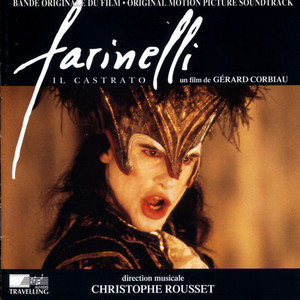 | Polifemo: Alto giove (Air d'Acio) - Instrumental Version | Christophe Rousset, Les Talens Lyriques, Ewa Mallas-godlewska, Derek Lee Ragin | E♭ Minor | 0 | 2A | 141 BPM | |
 | Oboe Concerto in B-Flat Major, Wq. 164, H. 466: I. Allegretto | Carl Philipp Emanuel Bach, Jozsef Kiss, Budapest Ferenc Erkel Chamber Orchestra | B♭ Major | 1 | 6B | 131 BPM | |
 | Concerto No. 2 In G Minor RV 578: II. Allegro (Vivaldi) | Accademia Bizantina | F♯ Minor | 3 | 11A | 120 BPM | |
 | Miserere in C Minor Psalm 50, ZWV. 57 | Jan Dismas Zelenka, Il Fondamento, Il Fondamento Choir, Paul Dombrecht | B Minor | 2 | 10A | 64 BPM | |
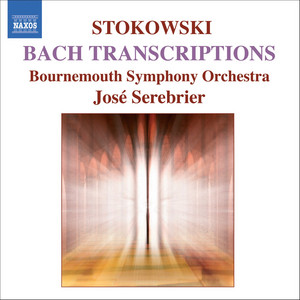 | Dido & Aeneas, Z. 626: When I Am Laid in Earth "Dido's Lament" (Transcr. L. Stokowski) | Henry Purcell, Timothy Walden, Bournemouth Symphony Orchestra, José Serebrier | E Major | 0 | 12B | 76 BPM | |
 | Overture (Suite) In D Major, TWV 55:D15: III. Harlequinade | Cologne Chamber Orchestra, Georg Philipp Telemann | D Major | 3 | 10B | 135 BPM | |
 | Thaïs / Acte Deux: Meditation | Jules Massenet, Michel Schwalbé, Berliner Philharmoniker, Herbert von Karajan | B♭ Major | 3 | 6B | 99 BPM | |
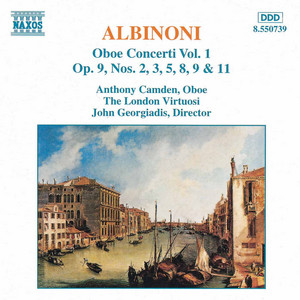 | Oboe Concerto in C Major, Op. 9, No. 5: I. Allegro | Tomaso Albinoni, Anthony Camden, London Virtuosi, John Georgiadis | C Major | 3 | 8B | 108 BPM | |
 | Zoroastre, RCT 62, Acte III, Scène VII: Gavotte en rondeau | Jean-Philippe Rameau, Teodor Currentzis | A♭ Minor | 1 | 1A | 116 BPM | |
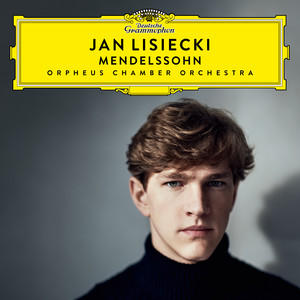 | Lieder ohne Worte, Op. 19: No. 6 in G Minor (Andante sostenuto) "Venetian Gondola Song", MWV U78 | Felix Mendelssohn, Jan Lisiecki | G Minor | 0 | 6A | 168 BPM | |
 | Deborah, HWV 51: Part I: Chorus - Let thy deeds be glorious | George Frideric Handel, Natacha Ducret, Elisabeth Scholl, Ewa Wolak, Lawrence Zazzo, Junge Kantorei, Frankfurt Baroque Orchestra, Joachim Carlos Martini | A Minor | 0 | 8A | 172 BPM | |
| Keyboard Sonata in E Major, Kk. 20 | Domenico Scarlatti, Ivo Pogorelich | E Major | 0 | 12B | 130 BPM | |
 | Scarlatti, A: Concerto grosso in sette parti No. 1 in F Minor: II. Allegro | Alessandro Scarlatti, Europa Galante, Fabio Biondi | E Minor | 3 | 9A | 80 BPM | |
 | Gluck: Don Juan, Wq. 52: III. Andante | Christoph Willibald Gluck, John Eliot Gardiner, English Baroque Soloists | F Major | 0 | 7B | 104 BPM | |
 | Symphony in D Minor, J-C 23: III. Presto | Giovanni Battista Sammartini, Aradia Ensemble, Kevin Mallon | D♭ Major | 1 | 3B | 131 BPM |
- ISRC
- USSM15900408
- Label
- L-M Records/RCA Records