- BPM
- 185
- Key
- G Major
- Camelot
- 9B
Le Carnaval des Animaux, R. 125: Svanen by Camille Saint-Saëns, Anne Martindale Williams, Pittsburgh Symphony Orchestra, André Previn Song Details
"Le Carnaval des Animaux, R. 125: Svanen" by Camille Saint-Saëns, Anne Martindale Williams, Pittsburgh Symphony Orchestra, André Previn had its release date on January 1, 1980. The duration of This song is about 3 minutes long, at 3:11. Based on our data, This song appears to be safe for all ages and is not considered explicit. This track is about the average length of a typical track. There are a total of 15 in the song's album "Petter Og Ulven / Dyrenes Karneval". In this album, this song's track order is #14. Furthermore, we believe that the track originated from Netherlands. The popularity of Le Carnaval des Animaux, R. 125: Svanen is currently below average in popularity right now. In our opinion, the overall tone is not very danceable and projects negative sounds, such as being sad, depressed, or angry.
BPM and Tempo
With Le Carnaval des Animaux, R. 125: Svanen by Camille Saint-Saëns, Anne Martindale Williams, Pittsburgh Symphony Orchestra, André Previn having a BPM of 185 with a half-time of 92 BPM and a double-time of 370 BPM, we would consider this track to have a Presto (very, very fast) tempo marking. Because of this, we believe that the song has an overall fast tempo. The time signature for this track is 3/4.
Music Key
G Major is the music key of this track. Or for those who are familiar with the camelot wheel, this song has a camelot key of 9B. So, the perfect camelot match for 9B would be either 9B or 10A. While, 10B can give you a low energy boost. For moderate energy boost, you would use 6B and a high energy boost can either be 11B or 4B. Though, if you want a low energy drop, you should looking for songs with either a camelot key of 9A or 8B will give you a low energy drop, 12B would be a moderate one, and 7B or 2B would be a high energy drop. Lastly, 6A allows you to change the mood.
Want to find the BPM and music key for other songs? Check out our BPM and Key Finder page!
- Popularity
- 22%
- Loudness
- -34.5 dB
- Acousticness
- 99%
- Danceability
- 7%
- Energy
- 1%
- Instrumentalness
- 74%
- Liveness
- 13%
- Loudness
- 43%
- Speechiness
- 4%
- Valence
- 4%
Recommendations
| Track | Artist | Key | Energy | Camelot | BPM | ||
|---|---|---|---|---|---|---|---|
 | Lieder ohne Worte (Songs without Words), Book 2, Op. 30: No. 7 in E-Flat Major, Op. 30, No. 1, MWV U103 | Felix Mendelssohn, Péter Nagy | E♭ Major | 0 | 5B | 65 BPM | |
 | Salut d'amour, Op. 12 | Edward Elgar, Daniel Hope, Jacques Ammon, Ensemble des Deutschen Kammerorchesters Berlin | E Major | 1 | 12B | 81 BPM | |
 | Gluck: Orphée et Eurydice, Wq. 41, Act 2: Danse des ombres heureuses | Christoph Willibald Gluck, Sir Neville Marriner, Academy of St. Martin in the Fields, Paul Davies | F Major | 0 | 7B | 76 BPM | |
 | Kinderszenen, Op. 15: VII. No. 7, Träumerei | Robert Schumann, Zhu Xiao-Mei | F Major | 0 | 7B | 65 BPM | |
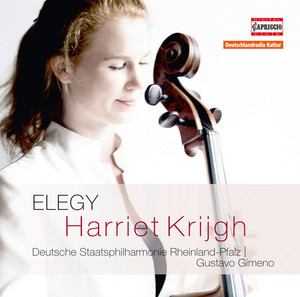 | Harmonies des bois, Op. 76: No. 2 Les larmes de Jacqueline (Version for Cello & Orchestra) | Jacques Offenbach, Harriet Krijgh, Gustavo Gimeno, Deutsche Staatsphilharmonie Rheinland-Pfalz | C Major | 0 | 8B | 70 BPM | |
 | Fauré: Pavane, Op. 50 | Gabriel Fauré, Sir Thomas Beecham, Orchestre National Radiodiffusion Française | F♯ Minor | 1 | 11A | 80 BPM | |
 | Orfeo ed Euridice, Wq. 30, Act II: Danse des champs-elysées "Mélodie" (Arr. for Piano by Ignaz Friedman) | Christoph Willibald Gluck, Joseph Banowetz | A Major | 0 | 11B | 72 BPM | |
 | Le Carnaval des Animaux, R. 125: IX. The Cuckoo in the Depths of the Forest | Camille Saint-Saëns, Seiji Ozawa, Garrick Ohlsson, John Browning, Boston Symphony Orchestra | A♭ Major | 1 | 4B | 77 BPM | |
 | Violin Concerto No. 1 in G Minor, Op. 26: II. Adagio | Max Bruch, Arabella Steinbacher, Orquestra Gulbenkian, Lawrence Foster | E♭ Major | 0 | 5B | 100 BPM | |
 | 16 Waltzes, Op. 39: Waltz in A-Flat Major, Op. 39, No. 15 | Johannes Brahms, Balazs Szokolay | A♭ Major | 1 | 4B | 139 BPM | |
 | Concerto For Claninet And Orchestra In A Major Kv622 "Adagio" | Various Artists | D Major | 0 | 10B | 81 BPM | |
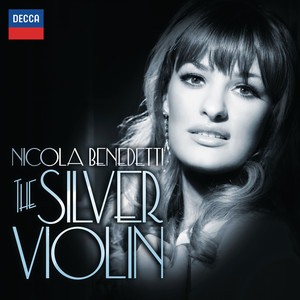 | Ladies In Lavender - Main Theme - (Ladies in Lavender) | Nigel Hess, Nicola Benedetti, Bournemouth Symphony Orchestra, Kirill Karabits | D Major | 2 | 10B | 87 BPM | |
 | Liszt: 12 Lieder von Franz Schubert, S. 558: No. 7, Frühlingsglaube | Franz Liszt, Aimi Kobayashi | A♭ Major | 0 | 4B | 68 BPM | |
 | 8 Slavonic Dances, Op. 72, B. 147: No. 2 in E Minor (Allegretto grazioso) | Antonín Dvořák, Budapest Festival Orchestra, Iván Fischer | B♭ Major | 1 | 6B | 60 BPM | |
 | Adagio for Strings and Organ in G Minor | Remo Giazotto, Stuttgart Chamber Orchestra, Karl Münchinger | C Minor | 1 | 5A | 66 BPM | |
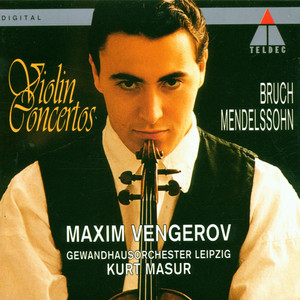 | Mendelssohn: Violin Concerto in E Minor, Op. 64, MWV O14: II. Andante | Felix Mendelssohn, Maxim Vengerov, Kurt Masur, Gewandhausorchester | C Major | 1 | 8B | 96 BPM | |
 | Violin Concerto No. 1 in G Minor, Op. 26: II. Adagio | Max Bruch, Itzhak Perlman, Bernard Haitink, Royal Concertgebouw Orchestra | E♭ Major | 1 | 5B | 87 BPM | |
 | Chanson de Matin, Op. 15 No. 2 (Version for Orchestra) | Edward Elgar, New Zealand Symphony Orchestra, James Judd | G Major | 1 | 9B | 141 BPM | |
 | Two Eligiac Melodies Last Spring | Academy of St. Martin in the Fields | G Major | 1 | 9B | 88 BPM | |
 | Orpheo ed Euridice, Wq. 30, Act II: Dance of the Blessed Spirits | Christoph Willibald Gluck, Eugene Ormandy, Philadelphia Orchestra | D Minor | 1 | 7A | 67 BPM | |
 | Albinoni: Adagio in G Minor | Tomaso Albinoni, Sir Neville Marriner, Academy of St. Martin in the Fields | C Minor | 1 | 5A | 90 BPM | |
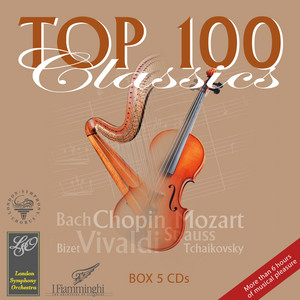 | Le Carnaval Des Animaux: XIII. The Swan | I Fiamminghi | G Major | 1 | 9B | 182 BPM | |
 | Warsaw Concerto | Richard Addinsell, Jean-Yves Thibaudet, BBC Symphony Orchestra, Hugh Wolff | B Major | 1 | 1B | 76 BPM | |
 | Second Intermezzo (After G. Bizet) | Rodion Shchedrin, Ukrainian State Symphony Orchestra, Theodore Kuchar | B Major | 1 | 1B | 122 BPM | |
 | Le carnaval des animaux, R. 125: XIII. Le Cygne | Camille Saint-Saëns, Neeme Järvi, Bergen Philharmonic Orchestra, Louis Lortie, Hélène Mercier | G Major | 0 | 9B | 92 BPM |
- ISRC
- NLA508015113
- Label
- L-M Records/RCA Records