- BPM
- 128
- Key
- F Minor
- Camelot
- 4A
Rigoletto, Act I Scene 1: It's happened! It's happened! (Marullo, Duke, Rigoletto, Ceprano, Borsa, Courtiers, Chorus) by Giuseppe Verdi, Sir Mark Elder, English National Opera Orchestra, Arthur Davies, John Rawnsley, Alan Opie, Mark Richardson, Terry Jenkins, English National Opera Chorus Song Details
Giuseppe Verdi, Sir Mark Elder, English National Opera Orchestra, Arthur Davies, John Rawnsley, Alan Opie, Mark Richardson, Terry Jenkins, English National Opera Chorus's ' "Rigoletto, Act I Scene 1: It's happened! It's happened! (Marullo, Duke, Rigoletto, Ceprano, Borsa, Courtiers, Chorus)" was released on its scheduled release date, January 1, 2000. The duration of This song is about two minutes long, specifically at 2:48. This song does not appear to have any foul language. Rigoletto, Act I Scene 1: It's happened! It's happened! (Marullo, Duke, Rigoletto, Ceprano, Borsa, Courtiers, Chorus)'s duration is considered a little bit shorter than the average duration of a typical track. This song is part of Verdi: Rigoletto by Giuseppe Verdi, Sir Mark Elder, English National Opera Orchestra, John Rawnsley, Helen Field, Arthur Davies, John Tomlinson, Jean Rigby, Norman Bailey. The song's track number on the album is #5 out of 38 tracks. Based on our data, United Kingdom was the country where this track was produced or recorded. Based on our statistics, Rigoletto, Act I Scene 1: It's happened! It's happened! (Marullo, Duke, Rigoletto, Ceprano, Borsa, Courtiers, Chorus)'s popularity is unknown right now. Since there is more of a neutral sound being played, this makes the track somewhat danceable.
BPM and Tempo
Since Rigoletto, Act I Scene 1: It's happened! It's happened! (Marullo, Duke, Rigoletto, Ceprano, Borsa, Courtiers, Chorus) by Giuseppe Verdi, Sir Mark Elder, English National Opera Orchestra, Arthur Davies, John Rawnsley, Alan Opie, Mark Richardson, Terry Jenkins, English National Opera Chorus has a tempo of 128 beats per a minute, the tempo markings of this song would be Allegro (fast, quick, and bright). With Rigoletto, Act I Scene 1: It's happened! It's happened! (Marullo, Duke, Rigoletto, Ceprano, Borsa, Courtiers, Chorus) being at 128 BPM, the half-time would be 64 BPM with a double-time of 256 BPM.In addition, we consider the tempo speed to be pretty fast for this song. This makes this song perfect for activities such as, walking. The time signature for this track is 4/4.
Music Key
This song is in the music key of F Minor. Which also means that the camelot key for this song is 4A. So, the perfect camelot match for 4A would be either 4A or 3B. While, a low energy boost can consist of either 4B or 5A. For moderate energy boost, you would use 1A and a high energy boost can either be 6A or 11A. However, if you are looking for a low energy drop, finding a song with a camelot key of 3A would be a great choice. Where 7A would give you a moderate drop, and 2A or 9A would be a high energy drop. Lastly, 7B allows you to change the mood.
Want to find the BPM and music key for other songs? Check out our BPM and Key Finder page!
- Popularity
- 0%
- Loudness
- -26.153 dB
- Acousticness
- 95%
- Danceability
- 50%
- Energy
- 13%
- Instrumentalness
- 0%
- Liveness
- 9%
- Loudness
- 56%
- Speechiness
- 6%
- Valence
- 48%
Recommendations
| Track | Artist | Key | Energy | Camelot | BPM | ||
|---|---|---|---|---|---|---|---|
 | Una voce poco fa from Il Barbiere di Siviglia, '(The) Barber of Seville' | Maria Callas, Philharmonia Orchestra, Tullio Serafin | E Major | 1 | 12B | 136 BPM | |
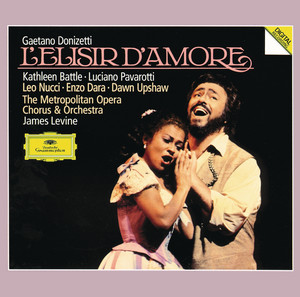 | L'elisir d'amore / Act II: "Una furtiva lagrima" | Gaetano Donizetti, Luciano Pavarotti, Metropolitan Opera Orchestra, James Levine | B♭ Minor | 1 | 3A | 87 BPM | |
 | Don Giovanni, ossia Il dissoluto punito, K.527 / Act 2: "Don Giovanni, a cenar teco m'invitasti" | Wolfgang Amadeus Mozart, Vitalij Kowaljow, Ildebrando D'Arcangelo, Luca Pisaroni, Mahler Chamber Orchestra, Yannick Nézet-Séguin, Vocalensemble Rastatt | C Minor | 2 | 5A | 99 BPM | |
 | Les Contes d'Hoffmann / Act 4: "Belle nuit, ô nuit d'amour" | Jacques Offenbach, Edita Gruberova, Claudia Eder, Orchestre National De France, Seiji Ozawa, Choeur de Radio France | D Major | 1 | 10B | 101 BPM | |
 | La traviata / Act 1: "Libiamo ne'lieti calici" (Brindisi) | Giuseppe Verdi, Carlo Bergonzi, Dame Joan Sutherland, Coro del Maggio Musicale Fiorentino, Orchestra del Maggio Musicale Fiorentino, Sir John Pritchard | B♭ Major | 2 | 6B | 138 BPM | |
 | L'elisir d'Amor: Una furtiva lagrima | Carlo Bergonzi | F Minor | 3 | 4A | 63 BPM | |
 | Carmina Burana: V. Ecce gratum | Carl Orff, Chor der Deutschen Oper Berlin, Orchester der Deutschen Oper Berlin, Eugen Jochum | B♭ Major | 4 | 6B | 139 BPM | |
 | Gianni Schicchi (O mio bambino caro) | Katia Ricciarelli | A♭ Major | 2 | 4B | 79 BPM | |
 | Die Fledermaus: Overture | Johann Strauss II, Bavarian State Orchestra, Carlos Kleiber | G Major | 1 | 9B | 100 BPM | |
 | Votre Toast, Je Peux Vous Le Rendre | Henri Meilhac, Alan Titus, Graciela Alperyn, Slovak Radio Symphony Orchestra, Slovak Philharmonic Chorus, Giorgio Lamberti, Doina Palade, Ludovic Halévy, Georges Bizet | F Major | 3 | 7B | 105 BPM | |
 | Bizet: Carmen, WD 31, Act 4: "Les voici ! Voici le quadrille !" (Chœur) | Georges Bizet, Michel Plasson, La Lauzeta, Les Éléments, Orchestre National Du Capitole De Toulouse | D♭ Minor | 2 | 12A | 93 BPM | |
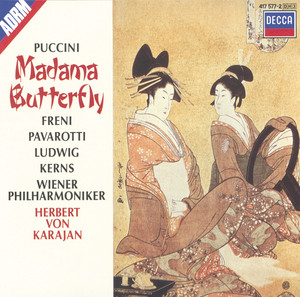 | Madama Butterfly / Act 2: "Un bel dì vedremo" | Giacomo Puccini, Mirella Freni, Wiener Philharmoniker, Herbert von Karajan | D♭ Major | 1 | 3B | 58 BPM | |
 | Carmen, Act II: Chanson bohème. Les tringles des sistres tintaient | Georges Bizet, Christine Barbaux, Agnes Baltsa, Jane Berbié, Berliner Philharmoniker, Herbert von Karajan | C Major | 1 | 8B | 106 BPM | |
 | Rinaldo / Act 2: Lascia ch'io pianga | George Frideric Handel, Cecilia Bartoli, Academy of Ancient Music, Christopher Hogwood | E Major | 1 | 12B | 176 BPM | |
 | Das Liebesverbot: Overture | Richard Wagner, Staatskapelle Dresden, Giuseppe Sinopoli | G Major | 6 | 9B | 120 BPM | |
 | Requiem: IIg. Recordare | Giuseppe Verdi, Mirella Freni, Christa Ludwig, Berliner Philharmoniker, Herbert von Karajan | F Major | 1 | 7B | 77 BPM | |
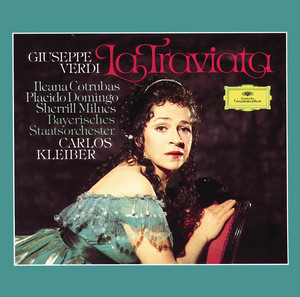 | La traviata, Act I: Follie! Follie! – Sempre libera "Cabaletta" | Giuseppe Verdi, Ileana Cotrubas, Plácido Domingo, Bavarian State Orchestra, Carlos Kleiber | A♭ Major | 1 | 4B | 117 BPM | |
 | Don Giovanni, ossia Il dissoluto punito, K.527 / Act 2: "Don Giovanni, a cenar teco m'invitasti" | Wolfgang Amadeus Mozart, Paata Burchuladze, Samuel Ramey, Ferruccio Furlanetto, Berliner Philharmoniker, Herbert von Karajan, Chor der Deutschen Oper Berlin | B♭ Major | 3 | 6B | 76 BPM | |
 | The Magic Flute, K. 620, Act II: Aria. Der Hölle Rache kocht in meinem Herzen | Wolfgang Amadeus Mozart, Wilfried Gahmlich, Anna Gonda, Hungarian Festival Chorus, Budapest Failoni Chamber Orchestra, Michael Halasz, Hellen Kwon, Lotte Leitner, Herbert Lippert, Elizabeth Norberg-Schulz, Kurt Rydl, Georg Tichy, Julia Faulkner, Waltraud Winsauer | F Major | 1 | 7B | 147 BPM | |
 | Le veau d'or - from Faust | Charles Gounod, Erwin Schrott, Daniele Rustioni | C Minor | 5 | 5A | 121 BPM | |
 | Lakmé / Act 1: Viens, Mallika, ... Dôme épais | Léo Delibes, Dame Joan Sutherland, Jane Berbié, Monte-Carlo Philharmonic Orchestra, Richard Bonynge | B Major | 1 | 1B | 84 BPM | |
 | Nessun dorma! from Turandot | Plácido Domingo | D Major | 4 | 10B | 80 BPM | |
| La Traviata / Act 1: Libiamo ne'lieti calici | Giuseppe Verdi, Ileana Cotrubas, Plácido Domingo, Chor der Bayerischen Staatsoper München, Bavarian State Orchestra, Carlos Kleiber | B♭ Major | 2 | 6B | 113 BPM | |
 | Gypsy Melodies, Op. 55: 4. Songs My Mother Taught Me (Orchestral Version) | Antonín Dvořák, Greta Bradman, Adelaide Symphony Orchestra, Luke Dollman | C Major | 2 | 8B | 189 BPM | |
 | Prokofiev: Suite No. 2 from Romeo and Juliet, Op. 64ter: I. The Montagues and Capulets (Excerpt) | Sergei Prokofiev, Philadelphia Orchestra, Riccardo Muti | A Minor | 3 | 8A | 108 BPM |
- ISRC
- GBLWD0001005
- Label
- L-M Records/RCA Records