- BPM
- 73
- Key
- D♭ Major
- Camelot
- 3B
Contrasts for Violin, Clarinet and Piano, Sz. 111: III. Sebes (Fast Dance) - Bonus Track by Béla Bartók, Pierre Génisson, Natacha Kudritskaya, Marc Bouchkov Song Details
"Contrasts for Violin, Clarinet and Piano, Sz. 111: III. Sebes (Fast Dance) - Bonus Track" by Béla Bartók, Pierre Génisson, Natacha Kudritskaya, Marc Bouchkov had its release date on January 10, 2020. Since This song is still less than 10 minute long, it is still considered a pretty long duration song compared to the average song length. This song does not appear to be explicit due to the lack of the "E" tag. There are a total of 16 in the song's album "Swing, a Benny Goodman Story (Bonus Track Version)". In this album, this song's track order is #16. Furthermore, we believe that the track originated from France. Contrasts for Violin, Clarinet and Piano, Sz. 111: III. Sebes (Fast Dance) - Bonus Track is not that popular right now. In our opinion, the overall tone is not very danceable and projects negative sounds, such as being sad, depressed, or angry.
BPM and Tempo
With Contrasts for Violin, Clarinet and Piano, Sz. 111: III. Sebes (Fast Dance) - Bonus Track by Béla Bartók, Pierre Génisson, Natacha Kudritskaya, Marc Bouchkov having a BPM of 73 with a half-time of 36 BPM and a double-time of 146 BPM, we would consider this track to have a Adagio (slowly with great expression) tempo marking. Because of this, we believe that the song has an overall slow tempo. The time signature for this track is 4/4.
Music Key
D♭ Major is the music key of this track. Or for those who are familiar with the camelot wheel, this song has a camelot key of 3B. So, the perfect camelot match for 3B would be either 3B or 4A. While, 4B can give you a low energy boost. For moderate energy boost, you would use 12B and a high energy boost can either be 5B or 10B. Though, if you want a low energy drop, you should looking for songs with either a camelot key of 3A or 2B will give you a low energy drop, 6B would be a moderate one, and 1B or 8B would be a high energy drop. Lastly, 12A allows you to change the mood.
Want to find the BPM and music key for other songs? Check out our BPM and Key Finder page!
- Popularity
- 1%
- Loudness
- -16.258 dB
- Acousticness
- 98%
- Danceability
- 36%
- Energy
- 20%
- Instrumentalness
- 50%
- Liveness
- 16%
- Loudness
- 73%
- Speechiness
- 5%
- Valence
- 11%
Recommendations
| Track | Artist | Key | Energy | Camelot | BPM | ||
|---|---|---|---|---|---|---|---|
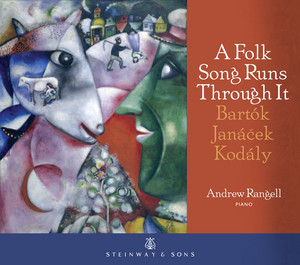 | Romanian Folk Dances, Sz 56: I. Joc cu bata - Allegro moderato | Béla Bartók, Andrew Rangell | G Major | 0 | 9B | 52 BPM | |
 | 10 Pieces for Piano, Op. 12: Prelude | Sergei Prokofiev, Lukas Geniusas | F Major | 0 | 7B | 82 BPM | |
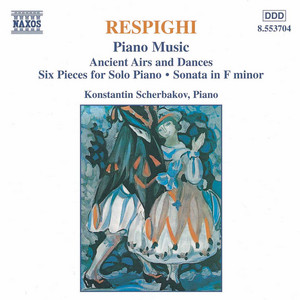 | Antiche Danze Ed Arie Per Liuto (Ancient Airs And Dances), P. 114: II. Villanella (Quadro III | Ottorino Respighi, Konstantin Scherbakov | B Minor | 0 | 10A | 136 BPM | |
 | Weinberg: Cello Concerto in C Minor, Op. 43: I. Adagio | Mieczysław Weinberg, Edgar Moreau, Andris Poga, WDR Sinfonieorchester | C Minor | 0 | 5A | 128 BPM | |
 | Piano Concerto No. 1 in C Minor, Op 33: I. Allegro | Nikolai Medtner, Geoffrey Tozer, Neeme Järvi, London Philharmonic Orchestra | G Major | 2 | 9B | 79 BPM | |
 | Lutosławski: Concerto for Orchestra: I. Intrada. Allegro maestoso | Witold Lutosławski, Daniel Barenboim, Chicago Symphony Orchestra | F♯ Minor | 1 | 11A | 128 BPM | |
 | Schluss | Fanny Mendelssohn, Heather Schmidt | E Major | 1 | 12B | 87 BPM | |
 | String Sextet in B-Flat Major, Op. 18: II. Andante, ma moderato | Johannes Brahms, Leipziger Streichquartett, Hartmut Rohde, Michael Sanderling | C Major | 1 | 8B | 178 BPM | |
 | Barcarolle No. 12, Op. 106 bis | Gabriel Fauré, Louis Lortie | E♭ Major | 0 | 5B | 107 BPM | |
 | Dances: No. 4, Sarabande | Tõnu Kõrvits, Ksenija Sidorova, Estonian Festival Orchestra, Paavo Järvi | A Major | 1 | 11B | 90 BPM | |
 | Nocturne 'Homage to John Field', Op. 33 | Samuel Barber, Ruth Slenczynska | A♭ Major | 1 | 4B | 65 BPM | |
 | Intermezzo In C Sharp Minor, Op. 117 No. 3 | Johannes Brahms, Kun-Woo Paik | C Major | 1 | 8B | 75 BPM | |
 | Cello Sonata: II. Capriccio | György Ligeti, Miklós Perényi | G Major | 2 | 9B | 132 BPM | |
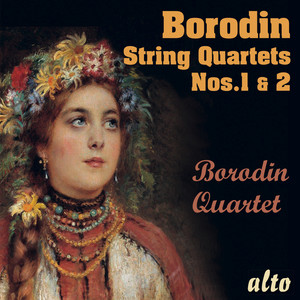 | String Quartet No.2 in D Major | Alexander Borodin, Borodin Quartet | D Major | 1 | 10B | 174 BPM | |
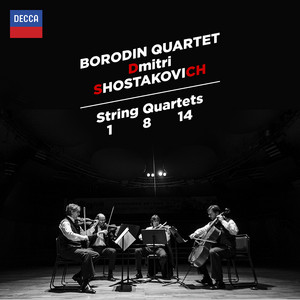 | String Quartet No. 8 in C Minor, Op. 110: I. Largo | Dmitri Shostakovich, Borodin Quartet | C Minor | 1 | 5A | 114 BPM | |
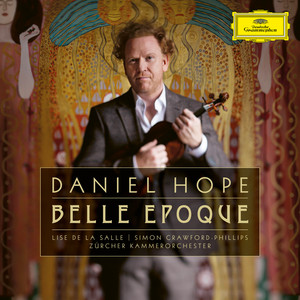 | Notturno for Strings and Harp | Arnold Schoenberg, Daniel Hope, Zürcher Kammerorchester, Jane Berthe | A♭ Major | 1 | 4B | 75 BPM | |
| 7 Piano Pieces, Op. 11: 2. Szekely lament: Rubato parlando | Zoltán Kodály, Andrew Rangell | E♭ Major | 1 | 5B | 59 BPM | |
 | Schubert: String Quartet No. 14 in D Minor, D. 810, "Death and the Maiden": II. Theme - | Franz Schubert, vision string quartet | G Minor | 0 | 6A | 131 BPM | |
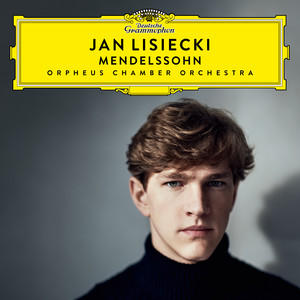 | Lieder ohne Worte, Op. 19: No. 6 in G Minor (Andante sostenuto) "Venetian Gondola Song", MWV U78 | Felix Mendelssohn, Jan Lisiecki | G Minor | 0 | 6A | 168 BPM | |
 | Four Dirges, Sz. 45, Op. 9a: 1. Adagio | Béla Bartók, Alexei Lubimov | E Major | 0 | 12B | 0 BPM | |
 | Piano Quintet in C Major, Sz. 23: II. Vivace (Scherzando) | Béla Bartók, Hansjacob Staemmler, Sophia Jaffé, Johanna Staemmler, Liisa Randalu, Peter-Philipp Staemmler | A Major | 1 | 11B | 131 BPM | |
 | Gaspard de la nuit: No. 2, Le Gibet. Très lent | Maurice Ravel, Hsiang Tu | A Major | 1 | 11B | 90 BPM | |
 | Bach, CPE: Duet for Clarinets in C Major, Wq. 142: I. Adagio e sostenuto | Carl Philipp Emanuel Bach, Sabine Meyer, Wolfgang Meyer | C Major | 0 | 8B | 74 BPM | |
 | Piano Sonata No. 1 in F Minor, Op. 6: II. (Adagio) | Alexander Scriabin, Julius Asal | B Minor | 0 | 10A | 69 BPM | |
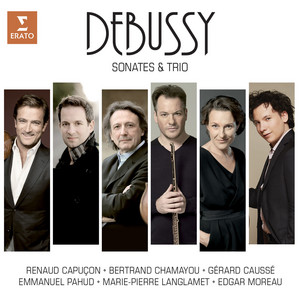 | Debussy: Syrinx, CD 137, L. 129 | Claude Debussy, Emmanuel Pahud | B Major | 0 | 1B | 165 BPM |
- ISRC
- FROV61921816
- Label
- L-M Records/RCA Records