- BPM
- 114
- Key
- C Minor
- Camelot
- 5A
Petrushka, First Scene: I. The Shrovetide Fair (Introduction) (1911 original version) by Igor Stravinsky, Valery Gergiev, Mariinsky Orchestra Song Details
Igor Stravinsky, Valery Gergiev, Mariinsky Orchestra's 'Petrushka, First Scene: I. The Shrovetide Fair (Introduction) (1911 original version)' had a release date set for October 19, 2018. With This song being less than two minutes long, at 1:25, we are fairly confident that this song is not explicit and is safe for all ages. Based on the duration of this song, this song duration is much smaller than the average song duration. There are a total of 18 in the song's album "Stravinsky: Petrushka, Jeu de cartes". In this album, this song's track order is #1. Furthermore, we believe that the track originated from Russia. In terms of popularity, Petrushka, First Scene: I. The Shrovetide Fair (Introduction) (1911 original version) is currently below average in popularity. Although the tone can be danceable to some, this track does projects more of a negative sound rather than a postive one.
BPM and Tempo
With Petrushka, First Scene: I. The Shrovetide Fair (Introduction) (1911 original version) by Igor Stravinsky, Valery Gergiev, Mariinsky Orchestra having a BPM of 114 with a half-time of 57 BPM and a double-time of 228 BPM, we would consider this track to have a Moderato (at a moderate speed) tempo marking. Because of this, we believe that the song has an overall moderate tempo. The time signature for this track is 1/4.
Music Key
This song is in the music key of C Minor. Which also means that the camelot key for this song is 5A. So, the perfect camelot match for 5A would be either 5A or 4B. While, a low energy boost can consist of either 5B or 6A. For moderate energy boost, you would use 2A and a high energy boost can either be 7A or 12A. However, if you are looking for a low energy drop, finding a song with a camelot key of 4A would be a great choice. Where 8A would give you a moderate drop, and 3A or 10A would be a high energy drop. Lastly, 8B allows you to change the mood.
Want to find the BPM and music key for other songs? Check out our BPM and Key Finder page!
- Popularity
- 30%
- Loudness
- -22.215 dB
- Acousticness
- 97%
- Danceability
- 51%
- Energy
- 8%
- Instrumentalness
- 89%
- Liveness
- 7%
- Loudness
- 63%
- Speechiness
- 4%
- Valence
- 33%
Recommendations
| Track | Artist | Key | Energy | Camelot | BPM | ||
|---|---|---|---|---|---|---|---|
 | Pictures at an Exhibition (Orch. Ravel): I. Gnomus | Modest Mussorgsky, Wiener Philharmoniker, Gustavo Dudamel | E Major | 1 | 12B | 60 BPM | |
 | Lutoslawski : Concerto for Orchestra : II Cappricio notturno e Arioso (Vivace) | Witold Lutosławski, Daniel Barenboim, Chicago Symphony Orchestra | B♭ Minor | 1 | 3A | 158 BPM | |
 | The Firebird Suite (1919 Version): Lullaby - 2017 Remastered Version | Igor Stravinsky, Leonard Bernstein, New York Philharmonic | A♭ Major | 0 | 4B | 58 BPM | |
 | Pictures at an Exhibition (Orch. Ravel): I. Gnomus | Modest Mussorgsky, London Symphony Orchestra, Claudio Abbado | B♭ Major | 1 | 6B | 0 BPM | |
 | Verklärte Nacht, Op. 4 (Version for String Orchestra): I. Grave | Arnold Schoenberg, Danish National Symphony Orchestra, Fabio Luisi | D Minor | 2 | 7A | 79 BPM | |
 | The Rite of Spring: Part Two: The Sacrifice: Ritual Action of the Ancestors | Igor Stravinsky, Teodor Currentzis, musicAeterna | G Major | 0 | 9B | 110 BPM | |
 | La Mer, L.109: 1. From Dawn Till Noon On The Sea (De l'aube à midi sur la mer) | Claude Debussy, Orchestre Symphonique de Montréal, Charles Dutoit | F♯ Major | 1 | 2B | 61 BPM | |
| The Rite of Spring: Part Two: The Sacrifice: Mystical Circles of the Young Girls | Igor Stravinsky, Teodor Currentzis, musicAeterna | D♭ Minor | 0 | 12A | 82 BPM | |
 | The Firebird (L'oiseau De Feu) - Suite (1919): 3. Variation Of The Firebird | Igor Stravinsky, Orchestre de l'Opéra National de Paris, Myung-Whun Chung | A♭ Minor | 2 | 1A | 110 BPM | |
| The Rite of Spring: Part One: Adoration of the Earth: Game of Abduction | Igor Stravinsky, Teodor Currentzis, musicAeterna | D Minor | 5 | 7A | 96 BPM | |
 | Symphonic Metamorphoses on Themes of Carl Maria von Weber: I. Allegro | Paul Hindemith, Leonard Bernstein, New York Philharmonic | D Minor | 3 | 7A | 105 BPM | |
| Pictures at an Exhibition (Orch. Ravel): IX. The Hut on Chicken's Legs | Modest Mussorgsky, Wiener Philharmoniker, Gustavo Dudamel | G Major | 2 | 9B | 166 BPM | |
 | Les biches Suite, FP 36b: IV. Andantino | Francis Poulenc, RTÉ National Symphony Orchestra, Jean-Luc Tingaud | C Major | 0 | 8B | 105 BPM | |
 | Eine Alpensinfonie, Op. 64, TrV 233: I. Nacht | Richard Strauss, Berliner Philharmoniker, Seiji Ozawa | F Major | 0 | 7B | 83 BPM | |
 | Scheherazade, Op. 35: III. Andantino quasi allegretto "The Young Prince and The Young Princess" | Nikolai Rimsky-Korsakov, New York Philharmonic, Alan Gilbert, Lawrence Rock | G Major | 1 | 9B | 97 BPM | |
 | Suk: Serenade for Strings in E-Flat Major, Op. 6: IV. Allegro giocoso ma non troppo presto | Josef Suk, Christopher Warren-Green, Andrew Shulman, Lyn Fletcher, Roger Chase, Nigel Warren-Green, London Chamber Orchestra | B♭ Major | 2 | 6B | 106 BPM | |
 | Symphonie fantastique, Op. 14: Marche au supplice (Allegro non troppo) | Hector Berlioz, Swedish Radio Symphony Orchestra, Daniel Harding | B♭ Major | 2 | 6B | 147 BPM | |
 | Copland: Symphony No. 3: I. Molto moderato, with simple expression | Aaron Copland, San Francisco Symphony, Michael Tilson Thomas | A Major | 1 | 11B | 82 BPM | |
| Scheherazade, Op. 35: II. Lento - Andantino "The Legend of the Kalendar Prince" | Nikolai Rimsky-Korsakov, New York Philharmonic, Alan Gilbert, Lawrence Rock | G Major | 1 | 9B | 59 BPM | |
 | Symphony No. 4 in G Major: II. In gemächlicher Bewegung. Ohne Hast | Gustav Mahler, Berliner Philharmoniker, Yannick Nézet-Séguin | C Major | 0 | 8B | 135 BPM | |
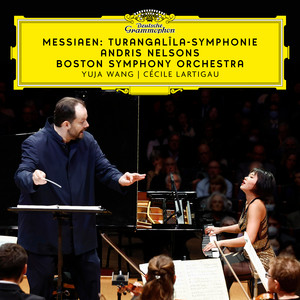 | Turangalîla-Symphonie: I. Introduction | Olivier Messiaen, Yuja Wang, Cécile Lartigau, Boston Symphony Orchestra, Andris Nelsons | B Major | 4 | 1B | 152 BPM | |
 | Schoenberg: Verklärte Nacht, Op. 4: II. Molto rallentando (1943 Version) | Arnold Schoenberg, Daniel Barenboim, Chicago Symphony Orchestra | E Major | 2 | 12B | 76 BPM | |
 | Concerto grosso no.1 (1976-77): 2. Toccata: Allegro | Alfred Schnittke, Gidon Kremer, Tatiana Grindenko, Yuri Smirnov, Chamber Orchestra of Europe, Heinrich Schiff | D Major | 5 | 10B | 134 BPM | |
 | Peer Gynt Suite No. 1, Op. 46: II. The Death of Åse - Recorded 1982 | Edvard Grieg, Berliner Philharmoniker, Herbert von Karajan | G Major | 0 | 9B | 45 BPM | |
 | Symphony No. 1 in C Minor, Op. 68: II. Andante sostenuto | Johannes Brahms, Berliner Philharmoniker, Herbert von Karajan | E Major | 1 | 12B | 85 BPM |
- ISRC
- RUA521609401
- Label
- L-M Records/RCA Records