- BPM
- 105
- Key
- F Major
- Camelot
- 7B
Prokofiev: String Quartet No. 2, Op. 92: I. Allegro sostenuto by Sergei Prokofiev, Quartetto Italiano Song Details
"Prokofiev: String Quartet No. 2, Op. 92: I. Allegro sostenuto" by Sergei Prokofiev, Quartetto Italiano had its release date on January 1, 1956. Since This song is still less than 10 minute long, it is still considered a pretty long duration song compared to the average song length. This song does not appear to be explicit due to the lack of the "E" tag. There are a total of 5 in the song's album "Prokofiev: String Quartet No. 2, Op. 92 - Malipiero: String Quartet No. 4". In this album, this song's track order is #1. Furthermore, we believe that the track originated from United Kingdom. In terms of popularity, Prokofiev: String Quartet No. 2, Op. 92: I. Allegro sostenuto is currently not that popular. In our opinion, the overall tone is not very danceable and projects negative sounds, such as being sad, depressed, or angry.
BPM and Tempo
With Prokofiev: String Quartet No. 2, Op. 92: I. Allegro sostenuto by Sergei Prokofiev, Quartetto Italiano having a BPM of 105 with a half-time of 52 BPM and a double-time of 210 BPM, we would consider this track to have a Andante (at a walking pace) tempo marking. Because of this, we believe that the song has an overall slow tempo. The time signature for this track is 4/4.
Music Key
This song has a musical key of F Major. Or for those who are familiar with the camelot wheel, this song has a camelot key of 7B. So, the perfect camelot match for 7B would be either 7B or 8A. While, 8B can give you a low energy boost. For moderate energy boost, you would use 4B and a high energy boost can either be 9B or 2B. Though, if you want a low energy drop, you should looking for songs with either a camelot key of 7A or 6B will give you a low energy drop, 10B would be a moderate one, and 5B or 12B would be a high energy drop. Lastly, 4A allows you to change the mood.
Want to find the BPM and music key for other songs? Check out our BPM and Key Finder page!
- Popularity
- 1%
- Loudness
- -15.057 dB
- Acousticness
- 94%
- Danceability
- 37%
- Energy
- 19%
- Instrumentalness
- 0%
- Liveness
- 26%
- Loudness
- 75%
- Speechiness
- 4%
- Valence
- 19%
Recommendations
| Track | Artist | Key | Energy | Camelot | BPM | ||
|---|---|---|---|---|---|---|---|
 | String Quartet No. 1 In D Major, Op. 11, TH.111: 1. Moderato e semplice | Pyotr Ilyich Tchaikovsky, Emerson String Quartet | F Minor | 1 | 4A | 78 BPM | |
 | Violin Sonata No. 2 in G Major, Op. 13: III. Allegro animato | Edvard Grieg, Frederic Chiu, Pierre Amoyal | D♭ Major | 3 | 3B | 110 BPM | |
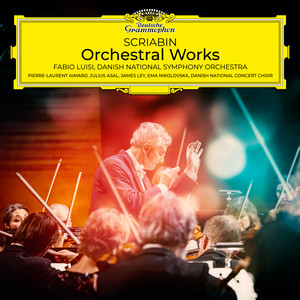 | Piano Concerto in F-Sharp Minor, Op. 20: IId. Var. 3. Adagio | Alexander Scriabin, Julius Asal, Danish National Symphony Orchestra, Fabio Luisi | B♭ Minor | 2 | 3A | 86 BPM | |
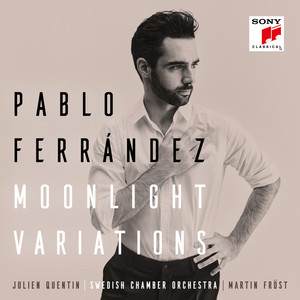 | Variations on a Rococo Theme, Op. 33: Thema - Moderato semplice | Pyotr Ilyich Tchaikovsky, Pablo Ferrandez, Martin Fröst, Swedish Chamber Orchestra | D Minor | 1 | 7A | 109 BPM | |
 | Jūra, MKČ 102: IV. Development, Storm | Mikalojus Konstantinas Čiurlionis, Lithuanian National Symphony Orchestra, Mirga Gražinytė-Tyla | A Minor | 0 | 8A | 85 BPM | |
 | Piano Trio No. 1 in D Minor, Op. 49: III. Scherzo: Leggiero e vivace | Felix Mendelssohn, Joshua Bell, Steven Isserlis, Jeremy Denk | D Major | 2 | 10B | 156 BPM | |
 | Piano Concerto for the Left Hand No. 2: III. Finale | Josef Labor, Oliver Triendl, Deutsche Staatsphilharmonie Rheinland-Pfalz, Eugene Tzigane | E♭ Major | 1 | 5B | 109 BPM | |
 | String Quartet No. 4, Op. 25, "Suite": III. Adagietto (Adagio) | Alexander von Zemlinsky, Escher String Quartet | F♯ Major | 0 | 2B | 66 BPM | |
 | Piano Trio in G Minor, Op. 17: II. Scherzo. Tempo di Menuetto | Clara Schumann, Nash Ensemble | D Major | 0 | 10B | 66 BPM | |
 | Grandes études de Paganini, S. 141: La campanella - Excerpt | Franz Liszt, Marc-André Hamelin | A♭ Major | 1 | 4B | 101 BPM | |
 | Piano Trio No. 3 in A Minor, Op. 26: I. Allegro appassionato | Édouard Lalo, Trio Wanderer | F Minor | 1 | 4A | 105 BPM | |
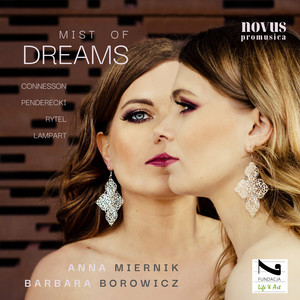 | Techno-Parade | Guillaume Connesson, Anna Miernik, Barbara Borowicz, Martyna Klupś-Radny | A♭ Minor | 2 | 1A | 138 BPM | |
 | Symphony No. 1, GMW 11: IIa. Kräftig bewegt, doch nicht zu schnel | Gustav Mahler, Tonhalle-Orchester Zürich, Paavo Järvi | B Minor | 1 | 10A | 68 BPM | |
 | String Quintet No. 2 in G Major, Op. 111: III. Un poco allegretto | Johannes Brahms, Gérard Caussé, Hagen Quartett | G Major | 1 | 9B | 97 BPM | |
 | Sonata for Piano and Violin No. 3 in G Minor, Op. Posth. 137, D. 408: II. Andante | Franz Schubert, David Grimal, Valery Afanassiev | E♭ Major | 0 | 5B | 89 BPM | |
 | Caplet: Quintet for Piano & Winds, Op. 8: II. Adagio | André Caplet, Les Vents Français | F♯ Minor | 1 | 11A | 131 BPM | |
 | Prokofiev: Cello Sonata in C Major, Op. 119: I. Andante grave - Moderato animato | Sergei Prokofiev, Mstislav Rostropovich, Sviatoslav Richter | C Major | 2 | 8B | 70 BPM | |
 | Piano Quintet in B Minor, Op. 74: II. Larghetto | Ferdinand Ries, Klavierquintett Wien | C Minor | 4 | 5A | 136 BPM | |
 | Bartók: Romanian Folk Dances, Sz. 56: No. 4, Horn Dance (Transcr. Strauss & Rizikov for Cello and Piano) | Béla Bartók, Lisa Strauss, Anastasia Rizikov | F Major | 0 | 7B | 97 BPM | |
 | Piano Quintet in F minor, Op. 34: IV. Finale (poco sostenuto - Allegro non troppo) | Johannes Brahms, Maurizio Pollini, Quartetto Italiano | F Minor | 1 | 4A | 105 BPM | |
 | Bene Feast | Estoria | F Minor | 1 | 4A | 105 BPM | |
 | Trumpet Sonata: II. Adagio molto cantabile | Karl Pilss, Carole Dawn Reinhart, Jean-Claude Vanden Eynden | F Minor | 1 | 4A | 105 BPM | |
| Bartók: Romanian Folk Dances, Sz. 56: No. 3, In One Spot (Transcr. Strauss & Rizikov for Cello and Piano) | Béla Bartók, Lisa Strauss, Anastasia Rizikov | F Major | 0 | 7B | 97 BPM | |
 | Enescu: String Octet in C Major, Op. 7: I. Très modéré | George Enescu, Quatuor Ébène, Belcea Quartet | F Minor | 1 | 4A | 105 BPM | |
| Enescu: String Octet in C Major, Op. 7: IV. Mouvement de valse bien rythmée | George Enescu, Quatuor Ébène, Belcea Quartet | F Minor | 1 | 4A | 105 BPM |
- ISRC
- GBAYC2100569
- Label
- L-M Records/RCA Records