- BPM
- 136
- Key
- B♭ Major
- Camelot
- 6B
Variations on a Theme by Haydn, Op. 56a: Variation VII: Grazioso by Johannes Brahms, London Symphony Orchestra, Eugen Jochum Song Details
"Variations on a Theme by Haydn, Op. 56a: Variation VII: Grazioso" by Johannes Brahms, London Symphony Orchestra, Eugen Jochum had its release date on January 1, 1975. The duration of This song is about two minutes long, specifically at 2:29. This song does not appear to have any foul language. Variations on a Theme by Haydn, Op. 56a: Variation VII: Grazioso's duration is considered a little bit shorter than the average duration of a typical track. The song is number 23 out of 25 in Elgar: Variations On An Original Theme, Op. 36 "Enigma" / Brahms: Variations On A Theme By Haydn, Op.56a by London Symphony Orchestra, Eugen Jochum. Going off of the ISRC code of this track, we detected that the origin of this track is from Germany. Based on our statistics, Variations on a Theme by Haydn, Op. 56a: Variation VII: Grazioso's popularity is not that popular right now. In our opinion, the overall tone is not very danceable and projects negative sounds, such as being sad, depressed, or angry.
BPM and Tempo
The tempo marking of Variations on a Theme by Haydn, Op. 56a: Variation VII: Grazioso by Johannes Brahms, London Symphony Orchestra, Eugen Jochum is Allegro (fast, quick, and bright), since this song has a tempo of 136 BPM. With that information, we can conclude that the song has a fast tempo. This song can go great with walking. The time signature for this track is 3/4.
Music Key
This song is in the music key of B♭ Major. This also means that this song has a camelot key of 6B. So, the perfect camelot match for 6B would be either 6B or 7A. While, 7B can give you a low energy boost. For moderate energy boost, you would use 3B and a high energy boost can either be 8B or 1B. Though, if you want a low energy drop, you should looking for songs with either a camelot key of 6A or 5B will give you a low energy drop, 9B would be a moderate one, and 4B or 11B would be a high energy drop. Lastly, 3A allows you to change the mood.
Want to find the BPM and music key for other songs? Check out our BPM and Key Finder page!
- Popularity
- 3%
- Loudness
- -28.664 dB
- Acousticness
- 98%
- Danceability
- 16%
- Energy
- 4%
- Instrumentalness
- 90%
- Liveness
- 15%
- Loudness
- 52%
- Speechiness
- 4%
- Valence
- 17%
Recommendations
| Track | Artist | Key | Energy | Camelot | BPM | ||
|---|---|---|---|---|---|---|---|
 | The Lark | Mikhail Glinka, Evgeny Kissin | B♭ Minor | 0 | 3A | 96 BPM | |
 | Serenade in C Major, Op. 48: III. Elegie | Pyotr Ilyich Tchaikovsky, Vienna Chamber Orchestra, Philippe Entremont | D Major | 1 | 10B | 89 BPM | |
 | Sonata in D Minor, K. 9 | Domenico Scarlatti, Ivo Pogorelich | D Minor | 0 | 7A | 94 BPM | |
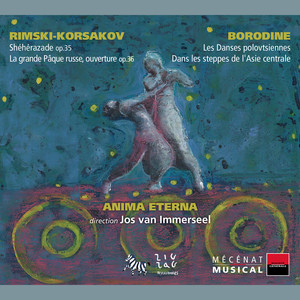 | Les danses polovtsiennes (Extraits de l'opéra Le Prince Igor): II. Danse des hommes | Alexander Borodin, Anima Eterna, Jos Van Immerseel | A Major | 0 | 11B | 87 BPM | |
 | Orchestral Suite No. 3 in D Major, BWV 1068: II. Air "on the G String" | Johann Sebastian Bach, David Bell, Berliner Philharmoniker, Herbert von Karajan | D Major | 1 | 10B | 113 BPM | |
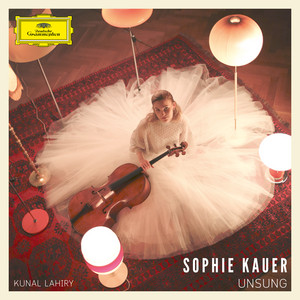 | 3 Romances, Op. 22: No. 1, Andante molto (Arr. Knoth for Cello and Piano) | Clara Schumann, Sophie Kauer, Kunal Lahiry | D♭ Major | 0 | 3B | 68 BPM | |
 | Halvorsen: Passacaglia (After Handel's Keyboard Suite, HWV 432) | Johan Halvorsen, Itzhak Perlman, Pinchas Zukerman | G Minor | 2 | 6A | 109 BPM | |
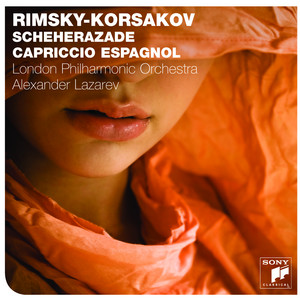 | Scheherazade: The Sea & Sinbad's Ship | Nikolai Rimsky-Korsakov, Lars Hjalmar Joakim | E Major | 1 | 12B | 82 BPM | |
 | Preghiera (Arr. by Fritz Kreisler from Piano Concerto No. 2 in C Minor, Op. 18, 2nd Movement) | Sergei Rachmaninoff, Gidon Kremer, Daniil Trifonov | C Major | 1 | 8B | 104 BPM | |
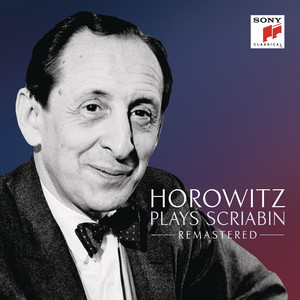 | Etude in D-Sharp Minor, Op. 8, No. 12: Patetico - Remastered | Alexander Scriabin, Vladimir Horowitz | D♭ Minor | 3 | 12A | 72 BPM | |
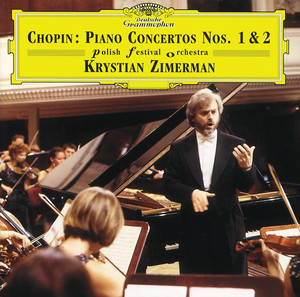 | Piano Concerto No.2 In F Minor, Op.21: 2. Larghetto | Frédéric Chopin, Krystian Zimerman, Polish Festival Orchestra | A♭ Major | 0 | 4B | 77 BPM | |
 | 2nd Movement: Largo | London Philharmonic Orchestra | D♭ Major | 0 | 3B | 74 BPM | |
 | Adagio in D Minor, BWV 974: II. Adagio | Johann Sebastian Bach, Alexandre Tharaud | D Minor | 0 | 7A | 65 BPM | |
 | 2 Pieces for the Left Hand, Op. 9: No. 2, Nocturne in D-Flat Major | Alexander Scriabin, Maria Lettberg | A♭ Major | 0 | 4B | 74 BPM | |
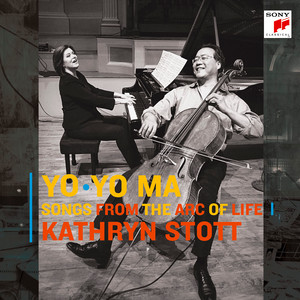 | Après un rêve, Op. 7, No. 1 | Gabriel Fauré, Yo-Yo Ma | F Minor | 0 | 4A | 115 BPM | |
 | Orfeo ed Euridice, Wq. 30: Dance of the Blessed Spirits "Melody" (Arr. Sgambati for Piano) | Christoph Willibald Gluck, Yuja Wang | D Minor | 0 | 7A | 70 BPM | |
| Serenade in C Major, Op. 48: II. Walzer | Pyotr Ilyich Tchaikovsky, Vienna Chamber Orchestra, Philippe Entremont | G Major | 2 | 9B | 180 BPM | |
 | Chopin - 6 Chants Polonais, S480/R145: No. 2. Fruhling(Wiosna, Spring) | Joseph Banowetz, Franz Liszt | G Major | 1 | 9B | 108 BPM | |
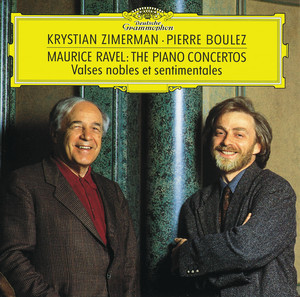 | Piano Concerto in G Major, M. 83: II. Adagio assai | Maurice Ravel, Krystian Zimerman, Cleveland Orchestra, Pierre Boulez | E Major | 0 | 12B | 74 BPM | |
 | Fauré: Pavane, Op. 50 (Instrumental Version) | Gabriel Fauré, Sir Neville Marriner, Academy of St. Martin in the Fields | F♯ Minor | 1 | 11A | 70 BPM | |
 | Wiener Blut, Op. 354 | Johann Strauss II, Vienna Volksoper Orchestra, Franz Bauer-Theussl | D Major | 2 | 10B | 93 BPM | |
 | Waltz No. 19 in A Minor, KK IVb (Version for Harp in A Flat Minor) | Frédéric Chopin, Magdalena Hoffmann | A♭ Minor | 1 | 1A | 127 BPM | |
 | Violin Concerto No. 1 in G Minor, Op. 26: I. Allegro moderato | Max Bruch, Itzhak Perlman, Bernard Haitink, Concertgebouworkest | E♭ Major | 2 | 5B | 99 BPM | |
 | Finlandia, Op. 26 | Jean Sibelius, Berliner Philharmoniker, Herbert von Karajan | A♭ Major | 3 | 4B | 67 BPM | |
 | Piano Sonata No. 12 in F Major, K. 332: II. Adagio | Wolfgang Amadeus Mozart, Maria João Pires | F Major | 0 | 7B | 73 BPM |
- ISRC
- DEF057501948
- Label
- L-M Records/RCA Records