- BPM
- 136
- Key
- B♭ Major
- Camelot
- 6B
Requiem Canticles: Libera me by Igor Stravinsky, Sally Burgess, Roderick Williams, Simon Joly Chorale, Philharmonia Orchestra, Robert Craft Song Details
"Requiem Canticles: Libera me" by Igor Stravinsky, Sally Burgess, Roderick Williams, Simon Joly Chorale, Philharmonia Orchestra, Robert Craft had its release date on April 5, 2011. With This song being less than two minutes long, at 1:15, we are fairly confident that this song is not explicit and is safe for all ages. Based on the duration of this song, this song duration is much smaller than the average song duration. There are a total of 23 in the song's album "Stravinsky: Duo Concertant". In this album, this song's track order is #16. Furthermore, we believe that the track originated from Hong Kong. Based on our statistics, Requiem Canticles: Libera me's popularity is not that popular right now. In our opinion, the overall tone is not very danceable and projects negative sounds, such as being sad, depressed, or angry.
BPM and Tempo
With Requiem Canticles: Libera me by Igor Stravinsky, Sally Burgess, Roderick Williams, Simon Joly Chorale, Philharmonia Orchestra, Robert Craft having a BPM of 136 with a half-time of 68 BPM and a double-time of 272 BPM, we would consider this track to have a Allegro (fast, quick, and bright) tempo marking. Because of this, we believe that the song has an overall fast tempo. Looking at the BPM of this song, this song might go great with walking. The time signature for this track is 5/4.
Music Key
This song is in the music key of B♭ Major. Or for those who are familiar with the camelot wheel, this song has a camelot key of 6B. So, the perfect camelot match for 6B would be either 6B or 7A. While, 7B can give you a low energy boost. For moderate energy boost, you would use 3B and a high energy boost can either be 8B or 1B. Though, if you want a low energy drop, you should looking for songs with either a camelot key of 6A or 5B will give you a low energy drop, 9B would be a moderate one, and 4B or 11B would be a high energy drop. Lastly, 3A allows you to change the mood.
Want to find the BPM and music key for other songs? Check out our BPM and Key Finder page!
- Popularity
- 8%
- Loudness
- -20.694 dB
- Acousticness
- 99%
- Danceability
- 25%
- Energy
- 27%
- Instrumentalness
- 1%
- Liveness
- 12%
- Loudness
- 66%
- Speechiness
- 4%
- Valence
- 11%
Recommendations
| Track | Artist | Key | Energy | Camelot | BPM | ||
|---|---|---|---|---|---|---|---|
 | Symphony No. 2: II. Allegro molto | Sergei Rachmaninoff, Valery Gergiev, London Symphony Orchestra | F Major | 1 | 7B | 146 BPM | |
 | Piano Concerto No. 3 in C Major, Op. 26: II. Tema con variazioni | Sergei Prokofiev, Martha Argerich, Berliner Philharmoniker, Claudio Abbado | C Major | 2 | 8B | 116 BPM | |
 | Symphony No. 1 in E Major, Op. 26: I. Lento | Alexander Scriabin, Danish National Symphony Orchestra, Fabio Luisi | B♭ Minor | 2 | 3A | 86 BPM | |
 | 6 Impromptus, Op. 5: Impromptu V | Jean Sibelius, Leif Ove Andsnes | B Minor | 0 | 10A | 72 BPM | |
 | Enigma Variations, Op. 36: Var. 9. Adagio "Nimrod" | Edward Elgar, BBC Symphony Orchestra, Leonard Bernstein | E♭ Major | 0 | 5B | 79 BPM | |
 | Symphony No. 5 in D Minor, Op. 47: IV. Allegro non troppo - 2017 Remastered Version | Dmitri Shostakovich, Leonard Bernstein, New York Philharmonic | B♭ Major | 4 | 6B | 106 BPM | |
 | Romeo and Juliet, Op. 64 - Act 1: The Fight | Sergei Prokofiev, Cleveland Orchestra, Lorin Maazel | C Major | 4 | 8B | 108 BPM | |
 | Piano Concerto in G Major, M. 83: II. Adagio assai | Maurice Ravel, Krystian Zimerman, Cleveland Orchestra, Pierre Boulez | E Major | 0 | 12B | 74 BPM | |
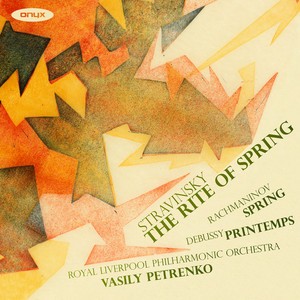 | The Rite of Spring, Part 1: I. Adoration of the Earth | Igor Stravinsky, Public Domain, Vasily Petrenko, Royal Liverpool Philharmonic Orchestra | D Major | 0 | 10B | 79 BPM | |
 | Elegy, Op. 58 | Edward Elgar, English Northern Philharmonia, David Lloyd-Jones | F Minor | 0 | 4A | 84 BPM | |
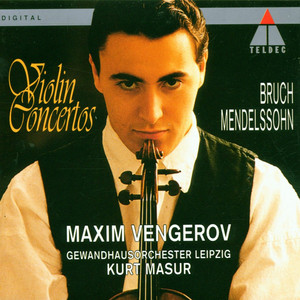 | Bruch : Violin Concerto No.1 in G minor Op.26 : III Finale - Allegro energico | Max Bruch, Maxim Vengerov, Kurt Masur, Gewandhausorchester Leipzig | G Major | 2 | 9B | 90 BPM | |
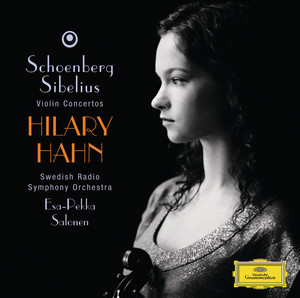 | Violin Concerto, Op. 36: I. Poco Allegro | Arnold Schoenberg, Hilary Hahn, Swedish Radio Symphony Orchestra, Esa-Pekka Salonen | A Minor | 2 | 8A | 82 BPM | |
| Romeo and Juliet, Op. 64: Introduction | Sergei Prokofiev, The Cleveland Orchestra, Lorin Maazel | E Major | 1 | 12B | 112 BPM | |
 | Symphony No. 1 in D Major: 2. Kräftig bewegt - Live | Gustav Mahler, Berliner Philharmoniker, Claudio Abbado | A Major | 1 | 11B | 96 BPM | |
 | 3 Pieces in Old Style: No. 1, Aria | Krzysztof Penderecki, Warsaw Philharmonic Chamber Orchestra, Antoni Wit | B♭ Major | 0 | 6B | 75 BPM | |
 | Piano Concerto No. 1 in C Minor, Op. 35: I. Allegro moderato | Dmitri Shostakovich, Boris Giltburg, Rhys Owens, Royal Liverpool Philharmonic Orchestra, Vasily Petrenko | A♭ Major | 3 | 4B | 142 BPM | |
 | Schoenberg: Verklärte Nacht, Op. 4: V. Adagio, molto tranquilo | Arnold Schoenberg, Daniel Barenboim, Chicago Symphony Orchestra, Charles Pikler, John Sharp, Joseph Golan, Li-Kuo Chang, Ruben Gonzalez, Stephen Balderston | E Minor | 1 | 9A | 125 BPM | |
 | Gaspard de la nuit, M. 55: I. Ondine | Maurice Ravel, Martha Argerich | D♭ Major | 0 | 3B | 72 BPM | |
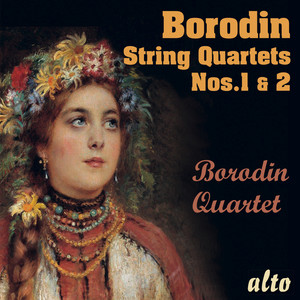 | String Quartet No.2 in D Major | Alexander Borodin, Borodin Quartet | D Major | 1 | 10B | 174 BPM | |
 | Organ Concerto in G Minor, FP 93: III. Andante moderato | Francis Poulenc, Philippe Lefebvre, Orchestre National de Lille, Jean-Claude Casadesus | D♭ Major | 0 | 3B | 79 BPM | |
 | Tristan und Isolde, Act I: Prelude | Richard Wagner, Staatskapelle Dresden, Carlos Kleiber | A Major | 1 | 11B | 82 BPM | |
| Enigma Variations, Op. 36: Var. 14. Finale. Allegro "E.D.U." | Edward Elgar, BBC Symphony Orchestra, Leonard Bernstein | G Major | 2 | 9B | 115 BPM | |
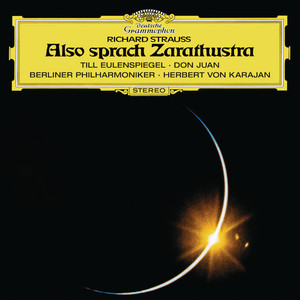 | Also sprach Zarathustra, Op. 30: II. Von den Hinterweltlern | Richard Strauss, Berliner Philharmoniker, Herbert von Karajan | A♭ Major | 0 | 4B | 78 BPM | |
 | Symphony No. 10 in E Minor, Op. 93: II. Allegro | Dmitri Shostakovich, Royal Liverpool Philharmonic Orchestra, Vasily Petrenko | B♭ Minor | 6 | 3A | 89 BPM | |
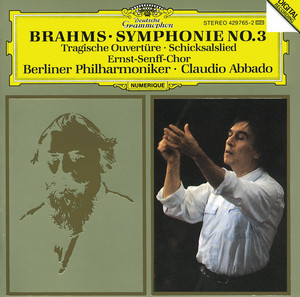 | Symphony No. 3 in F Major, Op. 90: IV. Allegro | Johannes Brahms, Berliner Philharmoniker, Claudio Abbado | C Major | 1 | 8B | 79 BPM |
- ISRC
- HKI191092916
- Label
- L-M Records/RCA Records