- BPM
- 184
- Key
- A Major
- Camelot
- 11B
Prince Igor: Polovtsian Dances: a. Introduction. Andantino by Alexander Borodin, Chicago Symphony Orchestra, Daniel Barenboim Song Details
Alexander Borodin, Chicago Symphony Orchestra, Daniel Barenboim's 'Prince Igor: Polovtsian Dances: a. Introduction. Andantino' had a release date set for 1977. The duration of This song is about two minutes long, specifically at 2:20. This song does not appear to have any foul language. Prince Igor: Polovtsian Dances: a. Introduction. Andantino's duration is considered a little bit shorter than the average duration of a typical track. The song is number 2 out of 15 in Borodin: Polovtsian Dances; Rimsky-Korsakov: Russian Easter Festival Overture & Capriccio espagnol; Mussorgsky: A Night on the Bare Mountain by Chicago Symphony Orchestra, Daniel Barenboim. Going off of the ISRC code of this track, we detected that the origin of this track is from Germany. The popularity of Prince Igor: Polovtsian Dances: a. Introduction. Andantino is currently not that popular right now. In our opinion, the overall tone is not very danceable and projects negative sounds, such as being sad, depressed, or angry.
BPM and Tempo
The tempo marking of Prince Igor: Polovtsian Dances: a. Introduction. Andantino by Alexander Borodin, Chicago Symphony Orchestra, Daniel Barenboim is Presto (very, very fast), since this song has a tempo of 184 BPM. With that information, we can conclude that the song has a fast tempo. The time signature for this track is 3/4.
Music Key
A Major is the music key of this track. This also means that this song has a camelot key of 11B. So, the perfect camelot match for 11B would be either 11B or 12A. While, 12B can give you a low energy boost. For moderate energy boost, you would use 8B and a high energy boost can either be 1B or 6B. Though, if you want a low energy drop, you should looking for songs with either a camelot key of 11A or 10B will give you a low energy drop, 2B would be a moderate one, and 9B or 4B would be a high energy drop. Lastly, 8A allows you to change the mood.
Want to find the BPM and music key for other songs? Check out our BPM and Key Finder page!
- Popularity
- 13%
- Loudness
- -11.516 dB
- Acousticness
- 75%
- Danceability
- 29%
- Energy
- 36%
- Instrumentalness
- 8%
- Liveness
- 16%
- Loudness
- 81%
- Speechiness
- 5%
- Valence
- 24%
Recommendations
| Track | Artist | Key | Energy | Camelot | BPM | ||
|---|---|---|---|---|---|---|---|
 | L'Arlésienne Suite No. 1, Op. 23bis, WD 40: IV. Carillon | Georges Bizet, Orquestra Simfònica de Barcelona i Nacional de Catalunya, Pablo González | A♭ Major | 10 | 4B | 136 BPM | |
 | Symphony No. 5 in A Minor, Op. 90 "Sinfonia brevis": III. Intermezzo | Erkki Melartin, Turku Philharmonic Orchestra, Ari Rasilainen | E Minor | 2 | 9A | 134 BPM | |
 | Sibelius: Symphony No. 2 in D Major, Op. 43: I. Allegretto | Jean Sibelius, Herbert von Karajan, Philharmonia Orchestra | E Minor | 0 | 9A | 124 BPM | |
 | Piano Quintet in C Minor: I. Andante | Alexander Borodin, Ilona Prunyi, New Budapest Quartet | C Minor | 1 | 5A | 68 BPM | |
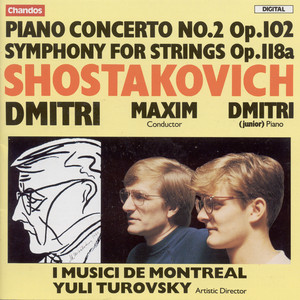 | Piano Concerto No. 2 in F Major, Op. 102: I. Allegro | Dmitri Shostakovich, I Musici de Montréal, Maxim Shostakovich | B♭ Major | 3 | 6B | 160 BPM | |
 | Othello Suite: IV. Venice (Nocturne) | Aram Khachaturian, Slovak Radio Symphony Orchestra, Adriano | B♭ Major | 4 | 6B | 124 BPM | |
 | Melody in F, Op.3, No.1 - Arr. G. Saborow | Anton Rubinstein, Irina Saizewa, Violin Ensemble of the Bolshoi Theatre, Moscow, Julij Rejentowitsch | F Major | 2 | 7B | 85 BPM | |
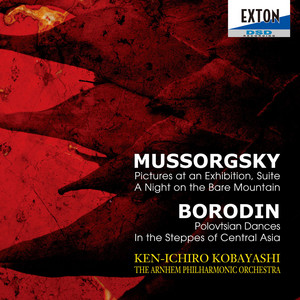 | ダッタン人の踊り (歌劇 イーゴリ公より) 6 娘たちの流麗な踊り | Alexander Borodin, Ken-Ichiro Kobayashi, Arnhem Philharmonic Orchestra | F♯ Minor | 4 | 11A | 79 BPM | |
 | Gli uccelli (The Birds), P. 154: V. Il cucu. Allegro | Ottorino Respighi, Chamber Orchestra of New York, Salvatore Di Vittorio | A Major | 1 | 11B | 181 BPM | |
 | Fantasía Morisca: Serenata (Allegro Moderato) (Chapí) | Orquesta "Ciudad de Granada" & Juan de Udaeta | B Minor | 1 | 10A | 100 BPM | |
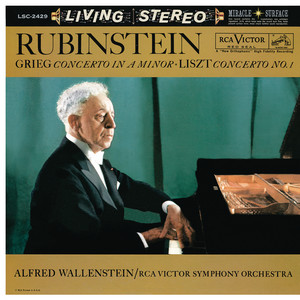 | Piano Concerto in A Minor, Op. 16: III. Allegro moderato molto e marcato - Remastered | Edvard Grieg, Arthur Rubinstein, Alfred Wallenstein, RCA Victor Symphony Orchestra | F Major | 1 | 7B | 119 BPM | |
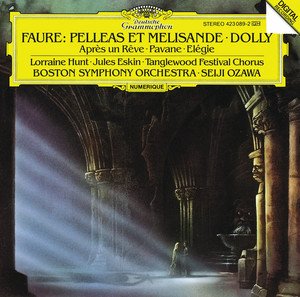 | Pelléas et Mélisande, Op.80: 2. Fileuse. Andantino quasi Allegretto | Gabriel Fauré, Boston Symphony Orchestra, Seiji Ozawa | G Major | 1 | 9B | 88 BPM | |
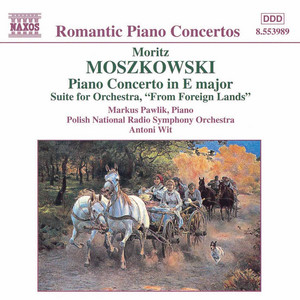 | Aus aller Herren Landern (From Foreign Lands), Op. 23: III. German: Andante | Moritz Moszkowski, Markus Pawlik, Polish National Radio Symphony Orchestra, Antoni Wit | F Major | 0 | 7B | 58 BPM | |
 | Suite No. 1, P. 109: I. Balletto Detto 'Il Conte Orlando': Allegretto Moderato | Ottorino Respighi, RTÉ National Symphony Orchestra | D Major | 0 | 10B | 127 BPM | |
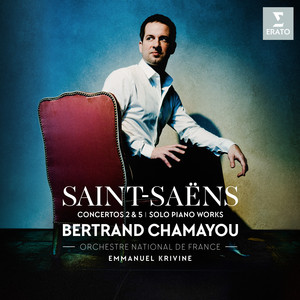 | Saint-Saëns: Piano Concerto No. 2 in G Minor, Op. 22: III. Presto | Camille Saint-Saëns, Bertrand Chamayou, Emmanuel Krivine, Orchestre National De France | C Minor | 4 | 5A | 110 BPM | |
 | Raymonda, Act I: Scene Mimique, Pt. 2 | Alexander Glazunov, Kivov Orchestra, Viktor Fedotov | C Major | 0 | 8B | 75 BPM | |
 | La Bayadere, Act III: 49. "Apotheosis, Pt. 2” | Evergreen Symphony Orchestra, Kevin Galiè | A Major | 0 | 11B | 58 BPM | |
 | Masquerade Suite: Gallop | Aram Khachaturian, St. Petersburg State Symphony Orchestra, Andre Anichanov | G Major | 1 | 9B | 104 BPM | |
 | Violin Concerto No. 3 in B Minor, Op. 61: I. Allegro non troppo | Camille Saint-Saëns, Itzhak Perlman, Orchestre de Paris, Daniel Barenboim | A Minor | 2 | 8A | 113 BPM | |
 | II. Contredanse | Dmitri Shostakovich, Ukraine National Symphony Orchestra, Theodore Kuchar | G Major | 0 | 9B | 63 BPM | |
 | Soirées musicales, Op. 9: II. Canzonetta | Benjamin Britten, Helsingborg Symphony Orchestra, Okko Kamu | C Major | 1 | 8B | 94 BPM | |
 | The Phantom Melody | Albert Ketèlbey, Slovak Radio Symphony Orchestra, Adrian Leaper | E♭ Major | 0 | 5B | 91 BPM | |
 | Serenade in E Minor, Op. 20: I. Allegro piacevole | Edward Elgar, Wales Camerata, Owain Arwel Hughes | E Minor | 0 | 9A | 76 BPM | |
 | Serenade for Strings in E-Flat Major, Op. 6: I. Andante con moto | Josef Suk, Alexej Svjatlovskij, Igor Makarow, Sergej Belesow, European New Philharmonic Orchestra, Volker Hartung | B♭ Major | 1 | 6B | 109 BPM | |
| Raymonda, Act I: Scene 1. 1er Tableau (Lento maestoso) | Alexander Glazunov, Kivov Orchestra, Viktor Fedotov | E♭ Major | 1 | 5B | 81 BPM |
- ISRC
- DEF057702032
- Label
- L-M Records/RCA Records