- BPM
- 140
- Key
- D♭ Major
- Camelot
- 3B
Nabucco: Act III - "Va pensiero, sull'ali dorata" by Berlin State Opera Chorus, Staatskapelle Berlin, Otmar Suitner Song Details
"Nabucco: Act III - "Va pensiero, sull'ali dorata"" by Berlin State Opera Chorus, Staatskapelle Berlin, Otmar Suitner had its release date on 1978. With this song being around four minutes long, at 4:21, the duration of this song is pretty average compared to other songs. This track is safe for children and doesn't appear to contain any foul language, since the "Explicit" tag was not present in this track. The song is number 16 out of 16 in Famous Opera Choruses by Various Artists. Going off of the ISRC code of this track, we detected that the origin of this track is from Germany. Based on our statistics, Nabucco: Act III - "Va pensiero, sull'ali dorata"'s popularity is below average in popularity right now. In our opinion, the overall tone is not very danceable and projects negative sounds, such as being sad, depressed, or angry.
BPM and Tempo
The tempo marking of Nabucco: Act III - "Va pensiero, sull'ali dorata" by Berlin State Opera Chorus, Staatskapelle Berlin, Otmar Suitner is Allegro (fast, quick, and bright), since this song has a tempo of 140 BPM. With that information, we can conclude that the song has a fast tempo. This song can go great with jogging or cycling. The time signature for this track is 3/4.
Music Key
D♭ Major is the music key of this track. This also means that this song has a camelot key of 3B. So, the perfect camelot match for 3B would be either 3B or 4A. While, 4B can give you a low energy boost. For moderate energy boost, you would use 12B and a high energy boost can either be 5B or 10B. Though, if you want a low energy drop, you should looking for songs with either a camelot key of 3A or 2B will give you a low energy drop, 6B would be a moderate one, and 1B or 8B would be a high energy drop. Lastly, 12A allows you to change the mood.
Want to find the BPM and music key for other songs? Check out our BPM and Key Finder page!
- Popularity
- 25%
- Loudness
- -18.595 dB
- Acousticness
- 99%
- Danceability
- 19%
- Energy
- 8%
- Instrumentalness
- 34%
- Liveness
- 35%
- Loudness
- 69%
- Speechiness
- 4%
- Valence
- 5%
Recommendations
| Track | Artist | Key | Energy | Camelot | BPM | ||
|---|---|---|---|---|---|---|---|
 | Peer Gynt: Solvejg's Song | Jeffrey Tate, Sylvia McNair, Berliner Philharmoniker | D Major | 2 | 10B | 85 BPM | |
 | Trumpet Concerto in E-Flat Major, Hob. VIIe:1: III. Finale. Allegro | Joseph Haydn, Simon Höfele, BBC Scottish Symphony Orchestra, Duncan Ward | E♭ Major | 2 | 5B | 146 BPM | |
 | Le carnaval des animaux, R. 125: Le cygne | Camille Saint-Saëns, Mischa Maisky, Orpheus Chamber Orchestra | C Major | 0 | 8B | 83 BPM | |
 | Nabucco: Va, pensiero, "Chorus of Hebrew Slaves" | Giuseppe Verdi, Slovak Philharmonic Chorus, Slovak Radio Symphony Orchestra, Oliver von Dohnanyi | D♭ Major | 0 | 3B | 71 BPM | |
![Les pêcheurs de perles (the Pearl Fishers), Les pecheurs de perles [the Pearl Fishers], Act I: Je crois entendre encore, cache sous les palmiers by Georges Bizet, Michael Spyres, Moscow Chamber Orchestra, Constantine Orbelian](https://i.scdn.co/image/ab67616d00001e025f29f002fa166c91866a8ff2) | Les pêcheurs de perles (the Pearl Fishers), Les pecheurs de perles [the Pearl Fishers], Act I: Je crois entendre encore, cache sous les palmiers | Georges Bizet, Michael Spyres, Moscow Chamber Orchestra, Constantine Orbelian | D Minor | 1 | 7A | 102 BPM | |
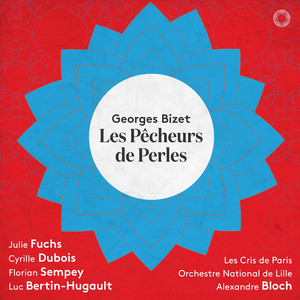 | Les Pêcheurs de perles, WD 13, Act I: Je crois entendre encore | Georges Bizet, Alexandre Bloch, Orchestre National de Lille, Cyrille Dubois | C Major | 0 | 8B | 90 BPM | |
 | La traviata, Act I: Libiamo ne' lieti calici | Giuseppe Verdi, Alfredo Kraus, Ambrosian Opera Chorus, John McCarthy, Philharmonia Orchestra, Renata Scotto, Riccardo Muti | D♭ Major | 2 | 3B | 138 BPM | |
 | Symphony No. 2 in C Major, Op. 61: III. Adagio espressivo | Robert Schumann, Staatskapelle Berlin, Daniel Barenboim | E Major | 2 | 12B | 136 BPM | |
 | Don Giovanni, ossia Il dissoluto punito, K.527 / Act 2: "Don Giovanni, a cenar teco m'invitasti" | Wolfgang Amadeus Mozart, Vitalij Kowaljow, Ildebrando D'Arcangelo, Luca Pisaroni, Mahler Chamber Orchestra, Yannick Nézet-Séguin, Vocalensemble Rastatt | C Minor | 2 | 5A | 99 BPM | |
 | Wagner: Tannhäuser: Overture | Richard Wagner, Daniel Barenboim, Staatskapelle Berlin | E Major | 1 | 12B | 80 BPM | |
 | Hänsel und Gretel: Act II - "Pantomime" | Engelbert Humperdinck, Staatskapelle Dresden, Otmar Suitner, Dresdner Kreuzchor | C Major | 4 | 8B | 84 BPM | |
 | La Bohème / Act 1: "O soave fanciulla" | Giacomo Puccini, Luciano Pavarotti, Mirella Freni, Berliner Philharmoniker, Herbert von Karajan | G Major | 2 | 9B | 83 BPM | |
 | Donna Diana: Overture | Emil Nikolaus von Reznicek, Leonard Bernstein, New York Philharmonic | A Major | 5 | 11B | 102 BPM | |
 | Bajazzo: Andiam: din, don suona vespero | Chor der Deutschen Oper Berlin, Orchester der Deutschen Oper Berlin, Rafael Frühbeck de Burgos | C Major | 2 | 8B | 132 BPM | |
 | Nabucco: va pensiero | Franck Pourcel | F♯ Major | 3 | 2B | 145 BPM | |
 | Viktoria! Der Meister soll leben! | Berliner Philharmoniker, Chor der Deutschen Oper Berlin | D Major | 4 | 10B | 134 BPM | |
 | Hansel und Gretel: Act III Scene 4: Erlost, befreit, fur alle Zeit! | Engelbert Humperdinck, Theo Adam, Staatskapelle Dresden, Otmar Suitner, Ingeborg Springer, Renate Hoff | F Major | 3 | 7B | 94 BPM | |
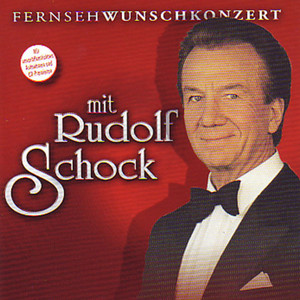 | Dein ist mein ganzes Herz | Rudolf Schock | D♭ Major | 3 | 3B | 46 BPM | |
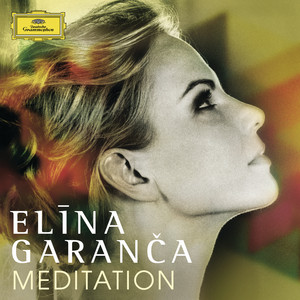 | Agnus Dei | Georges Bizet, Elina Garanca, Deutsche Radio Philharmonie Saarbrücken, Karel Mark Chichon | E♭ Major | 1 | 5B | 90 BPM | |
 | Les soirées musicales: La danza (Già la luna è in mezzo al mare) | Gioachino Rossini, Rolando Villazón, Orchestra del Maggio Musicale Fiorentino, Marco Armiliato | F Major | 4 | 7B | 69 BPM | |
 | Bizet: Carmen: No. 1 Prélude | Georges Bizet, Michel Plasson, Orchestre National Du Capitole De Toulouse, Wolff | D Minor | 3 | 7A | 129 BPM | |
| Hänsel und Gretel: Act I - "Drüben hinter'm Herrenwald" | Engelbert Humperdinck, Staatskapelle Dresden, Otmar Suitner, Dresdner Kreuzchor | B Major | 5 | 1B | 89 BPM | |
 | Ave verum corpus, K. 618 | Wolfgang Amadeus Mozart, MDR Leipzig Radio Chorus, Staatskapelle Dresden, Peter Schreier | D Major | 0 | 10B | 84 BPM | |
 | Hebrew Slaves Chorus from Nabucco | The London Symphony Orchestra - The London Symphony Chorus | D♭ Major | 0 | 3B | 69 BPM | |
 | Slave Choir "Nabucco" | Il Novecento Orchestra | D♭ Major | 2 | 3B | 107 BPM |
- ISRC
- DES380004526
- Label
- L-M Records/RCA Records