- BPM
- 81
- Key
- A Minor
- Camelot
- 8A
Pictures at an Exhibition: Promenade by Modest Mussorgsky, Positive Thinking Unlimited Song Details
Modest Mussorgsky, Positive Thinking Unlimited's 'Pictures at an Exhibition: Promenade' had a release date set for July 3, 2013. The duration of This song is about two minutes long, specifically at 2:09. This song does not appear to have any foul language. Pictures at an Exhibition: Promenade's duration is considered a little bit shorter than the average duration of a typical track. There are a total of 21 in the song's album "Positive Thinking With Classics & Good Morning Piano Songs". In this album, this song's track order is #20. Furthermore, we believe that the track originated from Italy. Pictures at an Exhibition: Promenade is unknown right now. Although the tone can be danceable to some, this track does projects more of a negative sound rather than a postive one.
BPM and Tempo
With Pictures at an Exhibition: Promenade by Modest Mussorgsky, Positive Thinking Unlimited having a BPM of 81 with a half-time of 40 BPM and a double-time of 162 BPM, we would consider this track to have a Andante (at a walking pace) tempo marking. Because of this, we believe that the song has an overall slow tempo. The time signature for this track is 4/4.
Music Key
This song is in the music key of A Minor. Which also means that the camelot key for this song is 8A. So, the perfect camelot match for 8A would be either 8A or 7B. While, a low energy boost can consist of either 8B or 9A. For moderate energy boost, you would use 5A and a high energy boost can either be 10A or 3A. However, if you are looking for a low energy drop, finding a song with a camelot key of 7A would be a great choice. Where 11A would give you a moderate drop, and 6A or 1A would be a high energy drop. Lastly, 11B allows you to change the mood.
Want to find the BPM and music key for other songs? Check out our BPM and Key Finder page!
- Popularity
- 0%
- Loudness
- -13.967 dB
- Acousticness
- 99%
- Danceability
- 50%
- Energy
- 22%
- Instrumentalness
- 93%
- Liveness
- 10%
- Loudness
- 77%
- Speechiness
- 3%
- Valence
- 36%
Recommendations
| Track | Artist | Key | Energy | Camelot | BPM | ||
|---|---|---|---|---|---|---|---|
 | Symphony No. 8 in C Minor, WAB 108: I. Allegro moderato | Anton Bruckner, Wiener Philharmoniker, Pierre Boulez | B♭ Minor | 1 | 3A | 110 BPM | |
 | Scheherazade: Calm at Sea | Nikolai Rimsky-Korsakov, Lars Hjalmar Joakim | E Major | 2 | 12B | 84 BPM | |
 | Die Fledermaus: Overture | Johann Strauss II, Bavarian State Orchestra, Carlos Kleiber | G Major | 1 | 9B | 100 BPM | |
 | Hungarian Dance No. 1 in G Minor, WoO 1/1. Allegro molto (Orch. by Brahms) | Johannes Brahms, Chicago Symphony Orchestra, Daniel Barenboim | G Minor | 2 | 6A | 65 BPM | |
 | Symphony No. 2: 2. Allegro risoluto | Aram Khachaturian, Wiener Philharmoniker | A♭ Major | 3 | 4B | 101 BPM | |
 | Symphonie fantastique, H. 48: II. Un bal. Valse | Hector Berlioz, Orchestre de Paris, Klaus Mäkelä | A Major | 1 | 11B | 100 BPM | |
 | Nocturnes, CD 98: II. Fêtes | Claude Debussy, Berliner Philharmoniker, Claudio Abbado | A Major | 2 | 11B | 79 BPM | |
 | Má vlast, JB 1:112: II. Vltava "The Moldau" | Bedřich Smetana, Chicago Symphony Orchestra, Daniel Barenboim | G Major | 1 | 9B | 142 BPM | |
 | Shéhérazade, Op. 35: I. The Sea and Sinbad's Ship | Nikolai Rimsky-Korsakov, Sergej Galaktionov, Gianandrea Noseda, Filarmonica Teatro Regio Torino | E Major | 1 | 12B | 136 BPM | |
 | Symphony No. 5: IV. Adagietto. Sehr langsam | Gustav Mahler, Berliner Philharmoniker, Claudio Abbado | F Major | 0 | 7B | 91 BPM | |
 | Die Meistersinger von Nürnberg, WWV 96: Prelude | Richard Wagner, Wiener Philharmoniker, Sir Georg Solti | C Major | 4 | 8B | 99 BPM | |
 | Andante Festivo | Jean Sibelius, Gothenburg Symphony Orchestra, Neeme Järvi | G Major | 1 | 9B | 86 BPM | |
 | Symphony No. 7 in E Major, WAB 107 (Ed. Haas): III. Scherzo. Sehr schnell - Trio. Etwas langsamer | Anton Bruckner, Wiener Philharmoniker, Herbert von Karajan | F Major | 2 | 7B | 74 BPM | |
 | Symphonie fantastique, Op. 14: Marche au supplice (Allegro non troppo) | Hector Berlioz, Swedish Radio Symphony Orchestra, Daniel Harding | B♭ Major | 2 | 6B | 147 BPM | |
 | Piano Concerto No. 1 in C Minor, Op. 35: II. Lento | Dmitri Shostakovich, André Previn, William Vacchiano, New York Philharmonic, Leonard Bernstein | D Minor | 3 | 7A | 113 BPM | |
 | Japanese Suite, Op. 33, H. 126: II. Ceremonial Dance | Gustav Holst, Ulster Orchestra, Joann Falletta | C Minor | 3 | 5A | 103 BPM | |
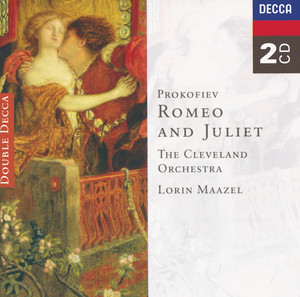 | Romeo and Juliet, Op. 64: Introduction | Sergei Prokofiev, The Cleveland Orchestra, Lorin Maazel | E Major | 1 | 12B | 112 BPM | |
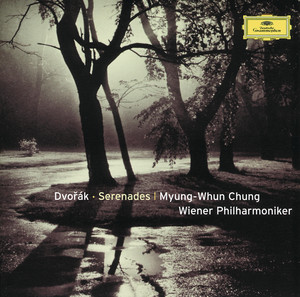 | Serenade for Strings in E Major, Op. 22, B. 52: V. Finale (Allegro vivace) | Antonín Dvořák, Wiener Philharmoniker, Myung-Whun Chung | E Major | 1 | 12B | 84 BPM | |
 | Symphony No. 2 in B Minor: III. Andante | Alexander Borodin, Gennady Rozhdestvensky, Royal Stockholm Philharmonic Orchestra | D♭ Major | 0 | 3B | 68 BPM | |
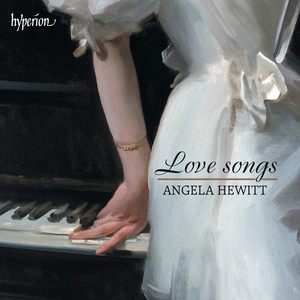 | Morgen, Op. 27 No. 4 (Arr. Reger for Piano) | Richard Strauss, Angela Hewitt | A Major | 2 | 11B | 143 BPM | |
 | Boris Godunov | Modest Mussorgsky, Choir of the Bolshoi Theater, Alexandr Ognivcev, Orchestra of The Bolshoi Theater, Vladimir Atlantov, Mark Ermler, Yevgeny Nesterenko, Yelena Obratsova, Yuri Mazurok | C Major | 2 | 8B | 80 BPM | |
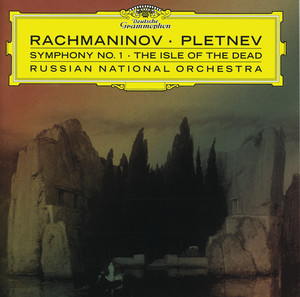 | Symphony No. 1 in D Minor, Op. 13: II. Allegro animato | Sergei Rachmaninoff, Russian National Orchestra, Mikhail Pletnev | F Major | 0 | 7B | 94 BPM | |
 | Piano Concerto No. 23 in A Major, K. 488: II. Adagio | Wolfgang Amadeus Mozart, Vladimir Horowitz, Orchestra Del Teatro Alla Scala, Milano, Carlo Maria Giulini | F♯ Minor | 0 | 11A | 108 BPM | |
 | Tristan und Isolde, Act III: Liebestod (Concert Version) | Richard Wagner, Berliner Philharmoniker, Herbert von Karajan | B Major | 2 | 1B | 94 BPM | |
 | Symphony No. 8 in G Minor, Op. 88, B. 163: III. Allegretto grazioso - Molto vivace | Antonín Dvořák, London Symphony Orchestra, Sir Colin Davis | G Major | 1 | 9B | 130 BPM |
- ISRC
- ITO101301740
- Label
- L-M Records/RCA Records