- BPM
- 68
- Key
- F Major
- Camelot
- 7B
String Quartet In F Major, M.35: 1. Allegro moderato. Très doux by Maurice Ravel, Carmirelli Quartet Song Details
Maurice Ravel, Carmirelli Quartet's 'String Quartet In F Major, M.35: 1. Allegro moderato. Très doux' had a release date set for January 1, 2006. Since This song is still less than 10 minute long, it is still considered a pretty long duration song compared to the average song length. This song does not appear to be explicit due to the lack of the "E" tag. There are a total of 9 in the song's album "Ravel: Piano Trio; Introduction & Allegro; String Quartet". In this album, this song's track order is #6. Furthermore, we believe that the track originated from United Kingdom. String Quartet In F Major, M.35: 1. Allegro moderato. Très doux is not that popular right now. In our opinion, the overall tone is not very danceable and projects negative sounds, such as being sad, depressed, or angry.
BPM and Tempo
With String Quartet In F Major, M.35: 1. Allegro moderato. Très doux by Maurice Ravel, Carmirelli Quartet having a BPM of 68 with a half-time of 34 BPM and a double-time of 136 BPM, we would consider this track to have a Adagio (slowly with great expression) tempo marking. Because of this, we believe that the song has an overall slow tempo. The time signature for this track is 4/4.
Music Key
This song is in the music key of F Major. Or for those who are familiar with the camelot wheel, this song has a camelot key of 7B. So, the perfect camelot match for 7B would be either 7B or 8A. While, 8B can give you a low energy boost. For moderate energy boost, you would use 4B and a high energy boost can either be 9B or 2B. Though, if you want a low energy drop, you should looking for songs with either a camelot key of 7A or 6B will give you a low energy drop, 10B would be a moderate one, and 5B or 12B would be a high energy drop. Lastly, 4A allows you to change the mood.
Want to find the BPM and music key for other songs? Check out our BPM and Key Finder page!
- Popularity
- 3%
- Loudness
- -17.782 dB
- Acousticness
- 94%
- Danceability
- 24%
- Energy
- 18%
- Instrumentalness
- 42%
- Liveness
- 10%
- Loudness
- 70%
- Speechiness
- 5%
- Valence
- 24%
Recommendations
| Track | Artist | Key | Energy | Camelot | BPM | ||
|---|---|---|---|---|---|---|---|
 | 6 Album Leaves, Op. 2, JB 1:51: No. 2 in A Minor, Chanson. Moderato | Bedřich Smetana, Jitka Čechová | A Minor | 0 | 8A | 66 BPM | |
 | Rêverie, L. 68 | Claude Debussy, François-Joël Thiollier | F Major | 0 | 7B | 69 BPM | |
 | Petite Suite: Nocturne | Alexander Borodin, Alexander Krichel | E Minor | 1 | 9A | 66 BPM | |
 | Come, Sweet Death, BWV 478 (Arr. for 5 Cellos) | Sheku Kanneh-Mason, Hannah Roberts, Ben Davies, Desmond Neysmith, Max Ruisi | C Major | 0 | 8B | 122 BPM | |
 | Souvenir d'un lieu cher, Op. 42: III. Mélodie (Ed. Herrmann) | Pyotr Ilyich Tchaikovsky, Daniel Lozakovich, Stanislav Soloviev | E♭ Major | 1 | 5B | 178 BPM | |
 | 5 Pieces, Op. 75, "The Trees": No. 3 Aspen | Jean Sibelius, Håvard Gimse | A♭ Minor | 0 | 1A | 0 BPM | |
 | 2 Aquarelles: Lento, ma non troppo | Frederick Delius, Royal Northern Sinfonia, David Lloyd-Jones | F Major | 0 | 7B | 71 BPM | |
 | Waltz in C-sharp minor, Op. 64 No. 2 | Frédéric Chopin, Khatia Buniatishvili | D♭ Minor | 0 | 12A | 96 BPM | |
 | Symphony No. 5 In C Sharp Minor: 4. Adagietto (Sehr langsam) | Gustav Mahler, Gyeonggi Philharmonic Orchestra, Shi-Yeon Sung | F Major | 0 | 7B | 82 BPM | |
 | Lyric Pieces Book I, Op. 12: No. 1 Arietta | Edvard Grieg, Emil Gilels | E♭ Major | 0 | 5B | 130 BPM | |
 | Lyric Pieces, Book 9, Op. 68: Badnlat (Cradle Song) | Edvard Grieg, Einar Steen-Nøkleberg | B♭ Major | 0 | 6B | 72 BPM | |
 | 6 Pezzi, P. 44: No. 4. Minuetto | Ottorino Respighi, Konstantin Scherbakov | G Major | 0 | 9B | 132 BPM | |
 | Pièces brèves, Op. 84: V. Improvisation in C-Sharp Minor | Gabriel Fauré, Kun-Woo Paik | D♭ Major | 0 | 3B | 74 BPM | |
 | Mélancolie, FP 105 | Francis Poulenc, Stephen Hough | E♭ Major | 2 | 5B | 104 BPM | |
 | Schluss | Fanny Mendelssohn, Heather Schmidt | E Major | 1 | 12B | 87 BPM | |
 | Ravel: Jeux d'eau, M. 30 | Maurice Ravel, Bertrand Chamayou | F♯ Minor | 1 | 11A | 97 BPM | |
| Ravel: Sonatine, M. 40: I. Modéré | Maurice Ravel, Bertrand Chamayou | F♯ Minor | 1 | 11A | 67 BPM | |
![Spartacus, Act III: Adagio of Spartacus and Phrygia (arr. Y. Grigorovich) [1968 Bolshoi Version] by Aram Khachaturian, RIAS Kammerchor, Deutsches Symphonie-Orchester Berlin, Michail Jurowski](https://i.scdn.co/image/ab67616d00001e02c21d253eed4ccdd547b4b94d) | Spartacus, Act III: Adagio of Spartacus and Phrygia (arr. Y. Grigorovich) [1968 Bolshoi Version] | Aram Khachaturian, RIAS Kammerchor, Deutsches Symphonie-Orchester Berlin, Michail Jurowski | E Major | 2 | 12B | 123 BPM | |
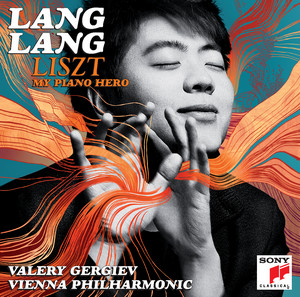 | Romance "O pourquoi donc" in E Minor, S. 169 | Franz Liszt, Lang Lang | E Minor | 0 | 9A | 67 BPM | |
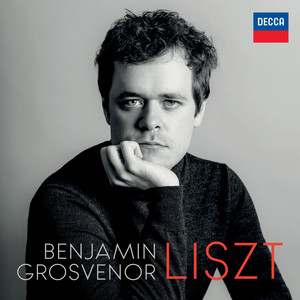 | Berceuse, S. 174 | Franz Liszt, Benjamin Grosvenor | D♭ Major | 0 | 3B | 136 BPM | |
 | Romeo and Juliette, Op. 64 (Arr. for Viola and Piano by Vadim Borisovsky, Orchestration for Viola and String Orchestra by François Vallières): Introduction | Sergei Prokofiev, Elvira Misbakhova, I Musici de Montréal, Jean-François Rivest | D Major | 1 | 10B | 99 BPM | |
| Ravel: Miroirs, M. 43: II. Oiseaux tristes | Maurice Ravel, Bertrand Chamayou | B Major | 0 | 1B | 69 BPM | |
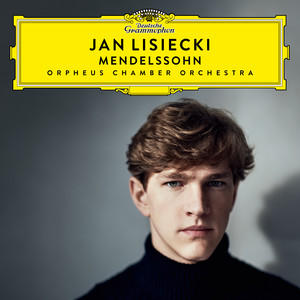 | Lieder ohne Worte, Op. 19: No. 6 in G Minor (Andante sostenuto) "Venetian Gondola Song", MWV U78 | Felix Mendelssohn, Jan Lisiecki | G Minor | 0 | 6A | 168 BPM | |
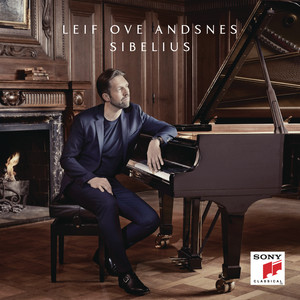 | 13 Pieces for Piano, Op. 76: Elegiaco, No. 10 | Jean Sibelius, Leif Ove Andsnes | E Major | 0 | 12B | 169 BPM | |
 | Tales "Skazki", Op. 26: III. Narrante a piacere | Nikolai Medtner, Anna Gourari | F Minor | 0 | 4A | 62 BPM |
- ISRC
- GBBBA5750241
- Label
- L-M Records/RCA Records