- BPM
- 94
- Key
- F Major
- Camelot
- 7B
El Amor brujo: Quadre Segon: Danza y cancíon de la bruja fingida by Manuel de Falla, Ginesa Ortega, Josep Pons, Orquestra De Cambra Teatre Lliure Song Details
"El Amor brujo: Quadre Segon: Danza y cancíon de la bruja fingida" by Manuel de Falla, Ginesa Ortega, Josep Pons, Orquestra De Cambra Teatre Lliure had its release date on June 7, 2011. With this song being around four minutes long, at 4:01, the duration of this song is pretty average compared to other songs. This track is safe for children and doesn't appear to contain any foul language, since the "Explicit" tag was not present in this track. The song is number 15 out of 23 in De Falla: El amor brujo by Manuel de Falla, Ginesa Ortega, Orquestra De Cambra Teatre Lliure, Josep Pons. Going off of the ISRC code of this track, we detected that the origin of this track is from France. In terms of popularity, El Amor brujo: Quadre Segon: Danza y cancíon de la bruja fingida is currently not that popular. In our opinion, the overall tone is not very danceable and projects negative sounds, such as being sad, depressed, or angry.
BPM and Tempo
The tempo marking of El Amor brujo: Quadre Segon: Danza y cancíon de la bruja fingida by Manuel de Falla, Ginesa Ortega, Josep Pons, Orquestra De Cambra Teatre Lliure is Andante (at a walking pace), since this song has a tempo of 94 BPM. With that information, we can conclude that the song has a slow tempo. This song can go great with yoga or pilates. The time signature for this track is 3/4.
Music Key
This song is in the music key of F Major. This also means that this song has a camelot key of 7B. So, the perfect camelot match for 7B would be either 7B or 8A. While, 8B can give you a low energy boost. For moderate energy boost, you would use 4B and a high energy boost can either be 9B or 2B. Though, if you want a low energy drop, you should looking for songs with either a camelot key of 7A or 6B will give you a low energy drop, 10B would be a moderate one, and 5B or 12B would be a high energy drop. Lastly, 4A allows you to change the mood.
Want to find the BPM and music key for other songs? Check out our BPM and Key Finder page!
- Popularity
- 8%
- Loudness
- -22.74 dB
- Acousticness
- 98%
- Danceability
- 31%
- Energy
- 4%
- Instrumentalness
- 62%
- Liveness
- 13%
- Loudness
- 62%
- Speechiness
- 4%
- Valence
- 16%
Recommendations
| Track | Artist | Key | Energy | Camelot | BPM | ||
|---|---|---|---|---|---|---|---|
![Gammal fabodpsalm fran Dalarna: No. 1 in A Major (arr. J. Johansson for orchestra) [Old Pastoral Hymn from Dalecarlia] by Wilhelm Stenhammar, Henning Kraggerud, Dalasinfoniettan, Bjarte Engeset](https://i.scdn.co/image/ab67616d00001e02a95e6620e53fc12c4d70391b) | Gammal fabodpsalm fran Dalarna: No. 1 in A Major (arr. J. Johansson for orchestra) [Old Pastoral Hymn from Dalecarlia] | Wilhelm Stenhammar, Henning Kraggerud, Dalasinfoniettan, Bjarte Engeset | A Major | 2 | 11B | 85 BPM | |
 | 12 Danzas españolas, Op. 37: 1. Galante - Minueto | Enrique Granados, Alicia de Larrocha | G Major | 0 | 9B | 143 BPM | |
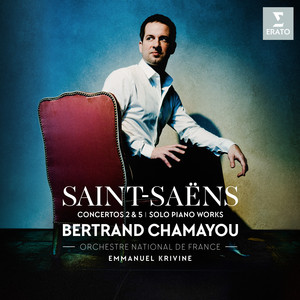 | Saint-Saëns: Piano Concerto No. 2 in G Minor, Op. 22: III. Presto | Camille Saint-Saëns, Bertrand Chamayou, Emmanuel Krivine, Orchestre National De France | C Minor | 4 | 5A | 110 BPM | |
 | Trio élégiaque No. 1 in G Minor | Sergei Rachmaninoff, Gidon Kremer, Daniil Trifonov, Giedre Dirvanauskaite | C Minor | 1 | 5A | 57 BPM | |
 | Asturiana - I | Manuel de Falla, Kim Kashkashian, Robert Levin | F Minor | 0 | 4A | 89 BPM | |
 | Bruch: Kol Nidrei, Op. 47 | Max Bruch, Jacqueline du Pré/Daniel Barenboim/Israel Philharmonic Orchestra, Daniel Barenboim, Israel Philharmonic Orchestra | D Minor | 2 | 7A | 82 BPM | |
 | Orfeo ed Euridice, Wq. 30, Act II: Danse des champs-elysées "Mélodie" (Arr. for Piano by Ignaz Friedman) | Christoph Willibald Gluck, Joseph Banowetz | A Major | 0 | 11B | 72 BPM | |
 | 3 Romances, Op. 22: 1. Andante molto | Clara Schumann, Janine Jansen, Antonio Pappano | D♭ Major | 1 | 3B | 74 BPM | |
 | Nocturno | Benita Meshulam, Manuel de Falla, Peter Arts | F Minor | 0 | 4A | 72 BPM | |
 | 7 Canciones populares Españolas: No. 5, Nana | Manuel de Falla, Pablo Ferrandez, Denis Kozhukhin | A Minor | 0 | 8A | 170 BPM | |
 | Concerto in D Minor, BWV 974: II. Adagio (Arr. for Cello and Piano by Mischa Maisky) | Johann Sebastian Bach, Mischa Maisky, Lily Maisky | B♭ Major | 3 | 6B | 139 BPM | |
 | Le carnaval des animaux, R. 125: Le cygne | Camille Saint-Saëns, Mischa Maisky, Orpheus Chamber Orchestra | C Major | 0 | 8B | 83 BPM | |
| Saint-Saëns: Piano Concerto No. 2 in G Minor, Op. 22: I. Andante sostenuto | Camille Saint-Saëns, Bertrand Chamayou, Emmanuel Krivine, Orchestre National De France | G Minor | 2 | 6A | 94 BPM | |
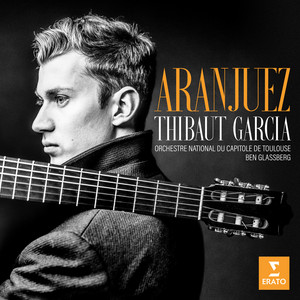 | De Visée / Transcr. Garcia: Pièces de théorbe et de luth, Suite en la mineur: V. Rondeau "La Montfermeil" | Robert de Visée, Thibaut García | C Major | 0 | 8B | 76 BPM | |
 | Casals: El cant dels ocells | Pablo Casals, Han-Na Chang, Orchestra dell'Accademia Nazionale di Santa Cecilia, Antonio Pappano | A Minor | 0 | 8A | 88 BPM | |
 | El Amor brujo: Quadre Primer: Romance del pescador | Manuel de Falla, Ginesa Ortega, Orquestra De Cambra Teatre Lliure, Josep Pons | D Minor | 0 | 7A | 84 BPM | |
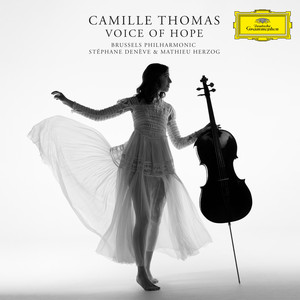 | "Kol Nidrei" Adagio for Cello and Orchestra, Op. 47: I. Adagio ma non troppo | Max Bruch, Camille Thomas, Brussels Philharmonic, Mathieu Herzog | D Minor | 1 | 7A | 117 BPM | |
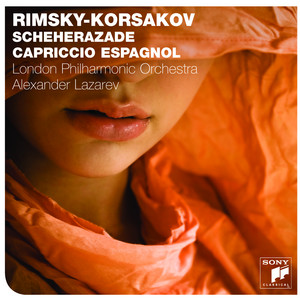 | Scheherazade: Calm at Sea | Nikolai Rimsky-Korsakov, Lars Hjalmar Joakim | E Major | 2 | 12B | 84 BPM | |
 | El sombrero de tres picos, Pt. 1: III. Danza de la molinera | Manuel de Falla, Carlos Miguel Prieto, The Orchestra of the Americas | D Major | 1 | 10B | 121 BPM | |
 | Homage 1770 | María Dueñas | A Minor | 1 | 8A | 90 BPM | |
 | Gypsy Melodies, Op. 55, B. 104: IV. Songs My Mother Taught Me (Adapt. for Cello and Orchestra) | Antonín Dvořák, Camille Thomas, Brussels Philharmonic, Mathieu Herzog | C Minor | 1 | 5A | 100 BPM | |
| El Amor brujo: Quadre Segon: Introduccion | Manuel de Falla, Ginesa Ortega, Josep Pons, Orquestra De Cambra Teatre Lliure | G Major | 0 | 9B | 85 BPM | |
 | Danzas fantásticas, Op. 22: III. Orgia | Joaquín Turina, Juanjo Mena, BBC Philharmonic | E Minor | 2 | 9A | 73 BPM | |
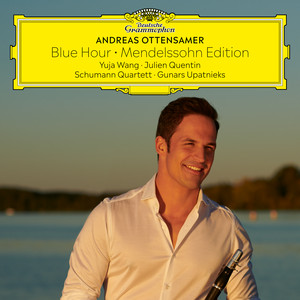 | Lieder ohne Worte, Op. 62: No. 6 Allegretto grazioso "Frühlingslied" (Arr. Ottensamer for Clarinet and Strings) | Felix Mendelssohn, Andreas Ottensamer, Schumann Quartett, Gunars Upatnieks | A Major | 1 | 11B | 99 BPM | |
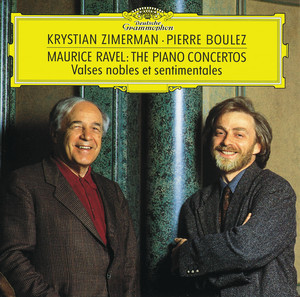 | Piano Concerto in G Major, M. 83: II. Adagio assai | Maurice Ravel, Krystian Zimerman, Cleveland Orchestra, Pierre Boulez | E Major | 0 | 12B | 74 BPM |
- ISRC
- FRZ149033150
- Label
- L-M Records/RCA Records