- BPM
- 76
- Key
- A♭ Major
- Camelot
- 4B
Puccini: Turandot, Act 3: "Nessun dorma!" (Calaf, Coro) by Giacomo Puccini, Pene Pati, Orchestre National Bordeaux Aquitaine, Emmanuel Villaume, Chœur de l'Opéra National de Bordeaux Song Details
"Puccini: Turandot, Act 3: "Nessun dorma!" (Calaf, Coro)" by Giacomo Puccini, Pene Pati, Orchestre National Bordeaux Aquitaine, Emmanuel Villaume, Chœur de l'Opéra National de Bordeaux had its release date on September 20, 2024. With this song being around four minutes long, at 3:43, the duration of this song is pretty average compared to other songs. This track is safe for children and doesn't appear to contain any foul language, since the "Explicit" tag was not present in this track. There are a total of 18 in the song's album "Nessun dorma". In this album, this song's track order is #1. Furthermore, we believe that the track originated from United Kingdom. Puccini: Turandot, Act 3: "Nessun dorma!" (Calaf, Coro) is below average in popularity right now. In our opinion, the overall tone is not very danceable and projects negative sounds, such as being sad, depressed, or angry.
BPM and Tempo
With Puccini: Turandot, Act 3: "Nessun dorma!" (Calaf, Coro) by Giacomo Puccini, Pene Pati, Orchestre National Bordeaux Aquitaine, Emmanuel Villaume, Chœur de l'Opéra National de Bordeaux having a BPM of 76 with a half-time of 38 BPM and a double-time of 152 BPM, we would consider this track to have a Adagio (slowly with great expression) tempo marking. Because of this, we believe that the song has an overall slow tempo. The time signature for this track is 3/4.
Music Key
This song is in the music key of A♭ Major. This also means that this song has a camelot key of 4B. So, the perfect camelot match for 4B would be either 4B or 5A. While, 5B can give you a low energy boost. For moderate energy boost, you would use 1B and a high energy boost can either be 6B or 11B. Though, if you want a low energy drop, you should looking for songs with either a camelot key of 4A or 3B will give you a low energy drop, 7B would be a moderate one, and 2B or 9B would be a high energy drop. Lastly, 1A allows you to change the mood.
Want to find the BPM and music key for other songs? Check out our BPM and Key Finder page!
- Popularity
- 28%
- Loudness
- -24.69 dB
- Acousticness
- 94%
- Danceability
- 12%
- Energy
- 8%
- Instrumentalness
- 1%
- Liveness
- 6%
- Loudness
- 59%
- Speechiness
- 5%
- Valence
- 6%
Recommendations
| Track | Artist | Key | Energy | Camelot | BPM | ||
|---|---|---|---|---|---|---|---|
 | Vedrò | Antonio Vivaldi, Jakub Józef Orliński, Aleksander Debicz, Wojciech Gumiński, Marcin Ułanowski | A Minor | 7 | 8A | 130 BPM | |
 | Petite messe solennelle: III. Kyrie. Kyrie eleison | Gioachino Rossini, Giulio Prandi, Coro Ghislieri, Francesco Corti, Cristiano Gaudio, Deniel Perer | A♭ Major | 1 | 4B | 121 BPM | |
 | Robert le Diable, Act IV: Chœur et Strette. Quelle aventure ! est-ce un prestige ? | Giacomo Meyerbeer, Erin Morley, Amina Edris, John Osborn, Nico Darmanin, Chœur de l'Opéra National de Bordeaux, Orchestre National Bordeaux Aquitaine, Marc Minkowski | F Major | 2 | 7B | 85 BPM | |
 | Les Contes d'Hoffmann / Act II: Barcarolle | Anna Netrebko, Elina Garanca, Prague Philharmonia, Emmanuel Villaume, Prague Philharmonic Choir | D Major | 1 | 10B | 91 BPM | |
 | Vocalise, Op. 34, No. 14 - Remastered | Sergei Rachmaninoff, Anna Moffo, American Symphony Orchestra, Leopold Stokowski | D Major | 1 | 10B | 100 BPM | |
 | Nabucco: Va, pensiero, sull'ali dorate (Chorus of the Hebrew Slaves) | Renato Cellini, Robert Shaw | A♭ Major | 1 | 4B | 168 BPM | |
 | Suor Angelica: O sorelle in pio lavoro | Giacomo Puccini, Isobel Buchanan, Dame Joan Sutherland, Elizabeth Connell, Miriam Bowen, National Philharmonic Orchestra, Richard Bonynge | D♭ Major | 1 | 3B | 91 BPM | |
 | La Wally / Act 1: "Ebben? Ne andrò lontana" | Alfredo Catalani, Angela Gheorghiu, Orchestra del Teatro Regio di Torino, John Mauceri | E Major | 1 | 12B | 87 BPM | |
 | Cleonice: Aria. Con favella de' pianti | Giovanni Alberto Ristori, Adèle Charvet, Le Consort | F Major | 1 | 7B | 168 BPM | |
 | Roméo et Juliette, CG 9: "L'amour! l'amour! oui, son ardeur a troublé" | Charles Gounod, Benjamin Bernheim, PKF – Prague Philharmonia, Emmanuel Villaume | G Minor | 1 | 6A | 79 BPM | |
 | Il Barbiere Di Siviglia: Overture | Gioachino Rossini, Donato Renzetti, Orchestra Filarmonica Gioachino Rossini | G Major | 2 | 9B | 136 BPM | |
 | Delibes: The Flower Duet (from Lakmé) | All Angels | B Major | 3 | 1B | 115 BPM | |
 | Puccini: La rondine, Act 1: "Chi il bel sogno di Doretta" (Magda, Yvette, Bianca, Prunier, Lisette, Suzy, Rambaldo, Périchaud, Gobin, Crébillon) | Giacomo Puccini, Angela Gheorghiu, Antonio Pappano, London Symphony Orchestra | B♭ Minor | 8 | 3A | 126 BPM | |
 | Le feste d'Apollo / Orfeo: Che farò senza Euridice? | Christoph Willibald Gluck, Samuel Mariño, La Cetra Barockorchester Basel, Andrea Marcon | B Major | 7 | 1B | 108 BPM | |
 | Les Contes d'Hoffmann / Act 2: Barcarolle - Excerpt | Jacques Offenbach, Anna Netrebko, Elina Garanca, PKF – Prague Philharmonia, Emmanuel Villaume, Prague Philharmonic Choir, Lukás Vasilek | F Major | 4 | 7B | 89 BPM | |
 | Mozart: Le nozze di Figaro, K. 492, Act 2: "Voi, che sapete che cosa è amor" (Cherubino) | Wolfgang Amadeus Mozart, Daniel Barenboim, Cecilia Bartoli, Berliner Philharmoniker | B♭ Major | 2 | 6B | 110 BPM | |
 | Cleopatra e Cesare (Act 1): Tra le procelle assorto | Carl Heinrich Graun, Jeanine De Bique, Concerto Köln, Luca Quintavalle | E♭ Major | 2 | 5B | 136 BPM | |
 | Norma, Act I: Casta diva | Vincenzo Bellini, David Tobin, Jeff Meegan, Julian Gallant, Isobel Griffiths Ltd, Ann de Renais | F Major | 3 | 7B | 173 BPM | |
 | Wiegenlied | Richard Strauss, Anna Netrebko, Emmanuel Villaume, Prague Philharmonic Orchestra | D Major | 0 | 10B | 83 BPM | |
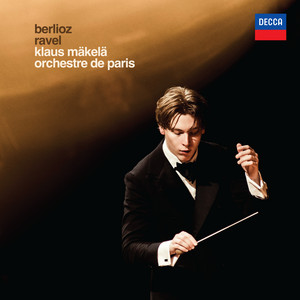 | Symphonie fantastique, H. 48: II. Un bal. Valse | Hector Berlioz, Orchestre de Paris, Klaus Mäkelä | A Major | 1 | 11B | 100 BPM | |
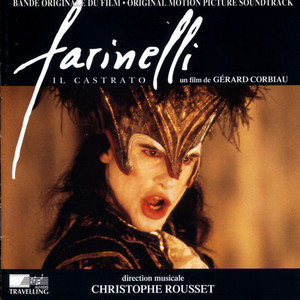 | Polifemo: Alto giove (Air d'Acio) - Instrumental Version | Christophe Rousset, Les Talens Lyriques, Ewa Mallas-godlewska, Derek Lee Ragin | E♭ Minor | 0 | 2A | 141 BPM | |
 | Don Giovanni, K.527 / Act 1: "Là ci darem la mano" | Wolfgang Amadeus Mozart, Cecilia Bartoli, Bryn Terfel, Orchestra dell'Accademia Nazionale di Santa Cecilia, Myung-Whun Chung | D Major | 2 | 10B | 88 BPM | |
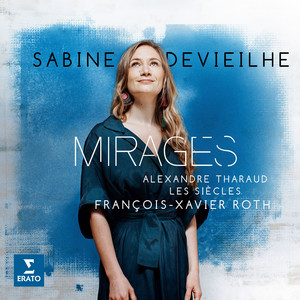 | Delibes: Lakmé, Act 1: Duo des fleurs. "Viens, Mallika" (Lakmé, Mallika) | Léo Delibes, Sabine Devieilhe, Marianne Crebassa, Les Siècles, François-Xavier Roth | B Major | 1 | 1B | 125 BPM | |
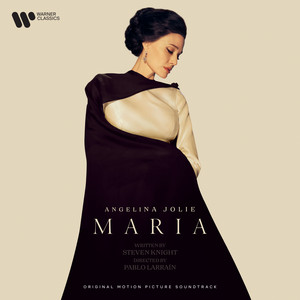 | Qui la voce sua soave | Maria Callas | D♭ Major | 2 | 3B | 126 BPM | |
 | Meyerbeer: Les Huguenots, Act 1: "Ah, quel spectacle enchanteur..." (Raoul) | Giacomo Meyerbeer, Pene Pati, Stéphane Rougier, Emmanuel Villaume, Orchestre National Bordeaux Aquitaine | G Major | 0 | 9B | 107 BPM |
- ISRC
- GBAYC2400799
- Label
- L-M Records/RCA Records