- BPM
- 137
- Key
- F♯ Major
- Camelot
- 2B
Suite in G Major: II. Grave by Nicola Matteis, Théotime Langlois de Swarte, Thomas Dunford Song Details
"Suite in G Major: II. Grave" by Nicola Matteis, Théotime Langlois de Swarte, Thomas Dunford had its release date on November 13, 2020. With This song being less than two minutes long, at 1:54, we are fairly confident that this song is not explicit and is safe for all ages. Based on the duration of this song, this song duration is much smaller than the average song duration. There are a total of 28 in the song's album "The Mad Lover". In this album, this song's track order is #17. Furthermore, we believe that the track originated from France. Based on our statistics, Suite in G Major: II. Grave's popularity is not that popular right now. In our opinion, the overall tone is not very danceable and projects negative sounds, such as being sad, depressed, or angry.
BPM and Tempo
With Suite in G Major: II. Grave by Nicola Matteis, Théotime Langlois de Swarte, Thomas Dunford having a BPM of 137 with a half-time of 68 BPM and a double-time of 274 BPM, we would consider this track to have a Allegro (fast, quick, and bright) tempo marking. Because of this, we believe that the song has an overall fast tempo. Looking at the BPM of this song, this song might go great with walking. The time signature for this track is 5/4.
Music Key
This song has a musical key of F♯ Major. Or for those who are familiar with the camelot wheel, this song has a camelot key of 2B. So, the perfect camelot match for 2B would be either 2B or 3A. While, 3B can give you a low energy boost. For moderate energy boost, you would use 11B and a high energy boost can either be 4B or 9B. Though, if you want a low energy drop, you should looking for songs with either a camelot key of 2A or 1B will give you a low energy drop, 5B would be a moderate one, and 12B or 7B would be a high energy drop. Lastly, 11A allows you to change the mood.
Want to find the BPM and music key for other songs? Check out our BPM and Key Finder page!
- Popularity
- 13%
- Loudness
- -20.007 dB
- Acousticness
- 96%
- Danceability
- 28%
- Energy
- 12%
- Instrumentalness
- 40%
- Liveness
- 16%
- Loudness
- 67%
- Speechiness
- 4%
- Valence
- 17%
Recommendations
| Track | Artist | Key | Energy | Camelot | BPM | ||
|---|---|---|---|---|---|---|---|
 | Concert pour quatre parties de violes, H. 545: I. Prélude | Marc-Antoine Charpentier, Jordi Savall, Le Concert Des Nations | E Major | 1 | 12B | 94 BPM | |
 | Aria burlesca (Presto) | Nicola Matteis, Gli Incogniti, Amandine Beyer | F♯ Major | 3 | 2B | 117 BPM | |
 | Oster-Oratorium, BWV 249: Adagio | Johann Sebastian Bach, Ilse Eerens, Michael Chance, Markus Schäfer, David Wilson-Johnson, Cappella Amsterdam, Orchestra Of The 18th Century, Frans Brüggen | G Minor | 1 | 6A | 116 BPM | |
 | Aire (For the Play "The Mad Lover) [3] | John Eccles, Capella Orlandi Bremen, Thomas Ihlenfeldt | F♯ Minor | 0 | 11A | 97 BPM | |
 | Scarlatti, A: Concerto grosso in sette parti: No. 1 in F Minor: IV. Allemande. Allegro | Alessandro Scarlatti, Europa Galante, Fabio Biondi | E Minor | 1 | 9A | 117 BPM | |
 | Sinfonie a cinque per due violini, alto, tenore, violoncello e basso, Op. 2. Sonata a cinque in G Minor, No. 6: II. Allegro | Tomaso Albinoni, Ensemble 415, Chiara Banchini | F♯ Minor | 3 | 11A | 108 BPM | |
 | Fantasia, VdGS No. 4 | Thomas Brewer, Ricercar Consort, Philippe Pierlot | B Minor | 1 | 10A | 75 BPM | |
 | Violin Sonata in G Minor, Op. 5 No. 5: I. Adagio (Version for Flute) | Arcangelo Corelli, Anna Besson, Myriam Rignol, Jean Rondeau | A♭ Major | 1 | 4B | 105 BPM | |
 | Sonata I in B Minor, HWV 386, Op. 2 No. 1: III. Largo | George Frideric Handel, Academy of Ancient Music, Richard Egarr | F♯ Minor | 2 | 11A | 92 BPM | |
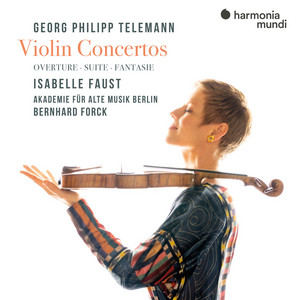 | Sonata a tromba in D Major, TWV 44:1: III. Vivace | Georg Philipp Telemann, Isabelle Faust, Akademie für Alte Musik Berlin, Bernhard Forck, Ute Hartwich | D♭ Major | 3 | 3B | 141 BPM | |
![Sonata in A-Moll, BuxWV 272: Sonata in A-Moll, BuxWV 272: I. [Allegro] by Dietrich Buxtehude, La Rêveuse, Sébastien Wonner, Benjamin Perrot, Florence Bolton](https://i.scdn.co/image/ab67616d00001e02f90d6525c5a62ca2c4975b93) | Sonata in A-Moll, BuxWV 272: Sonata in A-Moll, BuxWV 272: I. [Allegro] | Dietrich Buxtehude, La Rêveuse, Sébastien Wonner, Benjamin Perrot, Florence Bolton | A♭ Minor | 2 | 1A | 89 BPM | |
 | Concert XLVIIIe siècle "Le Raporté": Chaconne raportée à deux violes esgales | Monsieur de Sainte-Colombe, Sophie Watillon, Friederike Heumann | F♯ Minor | 0 | 11A | 157 BPM | |
 | Libro primo d'intavolatura di lauto: Toccata IV | Giovanni Girolamo Kapsberger, Thomas Dunford | F♯ Major | 1 | 2B | 92 BPM | |
 | Mystery Sonata No. 9 "Jesus Carries the Cross": I. Sonata | Heinrich Ignaz Franz von Biber, Sirkka-Liisa Kaakinen-Pilch, Battalia | A♭ Minor | 1 | 1A | 110 BPM | |
 | Suite Premiere - Iii. Simphonie La Favorite (Charles Desmazures) | Grupo de musica barroca La Folia/Pedro Bonet | E♭ Minor | 3 | 2A | 81 BPM | |
| Passaggio rotto (Andamento Veloce) | Nicola Matteis, Gli Incogniti, Amandine Beyer | A♭ Minor | 1 | 1A | 118 BPM | |
 | Sei Concerti in sette parti: No. 3 in F Major: III. Allegro | Alessandro Scarlatti, Concerto de' Cavalieri, Marcello di Lisa | E Major | 4 | 12B | 136 BPM | |
 | La Du Vaucel (Forqueray) | Jordi Savall | D Major | 0 | 10B | 175 BPM | |
 | Concerto for 2 Violins in D Minor, Op. 6, No. 10: I. Adagio | Giuseppe Torelli, Berliner Barock Compagney | F♯ Major | 2 | 2B | 103 BPM | |
 | Symphony No. 4 in A Major, Op. 90, "Italian": Toccata del Signor Pandolpho | Paolo Pandolfo, Andrea de Carlo, Thomas Boysen, Guido Morini, Alvaro Garrido | A Minor | 1 | 8A | 84 BPM | |
| Musica (Grave-Presto) | Nicola Matteis, Gli Incogniti, Amandine Beyer | A Major | 1 | 11B | 68 BPM | |
 | 7 Chansons grises: V. L'Heure exquise (Arr. for Violin by Théotime Langlois de Swarte) | Reynaldo Hahn, Tanguy de Williencourt, Théotime Langlois de Swarte | E Major | 0 | 12B | 112 BPM | |
 | Purcell: Dido and Aeneas, Z. 626: Overture | Henry Purcell, Jupiter, Thomas Dunford | B Minor | 1 | 10A | 68 BPM | |
 | Sonata No. 1 en Si Mineur, Livre I: I. Adagio | Jean Barrière, Bruno Cocset, Les Basses Réunies | B♭ Minor | 1 | 3A | 80 BPM | |
 | Canzona prima a 2 bassi | Girolamo Frescobaldi, Bruno Cocset, Les Basses Réunies | D Major | 2 | 10B | 75 BPM |
- ISRC
- FR7JM2003170
- Label
- L-M Records/RCA Records