- BPM
- 88
- Key
- F♯ Minor
- Camelot
- 11A
Symphonie "Mathis der Maler": 2. Grablegung by Paul Hindemith, Boston Symphony Orchestra, William Steinberg Song Details
"Symphonie "Mathis der Maler": 2. Grablegung" by Paul Hindemith, Boston Symphony Orchestra, William Steinberg had its release date on January 1, 2007. With this song being around four minutes long, at 4:09, the duration of this song is pretty average compared to other songs. This track is safe for children and doesn't appear to contain any foul language, since the "Explicit" tag was not present in this track. The track order of this song in Paul Hindemith, Daniel Benyamini, Paris Conservatoire Orchestra, Boston Symphony Orchestra, William Steinberg, Daniel Barenboim's "Hindemith: Symphony "Mathis Der Maler"" album is number 2 out of 9. Symphonie "Mathis der Maler": 2. Grablegung is not that popular right now. In our opinion, the overall tone is not very danceable and projects negative sounds, such as being sad, depressed, or angry.
BPM and Tempo
We consider the tempo marking of Symphonie "Mathis der Maler": 2. Grablegung by Paul Hindemith, Boston Symphony Orchestra, William Steinberg to be Andante (at a walking pace) because the track has a tempo of 88 BPM, a half-time of 44BPM, and a double-time of 176 BPM. Based on that, the speed of the song's tempo is slow. Activities such as, yoga or pilates, can go well with this song. The time signature for this track is 4/4.
Music Key
This song has a musical key of F♯ Minor. This also means that this song has a camelot key of 11A. So, the perfect camelot match for 11A would be either 11A or 10B. While, a low energy boost can consist of either 11B or 12A. For moderate energy boost, you would use 8A and a high energy boost can either be 1A or 6A. However, if you are looking for a low energy drop, finding a song with a camelot key of 10A would be a great choice. Where 2A would give you a moderate drop, and 9A or 4A would be a high energy drop. Lastly, 2B allows you to change the mood.
Want to find the BPM and music key for other songs? Check out our BPM and Key Finder page!
- Popularity
- 4%
- Loudness
- -20.256 dB
- Acousticness
- 97%
- Danceability
- 20%
- Energy
- 8%
- Instrumentalness
- 83%
- Liveness
- 8%
- Loudness
- 66%
- Speechiness
- 4%
- Valence
- 3%
Recommendations
| Track | Artist | Key | Energy | Camelot | BPM | ||
|---|---|---|---|---|---|---|---|
 | Verklärte Nacht, Op. 4 (Version for String Orchestra): IV. Adagio (Bar 229) | Arnold Schoenberg, Danish National Symphony Orchestra, Fabio Luisi | D Major | 2 | 10B | 79 BPM | |
 | Suite pastorale: I. Idylle | Emmanuel Chabrier, Neeme Järvi, Orchestre de la Suisse Romande | C Major | 2 | 8B | 143 BPM | |
 | Symphonie "Mathis der Maler": 1. Engelkonzert | Paul Hindemith, San Francisco Symphony, Herbert Blomstedt | D Major | 1 | 10B | 113 BPM | |
 | 4 Ragtime Dances: No. 4, — | Charles Ives, Orchestra New England, James Sinclair | B♭ Major | 4 | 6B | 93 BPM | |
 | Five Pieces for String Quartet, WV 68: No. 5, Alla Tarantella | Erwin Schulhoff, Leonkoro Quartet | G Major | 0 | 9B | 91 BPM | |
 | Piano Concerto in A Minor, Op. 7: I. Allegro maestoso | Clara Schumann, Veronica Jochum, Bamberg Symphony, Joseph Silverstein | A Minor | 1 | 8A | 112 BPM | |
 | Piano Quintet in C Minor: II. Scherzo: Allegro non troppo | Alexander Borodin, Ilona Prunyi, New Budapest Quartet | C Major | 1 | 8B | 115 BPM | |
 | Der Schwanendreher · Konzert nach alten Volksliedern für Viola und kleines Orchester: II. Nun Laube, Lindlein, Laube - Fugato: Der Gutzgauch auf dem Zaune saß | Paul Hindemith, Tabea Zimmermann, David Shallon, Bayerischer Rundfunk, Bavarian Radio Symphony Orchestra | A Major | 0 | 11B | 112 BPM | |
 | The Seven Last Words of Our Saviour on the Cross, Hob. XX (Hybrid Version): Introduction 2. Largo e cantabile | Joseph Haydn, Emerson String Quartet | C Minor | 2 | 5A | 114 BPM | |
 | Bartók: String Quartet No. 4 in C Major, Sz. 91: III. Non troppo lento | Béla Bartók, Belcea Quartet | C Major | 0 | 8B | 72 BPM | |
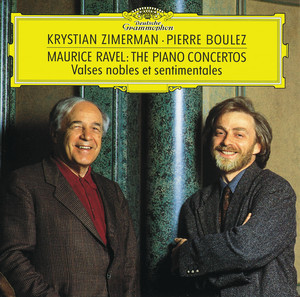 | Valses nobles et sentimentales, M. 61a: VIII. Epilogue. Lent | Maurice Ravel, The Cleveland Orchestra, Pierre Boulez | G Major | 0 | 9B | 103 BPM | |
 | Viola Sonata, Op. 31, No. 4: II. Lied. Ruhig, mit wenig Ausdruck. Langsame Viertel | Paul Hindemith, Nobuko Imai | G Major | 1 | 9B | 87 BPM | |
 | Sonate, Op. 71: II. Nocturne – Presque adagio | Charles Koechlin, Julien Hardy, Simon Zaoui | E♭ Major | 0 | 5B | 77 BPM | |
 | The Tempest Suite No. 1, Op. 109, No. 2: I. The Oak Tree | Jean Sibelius, Lahti Symphony Orchestra, Okko Kamu | B♭ Major | 0 | 6B | 86 BPM | |
 | Quatuor pour la fin du Temps: V. Louange à l’Éternité de Jésus | Olivier Messiaen, Louise Bessette, Cameron Crozman | G Major | 0 | 9B | 91 BPM | |
 | Stille Musik: I. Walzer des Augenblicks | Valentin Silvestrov, Munich Chamber Orchestra | A Minor | 0 | 8A | 60 BPM | |
 | Mythes, Trois Poèmes, Op.30: 1. La fontaine d'Arethuse | Karol Szymanowski, Kaja Danczowska, Krystian Zimerman | A♭ Minor | 0 | 1A | 74 BPM | |
 | Organ Concerto in G Minor, FP 93: IV. Tempo allegro. Molto agitato | Francis Poulenc, Philippe Lefebvre, Orchestre National de Lille, Jean-Claude Casadesus | B♭ Minor | 0 | 3A | 133 BPM | |
 | Prélude, Choral et Fugue, FWV 21: Fugue. Tempo I° | César Franck, Nikolai Lugansky | D Major | 1 | 10B | 68 BPM | |
 | Symphony No. 3 in E Flat Major, Op. 90: III. Menuetto. Moderato - Trio I - Trio II | Ferdinand Ries, Tapiola Sinfonietta, Janne Nisonen | E♭ Major | 0 | 5B | 174 BPM | |
 | Gustav II Adolf, Op. 49: VI. Breitenfeld - Bataljmålning (Breitenfeld - Battle Painting) | Hugo Alfvén, Gothenburg Symphony Orchestra, Neeme Järvi | G Major | 0 | 9B | 91 BPM | |
 | Barcarolle No. 12, Op. 106 bis | Gabriel Fauré, Louis Lortie | E♭ Major | 0 | 5B | 107 BPM | |
 | Ein Heldenleben, Op. 40, TrV. 190: Des Helden Friedenswerke | Richard Strauss, Wiener Philharmoniker, Christian Thielemann, Rainer Honeck | D Major | 1 | 10B | 56 BPM | |
 | Symphony No. 3 in A Minor, MWV N 18 "Scottish" (London Version, 1842): II. Scherzo. Vivace non troppo | Felix Mendelssohn, Les Ambassadeurs ~ La Grande Écurie, Alexis Kossenko | G Major | 0 | 9B | 91 BPM | |
 | Romance for Cello & Piano, RT VIII/5 | Frederick Delius, Gerald Peregrine, Antony Ingham | B Major | 0 | 1B | 94 BPM |
- ISRC
- This song does not have an ISRC.
- Label
- L-M Records/RCA Records