- BPM
- 70
- Key
- D Major
- Camelot
- 10B
String Quartet No. 14 in C-Sharp Minor, Op. 131 - Version for String Orchestra by Dimitri Mitropoulos: 2. Allegretto - Live by Ludwig van Beethoven, Wiener Philharmoniker, Leonard Bernstein Song Details
"String Quartet No. 14 in C-Sharp Minor, Op. 131 - Version for String Orchestra by Dimitri Mitropoulos: 2. Allegretto - Live" by Ludwig van Beethoven, Wiener Philharmoniker, Leonard Bernstein had its release date on January 1, 1992. The duration of This song is about 3 minutes long, at 3:14. Based on our data, This song appears to be safe for all ages and is not considered explicit. This track is about the average length of a typical track. The song is number 2 out of 11 in Beethoven: String Quartet No.14 in C Sharp Minor, Op.131; String Quartet No.16 in F, Op.135 by Ludwig van Beethoven, Wiener Philharmoniker, Leonard Bernstein. String Quartet No. 14 in C-Sharp Minor, Op. 131 - Version for String Orchestra by Dimitri Mitropoulos: 2. Allegretto - Live is not that popular right now. In our opinion, the overall tone is not very danceable and projects negative sounds, such as being sad, depressed, or angry.
BPM and Tempo
The tempo marking of String Quartet No. 14 in C-Sharp Minor, Op. 131 - Version for String Orchestra by Dimitri Mitropoulos: 2. Allegretto - Live by Ludwig van Beethoven, Wiener Philharmoniker, Leonard Bernstein is Adagio (slowly with great expression), since this song has a tempo of 70 BPM. With that information, we can conclude that the song has a slow tempo. The time signature for this track is 4/4.
Music Key
This song is in the music key of D Major. This also means that this song has a camelot key of 10B. So, the perfect camelot match for 10B would be either 10B or 11A. While, 11B can give you a low energy boost. For moderate energy boost, you would use 7B and a high energy boost can either be 12B or 5B. Though, if you want a low energy drop, you should looking for songs with either a camelot key of 10A or 9B will give you a low energy drop, 1B would be a moderate one, and 8B or 3B would be a high energy drop. Lastly, 7A allows you to change the mood.
Want to find the BPM and music key for other songs? Check out our BPM and Key Finder page!
- Popularity
- 18%
- Loudness
- -20.49 dB
- Acousticness
- 98%
- Danceability
- 23%
- Energy
- 17%
- Instrumentalness
- 88%
- Liveness
- 28%
- Loudness
- 66%
- Speechiness
- 5%
- Valence
- 17%
Recommendations
| Track | Artist | Key | Energy | Camelot | BPM | ||
|---|---|---|---|---|---|---|---|
 | Cublai, gran kan de' Tartar Overture | Antonio Salieri, Matthias Bamert, London Mozart Players | D Major | 2 | 10B | 88 BPM | |
 | Symphony No.3 In C Minor, Op.78 "Organ Symphony": 1b. Poco adagio | Camille Saint-Saëns, Simon Preston, Berliner Philharmoniker, James Levine | D♭ Major | 0 | 3B | 80 BPM | |
 | Symphony No. 8 in B Minor, D. 759 "Unfinished": II. Andante con moto | Franz Schubert, Wiener Philharmoniker, Josef Krips | E Major | 0 | 12B | 83 BPM | |
 | Symphony No. 1 "Jeremiah": I. Prophecy | Leonard Bernstein, Jennie Tourel, New York Philharmonic | E Minor | 3 | 9A | 79 BPM | |
 | The Creatures of Prometheus, Op. 43: i. Overture: Adagio. Allegro molto con brio | Beethoven, Maurice Abravanel, Utah Symphony Orchestra | F Major | 2 | 7B | 113 BPM | |
 | Suite No. 3 in D, BWV 1068: 5. Gigue | Johann Sebastian Bach, Berliner Philharmoniker, Herbert von Karajan | D Major | 4 | 10B | 99 BPM | |
 | Violin Concerto In D, Op. 61: 1. Allegro ma non troppo | Ludwig van Beethoven, Fritz Kreisler, Vadim Repin, Wiener Philharmoniker, Riccardo Muti | D Major | 1 | 10B | 106 BPM | |
 | Symphony No. 4 in E-Flat Major, WAB 104 “Romantic” (1886 Version, Ed. Nowak): IV. Finale. Bewegt, doch nicht zu schnell | Anton Bruckner, Wiener Philharmoniker, Claudio Abbado | F♯ Major | 1 | 2B | 64 BPM | |
 | Symphony No. 40 in G Minor, K. 550 (1st Version, No Clarinets): I. Molto allegro | Wolfgang Amadeus Mozart, Wiener Philharmoniker, Karl Böhm | B Major | 0 | 1B | 94 BPM | |
 | Faust-Ouverture in B Minor, Op. 46 | Emilie Mayer, Kölner Akademie, Michael Alexander Willens | B♭ Major | 1 | 6B | 77 BPM | |
 | 12 Etudes, Op. 10: No. 1 in C Major "Waterfall" | Frédéric Chopin, Yunchan Lim | C Major | 2 | 8B | 86 BPM | |
 | Symphonie fantastique, H. 48: V. Songe d'une nuit de sabbat | Hector Berlioz, Orchestre de Paris, Klaus Mäkelä | D Major | 1 | 10B | 87 BPM | |
 | Götterdämmerung - Concert version / Dritter Aufzug: Finale | Richard Wagner, Wiener Philharmoniker, Sir Georg Solti | D♭ Major | 3 | 3B | 136 BPM | |
 | Glück: I. Andante | Siegfried Wagner, Rundfunk-Sinfonieorchester Frankfurt, Dimitrij Kitajenko | A Minor | 0 | 8A | 86 BPM | |
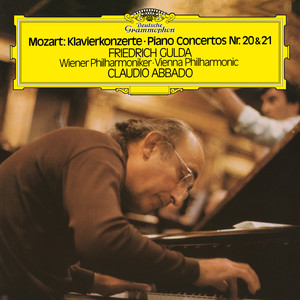 | Piano Concerto No. 21 in C Major, K. 467: III. Allegro vivace assai (Cadenza: Gulda) | Wolfgang Amadeus Mozart, Friedrich Gulda, Wiener Philharmoniker, Claudio Abbado | A Major | 2 | 11B | 81 BPM | |
 | Symphony no. 5 in Cm, Op. 67 - II. Andante con moto | Beethoven | A♭ Major | 0 | 4B | 86 BPM | |
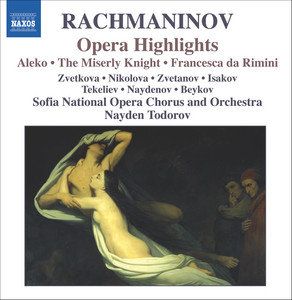 | Aleko: Introduction | Sergei Rachmaninoff, Mariana Zvetkova, Andreana Nikolova, Boiko Zvetanov, Alexander Tekeliev, Peter Naydenov, Sofia National Opera Chorus, Sofia National Opera Orchestra, Nayden Todorov | A Major | 0 | 11B | 177 BPM | |
 | Eine Alpensinfonie, Op. 64, TrV 233: IV. Eintritt in den Wald | Richard Strauss, David Bell, Berliner Philharmoniker, Herbert von Karajan | F Minor | 2 | 4A | 71 BPM | |
 | Symphonie fantastique, Op. 14, H 48: 5d. Songe d'une nuit du Sabbat - Dies irae et Ronde du Sabbat ensemble | Hector Berlioz, Chicago Symphony Orchestra, Claudio Abbado | B♭ Major | 1 | 6B | 153 BPM | |
 | Symphony No. 2 In C Minor - "Resurrection" / 2nd Movement - Andante moderato: Tempo I. Energisch bewegt | Gustav Mahler, Wiener Philharmoniker, Gilbert Kaplan | D♭ Minor | 1 | 12A | 132 BPM | |
 | Night on Bald Mountain | Modest Mussorgsky, Wiener Philharmoniker, Gustavo Dudamel | D Major | 2 | 10B | 69 BPM | |
 | Violin Concerto No. 1 in G minor, Op. 26: II. Adagio | Max Bruch, Niek Baar, Deutsche Radio Philharmonie, Christoph Poppen | E♭ Major | 1 | 5B | 112 BPM | |
 | Triple Concerto in C Major, Op. 56: II. Largo | Ludwig van Beethoven, Anne-Sophie Mutter, Yo-Yo Ma, Mark Zeltser, Berliner Philharmoniker, Herbert von Karajan | A♭ Major | 0 | 4B | 97 BPM | |
 | Symphony No. 8 in G Major, Op. 88, B. 163: I. Allegro con brio - Recorded 1985 | Antonín Dvořák, Wiener Philharmoniker, Herbert von Karajan | G Major | 2 | 9B | 71 BPM | |
 | Symphony No. 3 in D Major, D. 200: II. Allegretto | Franz Schubert, Wiener Philharmoniker, Carlos Kleiber | G Major | 0 | 9B | 115 BPM |
- ISRC
- This song does not have an ISRC.
- Label
- L-M Records/RCA Records