- BPM
- 162
- Key
- D Minor
- Camelot
- 7A
Rhapsody on a Theme of Paganini, Op. 43: Variation IV by Sergei Rachmaninoff, Arthur Rubinstein, Fritz Reiner Song Details
Sergei Rachmaninoff, Arthur Rubinstein, Fritz Reiner's ' "Rhapsody on a Theme of Paganini, Op. 43: Variation IV" was released on its scheduled release date, October 12, 1999. With This song being less than a minute long, we are pretty confident that this song does not contain any foul language. That being said, this song is pretty short compared to other songs. There are a total of 30 in the song's album "Rubinstein Collection, Vol. 35: Rachmaninoff: Piano Concerto No.2; Rhapsody on a Theme of Paganini; Prelude". In this album, this song's track order is #9. The popularity of Rhapsody on a Theme of Paganini, Op. 43: Variation IV is currently unknown right now. The mood doesn't appear to be that danceable, but it still produces a high amount of positive energy.
BPM and Tempo
With Rhapsody on a Theme of Paganini, Op. 43: Variation IV by Sergei Rachmaninoff, Arthur Rubinstein, Fritz Reiner having a BPM of 162 with a half-time of 81 BPM and a double-time of 324 BPM, we would consider this track to have a Vivace (lively and fast) tempo marking. Because of this, we believe that the song has an overall fast tempo. The time signature for this track is 4/4.
Music Key
This song has a musical key of D Minor. Which also means that the camelot key for this song is 7A. So, the perfect camelot match for 7A would be either 7A or 6B. While, a low energy boost can consist of either 7B or 8A. For moderate energy boost, you would use 4A and a high energy boost can either be 9A or 2A. However, if you are looking for a low energy drop, finding a song with a camelot key of 6A would be a great choice. Where 10A would give you a moderate drop, and 5A or 12A would be a high energy drop. Lastly, 10B allows you to change the mood.
Want to find the BPM and music key for other songs? Check out our BPM and Key Finder page!
- Popularity
- 0%
- Loudness
- -21.358 dB
- Acousticness
- 99%
- Danceability
- 29%
- Energy
- 18%
- Instrumentalness
- 87%
- Liveness
- 49%
- Loudness
- 64%
- Speechiness
- 5%
- Valence
- 76%
Recommendations
| Track | Artist | Key | Energy | Camelot | BPM | ||
|---|---|---|---|---|---|---|---|
 | Schumann, Clara: 3 Romances, Op. 11: No. 1 in E-Flat Minor | Clara Schumann, Sophie Pacini | E♭ Minor | 0 | 2A | 60 BPM | |
 | String Quartet No. 2 in D Major: III. Notturno: Andante | Alexander Borodin, Budapest Haydn Quartet | A Major | 1 | 11B | 89 BPM | |
 | XIII. Le cygne (Transcr. L. Godowsky for Piano) | Camille Saint-Saëns, Leopold Godowsky, Konstantin Scherbakov | F♯ Major | 0 | 2B | 72 BPM | |
 | Piano Concerto in E, Op. 59: II. Andante | Moritz Moszkowski, Joseph Moog, Nicholas Milton, Deutsche Radio Philharmonie Saarbrücken Kaiserslautern | D♭ Minor | 0 | 12A | 87 BPM | |
 | Scheherazade: The Tale of the Kalendar Prince | Nikolai Rimsky-Korsakov, Lars Hjalmar Joakim | B Minor | 1 | 10A | 62 BPM | |
 | Intermezzo Op. 76, No. 7 in A minor | Evgeny Kissin | A Minor | 0 | 8A | 70 BPM | |
 | Suite No. 2 in C Major, Op. 17: II. Valse: Presto | Sergei Rachmaninoff, Peter Donohoe, Martin Roscoe | G Major | 0 | 9B | 130 BPM | |
 | Die schöne Müllerin, D. 795: No. 19, Der Müller und der Bach - Performed on Cello & Piano | Franz Schubert, Mischa Maisky, Daria Hovora | G Major | 0 | 9B | 96 BPM | |
 | Piano Concerto No. 2 in C Minor, Op. 18: III. Allegro scherzando | Sergei Rachmaninoff, Anna Fedorova, Nordwestdeutsche Philharmonie, Laércio Diniz | G Major | 1 | 9B | 79 BPM | |
 | Peer Gynt Suite No. 1, Op. 46: II. Åse's Death | Edvard Grieg, Wiener Philharmoniker, Zubin Mehta | G Major | 0 | 9B | 99 BPM | |
 | 4 Lieder, Op. 82, B. 157: I. Lasst mich allein. Andante (Arr. Soltani For Solo Cello and Cello Ensemble) | Antonín Dvořák, Kian Soltani, Staatskapelle Berlin, Cellists, Otto Tolonen | B Major | 0 | 1B | 140 BPM | |
 | Carnaval, Op. 9: XII. Chopin | Robert Schumann, Daniil Trifonov | E Major | 0 | 12B | 68 BPM | |
 | Liebeslied "Widmung, von Robert Schumann", S. 566 (After Myrthen, Op. 25/1) | Franz Liszt, Angela Hewitt | G Major | 0 | 9B | 63 BPM | |
 | Träumerei | Robert Schumann, Vladimir Horowitz | A♭ Major | 1 | 4B | 128 BPM | |
 | 24 Preludes, Op. 11: No. 11 in B Major | Alexander Scriabin, Evgeny Zarafiants | B Major | 0 | 1B | 72 BPM | |
 | Tales "Skazki", Op. 26: III. Narrante a piacere | Nikolai Medtner, Anna Gourari | F Minor | 0 | 4A | 62 BPM | |
 | En rêve, Nocturne, S. 207 | Franz Liszt, Marc-André Hamelin | B Major | 0 | 1B | 73 BPM | |
 | Symphony No. 6 in B Minor, Op. 74 "Pathétique": II. Allegro con grazia | Pyotr Ilyich Tchaikovsky, Berliner Philharmoniker, Kirill Petrenko | D Major | 1 | 10B | 85 BPM | |
 | Lieder ohne Worte, Op. 19: No. 6 in G Minor (Andante sostenuto) "Venetian Gondola Song", MWV U78 | Felix Mendelssohn, Jan Lisiecki | G Minor | 0 | 6A | 168 BPM | |
 | 12 Songs, Op. 21: V. Lilacs (Transcr. Rachmaninoff for Solo Piano) | Sergei Rachmaninoff, Sergei Babayan | A♭ Major | 0 | 4B | 78 BPM | |
 | Fantasia & Fugue in C Minor, Op. 86 (After J.S. Bach's BWV 537): Fantasia | Edward Elgar, Seattle Symphony Orchestra, Gerard Schwarz | F Minor | 1 | 4A | 143 BPM | |
 | 21 Hungarian Dances, WoO 1: No. 1 in G Minor. Allegro molto (Version for Orchestra) | Johannes Brahms, Wiener Philharmoniker, Claudio Abbado | G Minor | 2 | 6A | 142 BPM | |
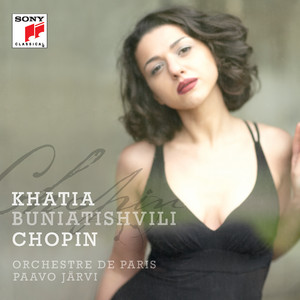 | Mazurka in A Minor, Op. 17 No. 4 | Frédéric Chopin, Khatia Buniatishvili | A Minor | 0 | 8A | 173 BPM | |
 | Mélancolie | Francis Poulenc, Alexandre Tharaud | D Major | 1 | 10B | 70 BPM | |
 | Holberg Suite, Op. 40: IV. Air (Andante religioso) | Edvard Grieg, Gothenburg Symphony Orchestra, Neeme Järvi | C Major | 1 | 8B | 79 BPM |
- ISRC
- This song does not have an ISRC.
- Label
- L-M Records/RCA Records