- BPM
- 172
- Key
- F♯ Minor
- Camelot
- 11A
String Quartet No. 14 in C-Sharp Minor, Op. 131: I. Adagio ma non troppo e molto espressivo by Ludwig van Beethoven, Takács Quartet Song Details
"String Quartet No. 14 in C-Sharp Minor, Op. 131: I. Adagio ma non troppo e molto espressivo" by Ludwig van Beethoven, Takács Quartet had its release date on January 1, 2004. Since This song is still less than 10 minute long, it is still considered a pretty long duration song compared to the average song length. This song does not appear to be explicit due to the lack of the "E" tag. The song is number 5 out of 31 in Beethoven: String Quartets Vol.3 by Ludwig van Beethoven, Takács Quartet. Going off of the ISRC code of this track, we detected that the origin of this track is from United Kingdom. The popularity of String Quartet No. 14 in C-Sharp Minor, Op. 131: I. Adagio ma non troppo e molto espressivo is currently not that popular right now. In our opinion, the overall tone is not very danceable and projects negative sounds, such as being sad, depressed, or angry.
BPM and Tempo
The tempo marking of String Quartet No. 14 in C-Sharp Minor, Op. 131: I. Adagio ma non troppo e molto espressivo by Ludwig van Beethoven, Takács Quartet is Vivace (lively and fast), since this song has a tempo of 172 BPM. With that information, we can conclude that the song has a fast tempo. The time signature for this track is 3/4.
Music Key
This song is in the music key of F♯ Minor. This also means that this song has a camelot key of 11A. So, the perfect camelot match for 11A would be either 11A or 10B. While, a low energy boost can consist of either 11B or 12A. For moderate energy boost, you would use 8A and a high energy boost can either be 1A or 6A. However, if you are looking for a low energy drop, finding a song with a camelot key of 10A would be a great choice. Where 2A would give you a moderate drop, and 9A or 4A would be a high energy drop. Lastly, 2B allows you to change the mood.
Want to find the BPM and music key for other songs? Check out our BPM and Key Finder page!
- Popularity
- 16%
- Loudness
- -29.289 dB
- Acousticness
- 90%
- Danceability
- 9%
- Energy
- 3%
- Instrumentalness
- 79%
- Liveness
- 10%
- Loudness
- 51%
- Speechiness
- 6%
- Valence
- 4%
Recommendations
| Track | Artist | Key | Energy | Camelot | BPM | ||
|---|---|---|---|---|---|---|---|
 | Piano Quintet in A major, D. 667 "The Trout": 1. Allegro vivace | Franz Schubert, Takács Quartet, Joseph Carver, Andreas Haefliger | G Major | 1 | 9B | 132 BPM | |
 | Symphonie À Grand Orchestre En Ré: IV. Allegro Con Moto | Juan Crisóstomo Arriaga, Jordi Savall | B Minor | 1 | 10A | 139 BPM | |
 | String Sextet No. 1, Op. 18: III. Scherzo. Allegro molto | Johannes Brahms, Belcea Quartet, Tabea Zimmermann, Jean-Guihen Queyras | F Major | 2 | 7B | 137 BPM | |
 | Sinfonietta, JW VI/18: II. The Castle, Brno. Andante – Allegretto | Leoš Janáček, Bavarian Radio Symphony Orchestra, Rafael Kubelík | A♭ Minor | 2 | 1A | 144 BPM | |
 | Mahler: Quartet for Piano and Strings | Gustav Mahler, New York Piano Quartet | F Major | 1 | 7B | 97 BPM | |
 | Piano Trio No. 1 in D Minor, Op. 49: III. Scherzo (Leggiero e vivace) | Felix Mendelssohn, Trio Wanderer | A Minor | 1 | 8A | 106 BPM | |
 | Bewildered Soliloquies (Live) | Santiago Kodela, Fidelio Trio | G Major | 1 | 9B | 174 BPM | |
 | Het wielewaalt en leeuwerkt | Lodewijk Mortelmans, Peter Vanhove | A Major | 1 | 11B | 67 BPM | |
 | Symphony in C Major, GB 115: I. Allegro vivo | Georges Bizet, Marc Soustrot, Aarhus Symphony Orchestra | G Major | 1 | 9B | 80 BPM | |
 | String Quartet in D minor, Op. 56 "Voces intimae": 5. Allegro | Jean Sibelius, Guarneri Quartet | F Major | 1 | 7B | 159 BPM | |
 | Violin Concerto No. 1 in G Minor, Op. 26: I. Prelude. Allegro moderato – | Max Bruch, Kyung Wha Chung, Royal Philharmonic Orchestra, Rudolf Kempe | E♭ Major | 1 | 5B | 101 BPM | |
 | Orfeo ed Euridice, Wq. 30: Dance of the Blessed Spirits "Melody" (Arr. Sgambati for Piano) | Christoph Willibald Gluck, Yuja Wang | D Minor | 0 | 7A | 70 BPM | |
 | Violin Concerto No. 2 In G Minor, Op. 63: 2. Andante assai | Sergei Prokofiev, Gil Shaham, André Previn, London Symphony Orchestra | G Major | 1 | 9B | 64 BPM | |
 | The Creation, Hob.XXI,2: Pt. 1, The Representation of Chaos | Joseph Haydn, Handel and Haydn Society, Sarah Tynan, Jeremy Ovenden, Matthew Brook, Harry Christophers | D♭ Major | 1 | 3B | 93 BPM | |
 | Concerto for Cello & Wind Band: II. Idylle | Friedrich Gulda, Nicolas Altstaedt, Alexander Joel, Deutsche Staatsphilharmonie Rheinland-Pfalz | B♭ Major | 0 | 6B | 80 BPM | |
 | String Quartet No. 63 in B-Flat Major, Op. 76 No. 4, Hob. III:78 "Sunrise": II. Adagio | Joseph Haydn, Kodály Quartet | B♭ Major | 0 | 6B | 158 BPM | |
 | String Quartet No. 13 in G Major, Op. 106, B. 192: III. Molto vivace | Antonín Dvořák, Pavel Haas Quartet | F Major | 1 | 7B | 158 BPM | |
 | Fauré: Élégie, Op. 24 (Orchestral Version) | Gabriel Fauré, Paavo Järvi, Eric Picard, Orchestre de Paris | A♭ Major | 0 | 4B | 89 BPM | |
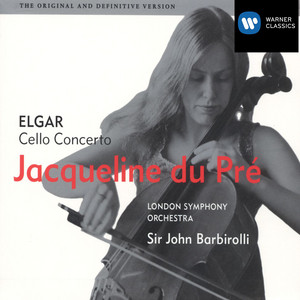 | Elgar: Cello Concerto in E Minor, Op. 85: II. Lento - Allegro molto | Edward Elgar, Jacqueline du Pré, London Symphony Orchestra, Sir John Barbirolli | G Major | 2 | 9B | 87 BPM | |
 | String Quartet in G Minor, Op. 10: I. Animé et très décidé | Claude Debussy, Quatuor Ébène | F♯ Minor | 0 | 11A | 84 BPM | |
 | String Quartet in E-Flat Major, H-U 277: III. Romanze | Fanny Mendelssohn, Takács Quartet | A Minor | 1 | 8A | 116 BPM | |
 | Violin Concerto in D Minor, Op. 47: III. Allegro, ma non tanto | Jean Sibelius, Anne-Sophie Mutter, Staatskapelle Dresden, André Previn | D Major | 2 | 10B | 112 BPM | |
| String Quartet in D minor, Op. 56 "Voces intimae": 4. Allegretto (ma pesante) | Jean Sibelius, Guarneri Quartet | D Minor | 1 | 7A | 76 BPM | |
 | Piano Trio in G Minor, Op. 17: II. Scherzo. Tempo di Menuetto | Clara Schumann, Ragna Schirmer, Iason Keramidis, Benedict Kloeckner | E♭ Major | 0 | 5B | 83 BPM | |
 | String Quartet No. 6 in B Flat Major, Op. 18, No. 6 - I. Allegro con brio | Beethoven | A♭ Major | 0 | 4B | 76 BPM |
- ISRC
- GBBBA0401021
- Label
- L-M Records/RCA Records