- BPM
- 94
- Key
- A Minor
- Camelot
- 8A
Introduction and Rondo capriccioso in A minor Op. 28 by Camille Saint-Saëns, Sarah Chang, Philadelphia Orchestra, Wolfgang Sawallisch Song Details
Camille Saint-Saëns, Sarah Chang, Philadelphia Orchestra, Wolfgang Sawallisch's 'Introduction and Rondo capriccioso in A minor Op. 28' had a release date set for January 1, 1994. Since This song is still less than 10 minute long, it is still considered a pretty long duration song compared to the average song length. This song does not appear to be explicit due to the lack of the "E" tag. There are a total of 5 in the song's album "Sarah Chang - Paganini & Saint-Saens Violin Concertos". In this album, this song's track order is #5. Furthermore, we believe that the track originated from United States. In terms of popularity, Introduction and Rondo capriccioso in A minor Op. 28 is currently not that popular. In our opinion, the overall tone is not very danceable and projects negative sounds, such as being sad, depressed, or angry.
BPM and Tempo
With Introduction and Rondo capriccioso in A minor Op. 28 by Camille Saint-Saëns, Sarah Chang, Philadelphia Orchestra, Wolfgang Sawallisch having a BPM of 94 with a half-time of 47 BPM and a double-time of 188 BPM, we would consider this track to have a Andante (at a walking pace) tempo marking. Because of this, we believe that the song has an overall slow tempo. Looking at the BPM of this song, this song might go great with yoga or pilates. The time signature for this track is 4/4.
Music Key
A Minor is the music key of this track. Which also means that the camelot key for this song is 8A. So, the perfect camelot match for 8A would be either 8A or 7B. While, a low energy boost can consist of either 8B or 9A. For moderate energy boost, you would use 5A and a high energy boost can either be 10A or 3A. However, if you are looking for a low energy drop, finding a song with a camelot key of 7A would be a great choice. Where 11A would give you a moderate drop, and 6A or 1A would be a high energy drop. Lastly, 11B allows you to change the mood.
Want to find the BPM and music key for other songs? Check out our BPM and Key Finder page!
- Popularity
- 14%
- Loudness
- -23.529 dB
- Acousticness
- 89%
- Danceability
- 31%
- Energy
- 11%
- Instrumentalness
- 35%
- Liveness
- 6%
- Loudness
- 61%
- Speechiness
- 5%
- Valence
- 20%
Recommendations
| Track | Artist | Key | Energy | Camelot | BPM | ||
|---|---|---|---|---|---|---|---|
 | Peer Gynt, Op. 23, Act II: No. 8, In the Hall of the Mountain King | Edvard Grieg, Margaret Lisi, San Francisco Symphony Chorus, Kaare Myksvoll, Maria Meyer, Kristina Rapp, Gregory Nybo, David Hess, San Francisco Symphony, Herbert Blomstedt | G Major | 1 | 9B | 116 BPM | |
 | Brahms: Double Concerto for Violin and Cello in A Minor, Op. 102: III. Vivace non troppo | Johannes Brahms, Renaud Capuçon, Gautier Capuçon, Gustav Mahler Jugendorchester, Myung-Whun Chung | C Major | 1 | 8B | 90 BPM | |
 | String Quartet No. 12 in F major, Op. 96 - "American" B.179: 2. Lento | Antonín Dvořák, Hagen Quartett | D Minor | 1 | 7A | 88 BPM | |
 | Carnival of the Animals, R. 125: XIV. Finale | Camille Saint-Saëns, Marylene Dosse, Annie Petit, Württembergisches Kammerorchester Heilbronn, Jörg Faerber | C Major | 3 | 8B | 106 BPM | |
 | Suite for Violin and Orchestra in A Minor, Op.10 (Suite im alten Stil): III. Tempo giusto | Christian Sinding, Itzhak Perlman, André Previn, Pittsburgh Symphony Orchestra | A Minor | 2 | 8A | 106 BPM | |
 | Scherzo in C Minor for Violin and Piano (from the F-A-E Sonata) | Johannes Brahms, Leonidas Kavakos, Yuja Wang | C Major | 2 | 8B | 59 BPM | |
 | Symphonie espagnole, Op. 21: V. Rondo. Allegro | Édouard Lalo, Itzhak Perlman, Orchestre de Paris, Daniel Barenboim | D Major | 2 | 10B | 83 BPM | |
 | Oberon, J. 306: Overture (Live) | Carl Maria von Weber, Staatskapelle Dresden, Giuseppe Sinopoli | D Major | 2 | 10B | 129 BPM | |
 | The Moldau | Bedřich Smetana, Ferenc Fricsay, Berliner Philharmoniker | E Minor | 3 | 9A | 86 BPM | |
 | Chopin: Piano Concerto No. 1 in E Minor, Op. 11: III. Rondo. Vivace | Frédéric Chopin, Martha Argerich, Charles Dutoit, Orchestre Symphonique de Montréal | E Major | 2 | 12B | 119 BPM | |
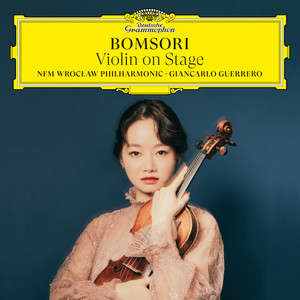 | Introduction et Rondo capriccioso, Op. 28, R. 188: I. Introduction | Camille Saint-Saëns, Bomsori, NFM Wrocław Philharmonic, Giancarlo Guerrero | A Minor | 0 | 8A | 177 BPM | |
 | Mendelssohn: Violin Concerto in E Minor, Op. 64, MWV O14: II. Andante | Felix Mendelssohn, Sarah Chang, Mariss Jansons, Berliner Philharmoniker | C Major | 0 | 8B | 81 BPM | |
 | String Quartet No. 12 in F Major, "American", Op. 96: II. Lento | Antonín Dvořák, Chilingirian Quartet | D Minor | 0 | 7A | 87 BPM | |
 | Elgar: Introduction and Allegro, Op. 47: I. Moderato | Edward Elgar, Sir John Barbirolli, Allegri String Quartet, Sinfonia Of London | G Major | 6 | 9B | 100 BPM | |
 | Violin Concerto in E Minor, Op. 64, MWV O 14: 3. Allegro non troppo - Allegro molto vivace | Felix Mendelssohn, Kyung Wha Chung, Orchestre Symphonique de Montréal, Charles Dutoit | E Major | 2 | 12B | 88 BPM | |
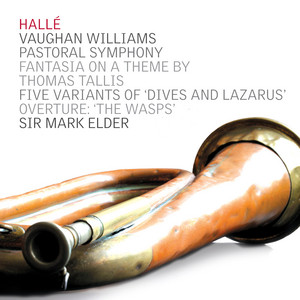 | Symphony No. 3 - 'Pastoral Symphony': I. Molto moderato | Ralph Vaughan Williams, Hallé, Sir Mark Elder | A Minor | 0 | 8A | 81 BPM | |
 | L'apprenti sorcier - Arranged by Victor Staub | Paul Dukas, Yuja Wang | D♭ Major | 3 | 3B | 175 BPM | |
 | Violin Concerto No. 1 in G Minor, Op. 26: II. Adagio | Max Bruch, Itzhak Perlman, Bernard Haitink, Royal Concertgebouw Orchestra | E♭ Major | 1 | 5B | 87 BPM | |
 | Concerto In G Minor "L'estate", Op. 8, No. 2, RV 315: III. Presto | Antonio Vivaldi, Nadja Salerno-Sonnenberg, Orchestra of St. Luke's | G Major | 4 | 9B | 146 BPM | |
 | Trãume | Richard Wagner, Anne Akiko Meyers | A Major | 2 | 11B | 175 BPM | |
 | Massenet: Thaïs, Act II: Méditation | Jules Massenet, Sarah Chang, Plácido Domingo, Berliner Philharmoniker | D Major | 1 | 10B | 99 BPM | |
| Symphonie espagnole, Op. 21: II. Scherzando. Allegro molto | Édouard Lalo, Itzhak Perlman, Orchestre de Paris, Daniel Barenboim | G Major | 1 | 9B | 105 BPM | |
 | Suite bergamasque: Clair de lune | Andre Caplet, Claude Debussy, Gustave Cloez, Rheinland-Pfalz State Philharmonic Orchestra, Leif Segerstam | D♭ Major | 0 | 3B | 68 BPM | |
 | String Quartet No. 1 in E Minor, JB 1:105: I. Allegro vivo appassionato | Bedřich Smetana, Pavel Haas Quartet | E Minor | 1 | 9A | 84 BPM | |
 | Vocalise, Op. 34, No. 14 (Arr. for Cello and Piano) | Sergei Rachmaninoff, Lynn Harrell, Vladimir Ashkenazy | D♭ Minor | 0 | 12A | 93 BPM |
- ISRC
- USAR29401003
- Label
- L-M Records/RCA Records