- BPM
- 90
- Key
- C Minor
- Camelot
- 5A
Gawain, Act II (1994 Revised Version): Gawain's Epilogue. I Left This Place [Live] by Harrison Birtwistle, Francois Le Roux, Elgar Howarth, Orchestra Of The Royal Opera House Song Details
"Gawain, Act II (1994 Revised Version): Gawain's Epilogue. I Left This Place [Live]" by Harrison Birtwistle, Francois Le Roux, Elgar Howarth, Orchestra Of The Royal Opera House had its release date on August 5, 2014. The duration of This song is about two minutes long, specifically at 2:27. This song does not appear to have any foul language. Gawain, Act II (1994 Revised Version): Gawain's Epilogue. I Left This Place [Live]'s duration is considered a little bit shorter than the average duration of a typical track. The track order of this song in Harrison Birtwistle, Orchestra Of The Royal Opera House, Elgar Howarth's "Harrison Birtwistle: Gawain (1994 Revised Version)" album is number 33 out of 65. On top of that, United Kingdom appears to be the country where this track was created. In terms of popularity, Gawain, Act II (1994 Revised Version): Gawain's Epilogue. I Left This Place [Live] is currently unknown. In our opinion, the overall tone is not very danceable and projects negative sounds, such as being sad, depressed, or angry.
BPM and Tempo
We consider the tempo marking of Gawain, Act II (1994 Revised Version): Gawain's Epilogue. I Left This Place [Live] by Harrison Birtwistle, Francois Le Roux, Elgar Howarth, Orchestra Of The Royal Opera House to be Andante (at a walking pace) because the track has a tempo of 90 BPM, a half-time of 45BPM, and a double-time of 180 BPM. Based on that, the speed of the song's tempo is slow. Activities such as, yoga or pilates, can go well with this song. The time signature for this track is 4/4.
Music Key
This song is in the music key of C Minor. Because this track belongs in the C Minor key, the camelot key is 5A. So, the perfect camelot match for 5A would be either 5A or 4B. While, a low energy boost can consist of either 5B or 6A. For moderate energy boost, you would use 2A and a high energy boost can either be 7A or 12A. However, if you are looking for a low energy drop, finding a song with a camelot key of 4A would be a great choice. Where 8A would give you a moderate drop, and 3A or 10A would be a high energy drop. Lastly, 8B allows you to change the mood.
Want to find the BPM and music key for other songs? Check out our BPM and Key Finder page!
- Popularity
- 0%
- Loudness
- -21.464 dB
- Acousticness
- 98%
- Danceability
- 32%
- Energy
- 20%
- Instrumentalness
- 1%
- Liveness
- 65%
- Loudness
- 64%
- Speechiness
- 5%
- Valence
- 13%
Recommendations
| Track | Artist | Key | Energy | Camelot | BPM | ||
|---|---|---|---|---|---|---|---|
 | Tandem: I. Con freschezze | Jörgen Dafgård, Carl-Johan Stjernstrom, Benjamin Schmid, Musica Vitae, Joachim Gustafsson | D♭ Minor | 1 | 12A | 116 BPM | |
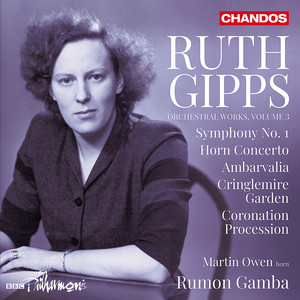 | Horn Concerto, Op. 58: II. Scherzo | Ruth Gipps, Martin Owen, BBC Philharmonic, Rumon Gamba | F Minor | 0 | 4A | 47 BPM | |
 | Variations on a Hungarian Folksong "The Peacock": Moderato | Zoltán Kodály, Neeme Järvi, Chicago Symphony Orchestra | C Minor | 0 | 5A | 69 BPM | |
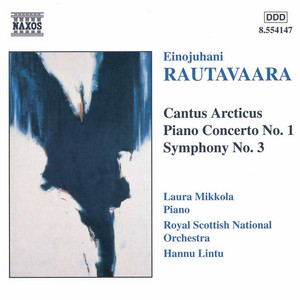 | Piano Concerto No. 1, Op. 45: II. Andante (ma rubato) | Einojuhani Rautavaara, Laura Mikkola, Royal Scottish National Orchestra, Hannu Lintu | D♭ Major | 0 | 3B | 104 BPM | |
 | D'Indy : Symphonie sur un chant montagnard, 'Cévenole' Op.25 : II Assez modéré, mais sans lenteur | Vincent d'Indy, Marek Janowski, Orchestre Philharmonique de Radio France | F Major | 1 | 7B | 56 BPM | |
 | Piano Quintet No. 1 "Margarete": I. Prelude and Chorale | Jim Aitchison, Roderick Chadwick, Kreutzer Quartet | G Major | 0 | 9B | 71 BPM | |
 | The Miraculous Mandarin, Op. 19, Sz. 73: V. Dance of the girl | Béla Bartók, Toronto Symphony Orchestra, Gustavo Gimeno | G Major | 0 | 9B | 71 BPM | |
 | Vattendroppar, JS 216 | Maja Bogdanovic, Daniel Rowland | B♭ Major | 1 | 6B | 175 BPM | |
 | Quatuor pour la fin du Temps: III. Abîme des oiseaux | Olivier Messiaen, Dominic Desautels | G Major | 0 | 9B | 71 BPM | |
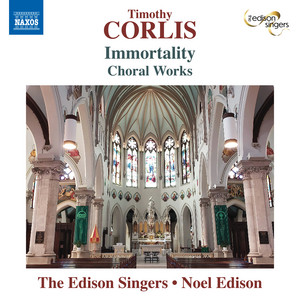 | Missa Pax: IV. Interlude | Timothy Corlis, James Campbell, Michael Bloss | E Major | 0 | 12B | 85 BPM | |
 | String Quartet No. 14 in F-Sharp Major, Op. 142: III. Allegretto | Dmitri Shostakovich, Cuarteto Casals | D♭ Major | 0 | 3B | 83 BPM | |
 | Bartók: String Quartet No. 3 in C-Sharp Minor, Sz. 85: I. Prima parte. Moderato | Béla Bartók, Belcea Quartet | B♭ Minor | 1 | 3A | 89 BPM | |
 | Punch and Judy: Pretty Polly's Rhapsody II | Harrison Birtwistle, Phyllis Bryn-Julson, Stephen Roberts, David Wilson-Johnson, London Sinfonietta, David Atherton | G Major | 1 | 9B | 78 BPM | |
 | Mythes, Trois Poèmes, Op.30: 1. La fontaine d'Arethuse | Karol Szymanowski, Kaja Danczowska, Krystian Zimerman | A♭ Minor | 0 | 1A | 74 BPM | |
| String Quartet No. 14 in F-Sharp Major, Op. 142: I. Allegretto | Dmitri Shostakovich, Cuarteto Casals | G Major | 0 | 9B | 71 BPM | |
 | Enescu: String Octet in C Major, Op. 7: IV. Mouvement de valse bien rythmée | George Enescu, Quatuor Ébène, Belcea Quartet | G Major | 0 | 9B | 71 BPM | |
 | Schoenberg: 3 Piano Pieces, Op. 11: No. 2 Mässige Achtel (Arr. Busoni) | Arnold Schoenberg, Daniel Barenboim | B♭ Major | 0 | 6B | 97 BPM | |
 | Nielsen: Violin Sonata No. 2 in G Minor, Op. 35: II. Molto adagio | Carl Nielsen, Leif Ove Andsnes, Christian Tetzlaff | B♭ Minor | 0 | 3A | 80 BPM | |
 | Advertisement | Henry Cowell | G Major | 5 | 9B | 113 BPM | |
 | Eine Alpensinfonie, Op. 64, TrV 233: I. Nacht | Richard Strauss, Andrés Orozco-Estrada, Hr-sinfonieorchester | B♭ Minor | 0 | 3A | 65 BPM | |
 | Maktah (berceuse phoque) (Chants de la jungle no.2) | Maurice Delage, Felicity Lott, Armin Jordan, Kammersensemble de Paris, Jean-Claude Bouveresse | E♭ Major | 0 | 5B | 128 BPM | |
 | Eine Alpensinfonie, Op. 64, TrV 233: XVIII. Stille vor dem Sturm | Richard Strauss, Berliner Philharmoniker, Seiji Ozawa | B♭ Major | 3 | 6B | 147 BPM | |
 | Ciudadano Sombra: II. - Live Concert | Ramón Paus, Pablo Martos, Yuval Gotlibovich, Alberto Martos | G Major | 1 | 9B | 94 BPM | |
 | The Triumph of Time: Quarter Note = C. 40 | Harrison Birtwistle, Philharmonia Orchestra, Elgar Howarth | E♭ Major | 3 | 5B | 107 BPM | |
 | String Quartet No. 8 in C Minor, Op. 110 (Arr. for Wind Ensemble by David Walter): I. Largo | Dmitri Shostakovich, Ensemble Ouranos | G Major | 0 | 9B | 71 BPM |
- ISRC
- GBCML1420064
- Label
- L-M Records/RCA Records