- BPM
- 108
- Key
- C Minor
- Camelot
- 5A
String Quartet in G Minor, Op. 10, L. 85: II. Assez vif et bien rythmé by Claude Debussy, Juilliard String Quartet Song Details
Claude Debussy, Juilliard String Quartet's ' "String Quartet in G Minor, Op. 10, L. 85: II. Assez vif et bien rythmé" was released on its scheduled release date, 1960. With this song being around four minutes long, at 3:49, the duration of this song is pretty average compared to other songs. This track is safe for children and doesn't appear to contain any foul language, since the "Explicit" tag was not present in this track. The song is number 2 out of 8 in Debussy: String Quartet in G Minor, Op. 10, L. 85 - Ravel: String Quartet in F Major, M. 35 by Juilliard String Quartet. Going off of the ISRC code of this track, we detected that the origin of this track is from United States. In terms of popularity, String Quartet in G Minor, Op. 10, L. 85: II. Assez vif et bien rythmé is currently not that popular. The overall mood can be danceable to some, especially with it's high amount of postive energy.
BPM and Tempo
The tempo marking of String Quartet in G Minor, Op. 10, L. 85: II. Assez vif et bien rythmé by Claude Debussy, Juilliard String Quartet is Andante (at a walking pace), since this song has a tempo of 108 BPM. With that information, we can conclude that the song has a moderate tempo. The time signature for this track is 4/4.
Music Key
C Minor is the music key of this track. Because this track belongs in the C Minor key, the camelot key is 5A. So, the perfect camelot match for 5A would be either 5A or 4B. While, a low energy boost can consist of either 5B or 6A. For moderate energy boost, you would use 2A and a high energy boost can either be 7A or 12A. However, if you are looking for a low energy drop, finding a song with a camelot key of 4A would be a great choice. Where 8A would give you a moderate drop, and 3A or 10A would be a high energy drop. Lastly, 8B allows you to change the mood.
Want to find the BPM and music key for other songs? Check out our BPM and Key Finder page!
- Popularity
- 11%
- Loudness
- -18.553 dB
- Acousticness
- 89%
- Danceability
- 51%
- Energy
- 19%
- Instrumentalness
- 69%
- Liveness
- 15%
- Loudness
- 69%
- Speechiness
- 5%
- Valence
- 60%
Recommendations
| Track | Artist | Key | Energy | Camelot | BPM | ||
|---|---|---|---|---|---|---|---|
 | Deux Arabesques, L. 66: No. 1 in E Major, Andantino con moto | Claude Debussy, New European Ensemble, Felicia van den End, James Meldrum, Astrid Haring, Emlyn Stam, Willem Stam | G Major | 0 | 9B | 53 BPM | |
 | Zdes' khorosho ('How Fair This Spot'), Op. 21, No. 7 | Sergei Rachmaninoff, Pablo Ferrandez, Denis Kozhukhin | A Major | 0 | 11B | 87 BPM | |
 | 12 Songs, Op. 21: V. Lilacs (Transcr. Rachmaninoff for Solo Piano) | Sergei Rachmaninoff, Sergei Babayan | A♭ Major | 0 | 4B | 78 BPM | |
 | 13 Pieces, Op. 76: No. 2 Etude | Jean Sibelius, Håvard Gimse | A Minor | 2 | 8A | 72 BPM | |
 | The Seasons, Op. 37b: X. October (Autumn Song) | Pyotr Ilyich Tchaikovsky, Khatia Buniatishvili | D Minor | 0 | 7A | 72 BPM | |
 | 3 Chorales, P. 167: No. 3, Andante (After J.S. Bach's BWV 645) | Ottorino Respighi, Seattle Symphony Orchestra, Gerard Schwarz | E♭ Major | 0 | 5B | 84 BPM | |
 | 6 Melodies, Op. 4 - 6 melodies, Op. 5: Allegretto | Fanny Mendelssohn, Beatrice Rauchs | G Minor | 1 | 6A | 107 BPM | |
 | 6 Pezzi, P. 44: No. 6. Internmezzo-serenata | Ottorino Respighi, Konstantin Scherbakov | A Major | 0 | 11B | 83 BPM | |
 | Petite Suite: Nocturne | Alexander Borodin, Alexander Krichel | E Minor | 1 | 9A | 66 BPM | |
 | Rachmaninov: 10 Preludes, Op. 23: No. 5 in G Minor | Sergei Rachmaninoff, Nikolai Lugansky | G Minor | 1 | 6A | 113 BPM | |
 | Le carnaval des animaux, R. 125: VII. Aquarium | Camille Saint-Saëns, Pascal Rogé, Cristina Ortiz, London Sinfonietta, Charles Dutoit | A Minor | 0 | 8A | 136 BPM | |
 | Ständchen, S. 560 (Trans. from Schwanengesang No. 4, D. 957) | Franz Schubert, Franz Liszt, Khatia Buniatishvili | D Major | 0 | 10B | 67 BPM | |
 | Mozart: Clarinet Concerto in A Major, K. 622: II. Adagio | Wolfgang Amadeus Mozart, Sabine Meyer, Berliner Philharmoniker, Claudio Abbado | D Major | 0 | 10B | 95 BPM | |
 | Images I, CD 105: I. Reflets dans l'eau | Claude Debussy, Seong-Jin Cho | D♭ Major | 0 | 3B | 67 BPM | |
 | Six Romances, Op. 6, TH 93: VI. None but the Lonely Heart (Arr. Elman) | Pyotr Ilyich Tchaikovsky, Daniel Lozakovich, Stanislav Soloviev | D♭ Major | 1 | 3B | 101 BPM | |
 | Bruyères - Home Session | Claude Debussy, Víkingur Ólafsson | A♭ Major | 0 | 4B | 64 BPM | |
 | Lyric Pieces Book V, Op. 54: No. 4 Notturno | Edvard Grieg, Alice Sara Ott | D Major | 2 | 10B | 121 BPM | |
 | 2 Arabesques, L. 66: No. 1 in E Major | Claude Debussy, Michael Korstick | E Major | 0 | 12B | 110 BPM | |
 | Nocturnes, Op. 27: No. 2 in D-Flat Major | Frédéric Chopin, Arthur Rubinstein | D♭ Major | 0 | 3B | 77 BPM | |
 | Children's Corner (arr. A. Caplet for orchestra): Serenade for the Doll | Andre Caplet, Claude Debussy, Rheinland-Pfalz State Philharmonic Orchestra, Leif Segerstam | D♭ Minor | 0 | 12A | 131 BPM | |
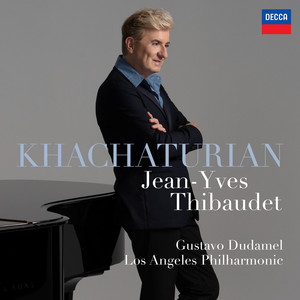 | Adagio of Spartacus and Phrygia (Transcr. E. Khachaturian for Solo Piano) - Excerpt | Aram Khachaturian, Jean-Yves Thibaudet | F Minor | 0 | 4A | 67 BPM | |
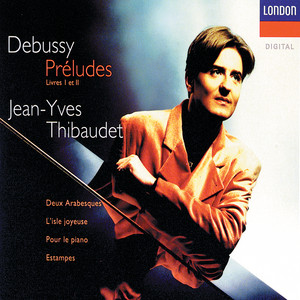 | Rêverie, L. 68: Rêverie | Claude Debussy, Jean-Yves Thibaudet | G Minor | 0 | 6A | 69 BPM | |
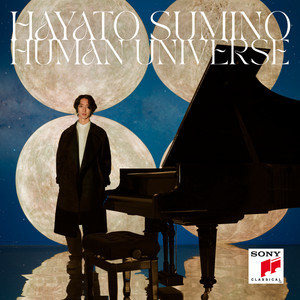 | In Paradisum | Gabriel Fauré, Hayato Sumino | A Minor | 0 | 8A | 98 BPM | |
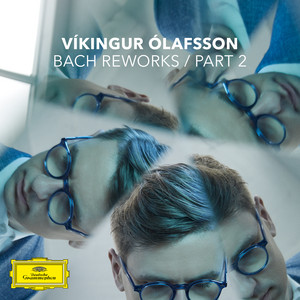 | Prelude in G Major | Víkingur Ólafsson | G Major | 0 | 9B | 102 BPM | |
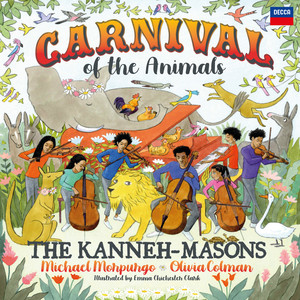 | Carnival of the Animals: Aquarium | Camille Saint-Saëns, Isata Kanneh-Mason, Konya Kanneh-Mason, Braimah Kanneh-Mason, Ayla Sahin, Timothy Ridout, Sheku Kanneh-Mason, Adam Walker, Alasdair Malloy | A Minor | 0 | 8A | 70 BPM |
- ISRC
- USSM11605590
- Label
- L-M Records/RCA Records