- BPM
- 96
- Key
- A♭ Minor
- Camelot
- 1A
Rigoletto, Act I Scene 1: You're going? That's cruel (Duke, Countess, Rigoletto, Chorus) by Giuseppe Verdi, Sir Mark Elder, English National Opera Orchestra, Arthur Davies, Linda McLeod, John Rawnsley, English National Opera Chorus Song Details
"Rigoletto, Act I Scene 1: You're going? That's cruel (Duke, Countess, Rigoletto, Chorus)" by Giuseppe Verdi, Sir Mark Elder, English National Opera Orchestra, Arthur Davies, Linda McLeod, John Rawnsley, English National Opera Chorus had its release date on January 1, 2000. The duration of This song is about two minutes long, specifically at 2:02. This song does not appear to have any foul language. Rigoletto, Act I Scene 1: You're going? That's cruel (Duke, Countess, Rigoletto, Chorus)'s duration is considered a little bit shorter than the average duration of a typical track. This song is part of Verdi: Rigoletto by Giuseppe Verdi, Sir Mark Elder, English National Opera Orchestra, John Rawnsley, Helen Field, Arthur Davies, John Tomlinson, Jean Rigby, Norman Bailey. The song's track number on the album is #4 out of 38 tracks. Based on our data, United Kingdom was the country where this track was produced or recorded. In terms of popularity, Rigoletto, Act I Scene 1: You're going? That's cruel (Duke, Countess, Rigoletto, Chorus) is currently unknown. In our opinion, the overall tone is not very danceable and projects negative sounds, such as being sad, depressed, or angry.
BPM and Tempo
Since Rigoletto, Act I Scene 1: You're going? That's cruel (Duke, Countess, Rigoletto, Chorus) by Giuseppe Verdi, Sir Mark Elder, English National Opera Orchestra, Arthur Davies, Linda McLeod, John Rawnsley, English National Opera Chorus has a tempo of 96 beats per a minute, the tempo markings of this song would be Andante (at a walking pace). With Rigoletto, Act I Scene 1: You're going? That's cruel (Duke, Countess, Rigoletto, Chorus) being at 96 BPM, the half-time would be 48 BPM with a double-time of 192 BPM.In addition, we consider the tempo speed to be pretty slow for this song. The time signature for this track is 3/4.
Music Key
This song is in the music key of A♭ Minor. Which also means that the camelot key for this song is 1A. So, the perfect camelot match for 1A would be either 1A or 12B. While, a low energy boost can consist of either 1B or 2A. For moderate energy boost, you would use 10A and a high energy boost can either be 3A or 8A. However, if you are looking for a low energy drop, finding a song with a camelot key of 12A would be a great choice. Where 4A would give you a moderate drop, and 11A or 6A would be a high energy drop. Lastly, 4B allows you to change the mood.
Want to find the BPM and music key for other songs? Check out our BPM and Key Finder page!
- Popularity
- 0%
- Loudness
- -17.202 dB
- Acousticness
- 96%
- Danceability
- 37%
- Energy
- 20%
- Instrumentalness
- 0%
- Liveness
- 16%
- Loudness
- 71%
- Speechiness
- 11%
- Valence
- 17%
Recommendations
| Track | Artist | Key | Energy | Camelot | BPM | ||
|---|---|---|---|---|---|---|---|
 | Blumenduett - Lakmé | Léo Delibes, Alain Lombard, Danielle Millet, Mady Mesplé, Orchestre Du Theatre National De L'Opera Comique | B Major | 1 | 1B | 130 BPM | |
 | Carmen, WD 31 / Act I: Séguedille et Duo: "Près des remparts de Séville" | Georges Bizet, Elina Garanca, Roberto Alagna, Orchestra Sinfonica Nazionale Della RAI, Karel Mark Chichon | F♯ Major | 1 | 2B | 127 BPM | |
 | La Sonnambula (1997 Digital Remaster): Compagne, temiri amici ....Come per me sereno | Maria Callas, Orchestra Del Teatro Alla Scala, Milano, Tullio Serafin | A♭ Major | 1 | 4B | 113 BPM | |
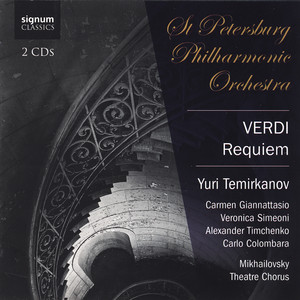 | Recordare | Giuseppe Verdi, Carmen Giannattasio, Veronica Simeoni, Alxander Timchenko, Carlo Colombara, Yuri Temirkanov, St. Petersburg Philharmonic Orchestra | F Major | 1 | 7B | 76 BPM | |
 | Così fan tutte, K. 588 / Act I: "Soave sia il vento" | Wolfgang Amadeus Mozart, Miah Persson, Angela Brower, Alessandro Corbelli, Chamber Orchestra of Europe, Yannick Nézet-Séguin | G Minor | 1 | 6A | 88 BPM | |
 | Overture | Georges Bizet, Herbert von Karajan, Wiener Philharmoniker | D Minor | 4 | 7A | 126 BPM | |
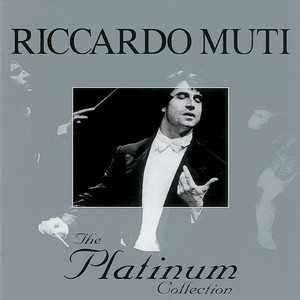 | Radetzky March Op. 228 | Riccardo Muti, Wiener Philharmoniker | A Major | 5 | 11B | 106 BPM | |
 | Giordano: Fedora, Act 2: "Amor ti vieta di non amar" (Loris) | Umberto Giordano, Plácido Domingo, Nello Santi, Orchestra of the Deutsche Oper Berlin | F Major | 1 | 7B | 115 BPM | |
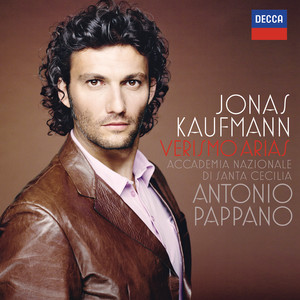 | Pagliacci / Act 1: "Recitar!...Vesti la giubba" | Ruggero Leoncavallo, Jonas Kaufmann, Orchestra dell'Accademia Nazionale di Santa Cecilia, Antonio Pappano | E Minor | 4 | 9A | 81 BPM | |
 | Die Walküre, WWV 86B, Act I: Winterstürme wichen dem Wonnemond "Siegmund's Love Aria" | Richard Wagner, Jonas Kaufmann, Mahler Chamber Orchestra, Claudio Abbado | F Major | 2 | 7B | 145 BPM | |
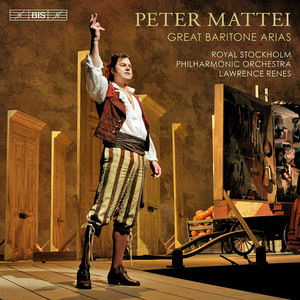 | Il barbiere di Siviglia (the Barber of Seville), Act I: Cavatina. Largo al factotum della citta | Gioachino Rossini, Peter Mattei, Royal Stockholm Philharmonic Orchestra, Lawrence Renes | C Major | 3 | 8B | 100 BPM | |
 | Bellini: Norma, Act 1: "Casta diva" (Norma, Coro) | Vincenzo Bellini, Maria Callas, Coro Del Teatro Alla Scala Di Milano, Tullio Serafin, Orchestra Del Teatro Alla Scala, Milano | F Major | 2 | 7B | 88 BPM | |
 | Aida: Preludio | Giuseppe Verdi, Plácido Domingo, Metropolitan Opera Orchestra, Samuel Ramey, Aprile Millo, James Levine, Dolora Zajick, James Morris | B Minor | 1 | 10A | 137 BPM | |
 | Pagliacci, Act I: "Recitar! Vesti la giubba" (Canio) | Ruggero Leoncavallo, Orchestra dell'Accademia Nazionale di Santa Cecilia, Francesco Molinari-Prandelli, Mario del Monaco | E Major | 2 | 12B | 89 BPM | |
 | Die lustige Witwe (The Merry Widow) (2000 - Remaster): XIV. Lippen schweigen (Danilo/Hanna) | Franz Lehár, Eberhard Waechter/Elisabeth Schwarzkopf/Philharmonia Orchestra/Lovro von Matacic, Eberhard Waechter, Lovro Von Matacic, Philharmonia Orchestra | G Major | 1 | 9B | 85 BPM | |
 | Cavalleria rusticana: Voi lo sapete | Pietro Mascagni, Agnes Baltsa, Munich Radio Orchestra, Heinz Wallberg | F Major | 3 | 7B | 172 BPM | |
 | Les Contes d'Hoffmann / Act 2: "Belle nuit, ô nuit d'amour" | Jacques Offenbach, Dame Joan Sutherland, Huguette Tourangeau, Chorus Pro Arte Lausanne Du Brassus, Radio Suisse Romande Chorus, Orchestre de la Suisse Romande, Richard Bonynge | D Major | 1 | 10B | 82 BPM | |
 | Il Trovatore: Coro di zingari | Giuseppe Verdi, Christer Solén, Staffan Sandlund, Eric Ericson, Orphei Drängar, Swedish Radio Symphony Orchestra, Leif Segerstam | G Major | 4 | 9B | 141 BPM | |
 | Die Zauberflöte, K. 620: Overture | Wolfgang Amadeus Mozart, Mahler Chamber Orchestra, Claudio Abbado | E♭ Major | 1 | 5B | 85 BPM | |
 | Die Walküre, Act III: Ride of the Valkyries | Richard Wagner, Budapest Symphony Orchestra, György Lehel | D♭ Major | 1 | 3B | 72 BPM | |
 | Requiem In D Minor, K. 626: Sanctus | Slovak Philharmonic, Jozef Kundlák, Jaroslava Horska, Peter Mikulas, Slovak Philharmonic Chorus, Vladimir Ruso, Stefan Klimo, Magdaléna Hajóssyová, Wolfgang Amadeus Mozart | D Major | 3 | 10B | 82 BPM | |
 | Bizet: Carmen, Act 2: "Votre toast, je peux vous le rendre" (Escamillo, Frasquita, Mercédès, Carmen, Zuniga, Chœur) | Georges Bizet, Rafael Frühbeck de Burgos, Bernard Gontcharenko, Chœur du Théâtre national de l'Opéra de Paris, Éliane Lublin, Grace Bumbry, Kostas Paskalis, Viorica Cortez, Orchestre du Théâtre National de l'Opéra de Paris | G Minor | 0 | 6A | 124 BPM | |
 | Carmina Burana: I. O fortuna | Carl Orff, Orchester der Deutschen Oper Berlin, Eugen Jochum, Chor der Deutschen Oper Berlin | B♭ Major | 2 | 6B | 70 BPM | |
 | Rigoletto / Act 2: "Sì vendetta" / "O mio padre" (Rigoletto, Gilda) | Giuseppe Verdi, Vladimir Chernov, Cheryl Studer, Metropolitan Opera Orchestra, James Levine | D♭ Major | 4 | 3B | 77 BPM | |
 | Chorus Of The Hebrew Slaves (Nabucco) | Choir and Orchestra of the Budapest State Opera, Josif Conta, Consortium Musicum Ljubjlana | D♭ Major | 0 | 3B | 142 BPM |
- ISRC
- GBLWD0001004
- Label
- L-M Records/RCA Records