- BPM
- 130
- Key
- B♭ Major
- Camelot
- 6B
Les Contes d'Hoffmann: Ils se sont éloignés enfin! by Jacques Offenbach, Richard Tucker, Roberta Peters, Pierre Monteux Song Details
"Les Contes d'Hoffmann: Ils se sont éloignés enfin!" by Jacques Offenbach, Richard Tucker, Roberta Peters, Pierre Monteux had its release date on October 28, 2011. The duration of This song is about two minutes long, specifically at 2:12. This song does not appear to have any foul language. Les Contes d'Hoffmann: Ils se sont éloignés enfin!'s duration is considered a little bit shorter than the average duration of a typical track. There are a total of 41 in the song's album "Offenbach: Les Contes d'Hoffmann (Metropolitan Opera)". In this album, this song's track order is #17. Furthermore, we believe that the track originated from United States. Based on our statistics, Les Contes d'Hoffmann: Ils se sont éloignés enfin!'s popularity is unknown right now. In our opinion, the overall tone is not very danceable and projects negative sounds, such as being sad, depressed, or angry.
BPM and Tempo
With Les Contes d'Hoffmann: Ils se sont éloignés enfin! by Jacques Offenbach, Richard Tucker, Roberta Peters, Pierre Monteux having a BPM of 130 with a half-time of 65 BPM and a double-time of 260 BPM, we would consider this track to have a Allegro (fast, quick, and bright) tempo marking. Because of this, we believe that the song has an overall fast tempo. Looking at the BPM of this song, this song might go great with walking. The time signature for this track is 4/4.
Music Key
This song is in the music key of B♭ Major. Or for those who are familiar with the camelot wheel, this song has a camelot key of 6B. So, the perfect camelot match for 6B would be either 6B or 7A. While, 7B can give you a low energy boost. For moderate energy boost, you would use 3B and a high energy boost can either be 8B or 1B. Though, if you want a low energy drop, you should looking for songs with either a camelot key of 6A or 5B will give you a low energy drop, 9B would be a moderate one, and 4B or 11B would be a high energy drop. Lastly, 3A allows you to change the mood.
Want to find the BPM and music key for other songs? Check out our BPM and Key Finder page!
- Popularity
- 0%
- Loudness
- -16.929 dB
- Acousticness
- 97%
- Danceability
- 34%
- Energy
- 25%
- Instrumentalness
- 0%
- Liveness
- 93%
- Loudness
- 72%
- Speechiness
- 8%
- Valence
- 7%
Recommendations
| Track | Artist | Key | Energy | Camelot | BPM | ||
|---|---|---|---|---|---|---|---|
 | Orchestersuite in D Major, BWV 1068: II. Air | Slovak Philharmonic, Bohdan Warchal | D Major | 2 | 10B | 114 BPM | |
 | Die Zauberflöte, K. 620: Overture | Wolfgang Amadeus Mozart, Mahler Chamber Orchestra, Claudio Abbado | E♭ Major | 1 | 5B | 85 BPM | |
 | Fauré: Pavane, Op. 50 | Gabriel Fauré, San Francisco Symphony, Michael Tilson Thomas | F♯ Minor | 0 | 11A | 62 BPM | |
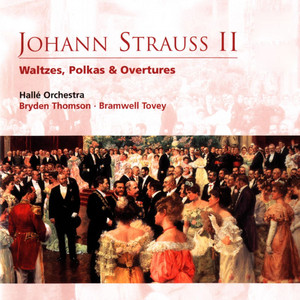 | Strauss II, J: Frühlingsstimmen, Op. 410 | Johann Strauss II, Hallé, Bryden Thomson | B♭ Major | 0 | 6B | 103 BPM | |
 | Prince Igor: Polovtsian Dances (Version for Chorus) | Alexander Borodin, Kiev Chamber Choir, Ukraine National Radio Symphony Orchestra, Theodore Kuchar | A Major | 2 | 11B | 110 BPM | |
 | Offenbach: Les contes d'Hoffmann, Act 2: Chanson d'Olympia. "Les oiseaux dans la charmille" (Olympia, Chœur) | Jacques Offenbach, Kent Nagano, Natalie Dessay, Choeur De l'Opéra National De Lyon, Orchestre De L'Opéra National De Lyon | C Major | 0 | 8B | 98 BPM | |
 | Aida: Aida, Act II: Grand March | Giuseppe Verdi, RTÉ National Symphony Orchestra, Various Artists, Antonio Ghislanzoni | D Minor | 1 | 7A | 78 BPM | |
 | Skater's Waltz | Norddeutsche Philharmonie Symphony | D Major | 2 | 10B | 105 BPM | |
 | Warsaw Concerto | Richard Addinsell, Jean-Yves Thibaudet, BBC Symphony Orchestra, Hugh Wolff | B Major | 1 | 1B | 76 BPM | |
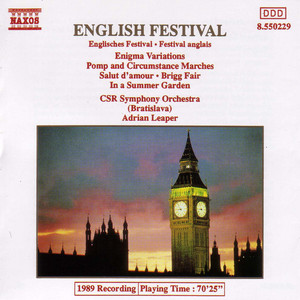 | Salut d'amour, Op. 12 (version for orchestra) | Edward Elgar, Slovak Radio Symphony Orchestra, Adrian Leaper | B♭ Major | 1 | 6B | 82 BPM | |
 | Mozart: Die Zauberflöte, K. 620: Overture | Wolfgang Amadeus Mozart, Wolfgang Sawallisch, Bayerisches Staatsorchester | E♭ Major | 1 | 5B | 80 BPM | |
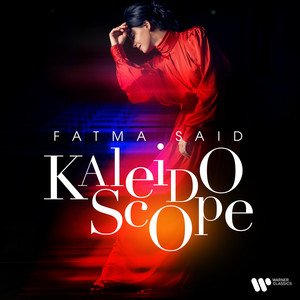 | Barcarolle: Belle nuit, ô nuit d’amour (Les Contes d’Hoffmann) | Jacques Offenbach, Fatma Said, Sascha Goetzel, Orchestre Philharmonique de Monte-Carlo | D Major | 1 | 10B | 129 BPM | |
 | La traviata / Act 1: "Libiamo ne'lieti calici" (Brindisi) | Giuseppe Verdi, Luciano Pavarotti, Wendy White, Anthony Laciura, Metropolitan Opera Orchestra, James Levine, Metropolitan Opera Chorus | B♭ Major | 1 | 6B | 111 BPM | |
 | Gaîté parisienne: Barcarolle - Excerpt | Jacques Offenbach, Orchestre Symphonique de Montréal, Charles Dutoit | D Major | 1 | 10B | 68 BPM | |
![Wiegenlied, Op. 49, No. 4 (Arr. for Cello and Piano) [Brahms Lullaby] by Johannes Brahms, Yo-Yo Ma, Kathryn Stott](https://i.scdn.co/image/ab67616d00001e02843f794b43b28fc6ccfe5b2f) | Wiegenlied, Op. 49, No. 4 (Arr. for Cello and Piano) [Brahms Lullaby] | Johannes Brahms, Yo-Yo Ma, Kathryn Stott | D Minor | 1 | 7A | 103 BPM | |
 | Les Contes d'Hoffmann / Act 1: Le conseiller Lindorf, morbleu! | Jacques Offenbach, Andreas Schmidt, Robert Gambill, Orchestre National De France, Seiji Ozawa | B♭ Major | 1 | 6B | 107 BPM | |
 | Gold And Silver Waltz (Gold und Silber/L'or et l'argent) | Franz Lehár, Strauss Festival Orchestra, Peter Guth | C Major | 2 | 8B | 175 BPM | |
 | Das Liebesverbot: Overture | Richard Wagner, Staatskapelle Dresden, Giuseppe Sinopoli | G Major | 6 | 9B | 120 BPM | |
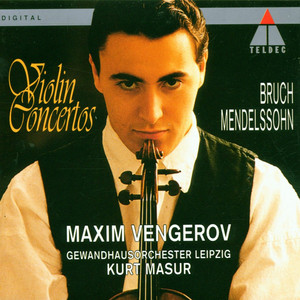 | Bruch : Violin Concerto No.1 in G minor Op.26 : III Finale - Allegro energico | Max Bruch, Maxim Vengerov, Kurt Masur, Gewandhausorchester Leipzig | G Major | 2 | 9B | 90 BPM | |
 | Die Tanzerin, Polka francaise, Op. 227 | Josef Strauss, Slovak State Philharmonic Orchestra, Kosice, Michael Dittrich | E♭ Major | 2 | 5B | 173 BPM | |
 | Scheherazade: The princess in a palanquin | Nikolai Rimsky-Korsakov, Lars Hjalmar Joakim | G Major | 1 | 9B | 166 BPM | |
 | Mozart: Symphony No. 40 in G Minor, K. 550: I. Molto allegro | Wolfgang Amadeus Mozart, Yehudi Menuhin, Sinfonia Varsovia | G Minor | 2 | 6A | 114 BPM | |
 | Sorochintsi Fair, Act I: Gopak (Hopak) | Modest Mussorgsky, Slovak Philharmonic, Kenneth Jean | G Major | 2 | 9B | 127 BPM | |
 | Offenbach: Les Brigands: Overture | Jacques Offenbach, John Eliot Gardiner, Orchestre de l'Opéra de Lyon | E♭ Major | 2 | 5B | 89 BPM | |
 | Gayane Suite No. 2: VI. Sabre Dance | Aram Khachaturian, St. Petersburg State Symphony Orchestra, Andre Anichanov | E♭ Major | 8 | 5B | 91 BPM |
- ISRC
- USY3P1102821
- Label
- L-M Records/RCA Records