- BPM
- 73
- Key
- C Minor
- Camelot
- 5A
Symphony No. 5 in D Major: II. Scherzo. Presto misterioso by Ralph Vaughan Williams, Bryden Thomson, London Symphony Orchestra Song Details
"Symphony No. 5 in D Major: II. Scherzo. Presto misterioso" by Ralph Vaughan Williams, Bryden Thomson, London Symphony Orchestra had its release date on August 1, 1989. With this song being about 5 minutes long, at This song is fairly a long song compared to the average song length. This song does not have an "Explicit" tag, making it safe for all ages. This song is part of Vaughan Williams: Complete Symphonies by Ralph Vaughan Williams, Bryden Thomson, London Symphony Orchestra, Yvonne Kenny, Catherine Bott, Brian Rayner Cook, Roderick elms, London Symphony Chorus. The song's track number on the album is #2 out of 37 tracks. Based on our data, United Kingdom was the country where this track was produced or recorded. Symphony No. 5 in D Major: II. Scherzo. Presto misterioso is unknown right now. In our opinion, the overall tone is not very danceable and projects negative sounds, such as being sad, depressed, or angry.
BPM and Tempo
Since Symphony No. 5 in D Major: II. Scherzo. Presto misterioso by Ralph Vaughan Williams, Bryden Thomson, London Symphony Orchestra has a tempo of 73 beats per a minute, the tempo markings of this song would be Adagio (slowly with great expression). With Symphony No. 5 in D Major: II. Scherzo. Presto misterioso being at 73 BPM, the half-time would be 36 BPM with a double-time of 146 BPM.In addition, we consider the tempo speed to be pretty slow for this song. The time signature for this track is 4/4.
Music Key
This song has a musical key of C Minor. Which also means that the camelot key for this song is 5A. So, the perfect camelot match for 5A would be either 5A or 4B. While, a low energy boost can consist of either 5B or 6A. For moderate energy boost, you would use 2A and a high energy boost can either be 7A or 12A. However, if you are looking for a low energy drop, finding a song with a camelot key of 4A would be a great choice. Where 8A would give you a moderate drop, and 3A or 10A would be a high energy drop. Lastly, 8B allows you to change the mood.
Want to find the BPM and music key for other songs? Check out our BPM and Key Finder page!
- Popularity
- 0%
- Loudness
- -19.432 dB
- Acousticness
- 95%
- Danceability
- 7%
- Energy
- 7%
- Instrumentalness
- 87%
- Liveness
- 20%
- Loudness
- 68%
- Speechiness
- 4%
- Valence
- 5%
Recommendations
| Track | Artist | Key | Energy | Camelot | BPM | ||
|---|---|---|---|---|---|---|---|
 | Deep River (Arr. Coleridge-Taylor, Kanneh-Mason) | Traditional, Sheku Kanneh-Mason, Isata Kanneh-Mason, Braimah Kanneh-Mason | E Major | 1 | 12B | 86 BPM | |
 | Scottish Fantasy for Violin and Orchestra, Op. 46: IV. Finale: Allegro guerriero | Max Bruch, Joshua Bell, Academy of St. Martin in the Fields | E♭ Major | 2 | 5B | 97 BPM | |
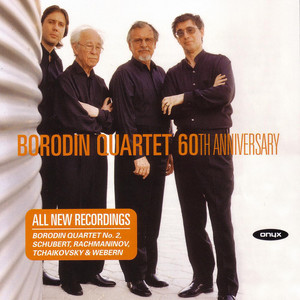 | Borodin - String Quartet No.2 in D major: Notturno: Andante | Alexander Borodin, Borodin Quartet | A Major | 2 | 11B | 74 BPM | |
 | Polovetsian Dances from Prince Igor: Introduzione | Alexander Borodin, George Szell, The Cleveland Orchestra | A Major | 1 | 11B | 83 BPM | |
 | Violin Concerto No. 1 in G Minor, Op. 26: II. Adagio | Max Bruch, Itzhak Perlman, Bernard Haitink, Royal Concertgebouw Orchestra | E♭ Major | 1 | 5B | 87 BPM | |
 | 6 Studies in English Folksong (Version for Cello & Piano): No. 5, Andante tranquillo "The Lady and the Dragon" | Ralph Vaughan Williams, Gerald Peregrine, Antony Ingham | G Major | 0 | 9B | 84 BPM | |
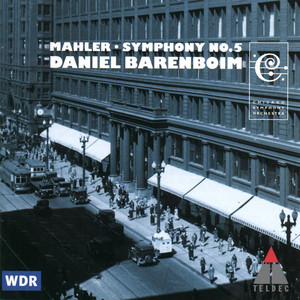 | Mahler: Symphony No. 5 in C-Sharp Minor: IV. Adagietto. Sehr langsam | Gustav Mahler, Daniel Barenboim, Chicago Symphony Orchestra | F Major | 1 | 7B | 82 BPM | |
 | Petite suite de concert, Op. 77: II. Demande et reponse | Samuel Coleridge-Taylor, Chicago Sinfonietta, Paul Freeman | G Major | 0 | 9B | 90 BPM | |
 | 5 Bagatelles, Op. 23a (Arr. L. Ashmore for Clarinet & Strings): No. 4, Forlana. Allegretto grazioso | Gerald Finzi, Robert Plane, Royal Northern Sinfonia, Howard Griffiths | F♯ Major | 1 | 2B | 96 BPM | |
 | Danses pour Harpe Chromatique: Danse profane | Claude Debussy, Claire Jones, Paul Watkins, English Chamber Orchestra | A Major | 1 | 11B | 99 BPM | |
 | Symphony No. 5 in E Minor, Op. 64: III. Valse. Allegro moderato | Pyotr Ilyich Tchaikovsky, Berliner Philharmoniker, Kirill Petrenko | A Major | 0 | 11B | 139 BPM | |
 | Kol Nidrei - Adagio For Cello, Opus 47 | Max Bruch, Alisa Weilerstein, Staatskapelle Berlin, Daniel Barenboim | D Major | 1 | 10B | 81 BPM | |
 | Lieder ohne Worte (Songs without Words), Book 2, Op. 30: No. 7 in E-Flat Major, Op. 30, No. 1, MWV U103 | Felix Mendelssohn, Péter Nagy | E♭ Major | 0 | 5B | 65 BPM | |
 | I. Allegro scherzando | George Butterworth, BBC National Orchestra Of Wales, Kriss Russman | F Major | 1 | 7B | 78 BPM | |
 | Trade Winds | Ronald Binge, Slovak Radio Symphony Orchestra, Ernest Tomlinson | A Major | 0 | 11B | 66 BPM | |
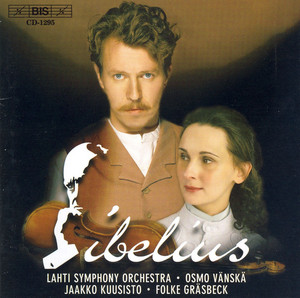 | Andante festivo, JS 34b (Version for String Orchestra & Timpani) | Jean Sibelius, Sinfonia Lahti, Osmo Vänskä | G Major | 2 | 9B | 57 BPM | |
 | Elgar: Introduction and Allegro, Op. 47: I. Moderato | Edward Elgar, Sir John Barbirolli, Allegri String Quartet, Sinfonia Of London | G Major | 6 | 9B | 100 BPM | |
 | The Victorian Kitchen Garden - Suite: Prelude | Paul Reade, Emma Johnson, Skaila Kanga | B♭ Major | 0 | 6B | 67 BPM | |
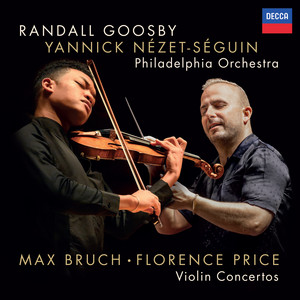 | Adoration (Arr. Gray for Violin & Orchestra) | Florence Beatrice Price, Randall Goosby, Philadelphia Orchestra, Yannick Nézet-Séguin | D Major | 3 | 10B | 74 BPM | |
 | Suite from "The Victorian Kitchen Garden": I. Prelude. Andante pastorale | Paul Reade, Michael Collins, Michael McHale | B♭ Major | 0 | 6B | 67 BPM | |
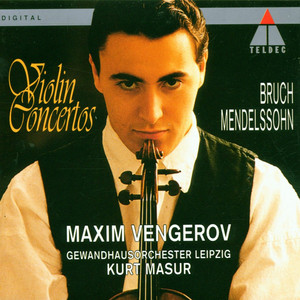 | Bruch: Violin Concerto No. 1 in G Minor, Op. 26: I. Prelude. Allegro moderato | Max Bruch, Maxim Vengerov, Kurt Masur, Gewandhausorchester | E♭ Major | 1 | 5B | 113 BPM | |
 | Five English Nursery Tunes: IV. Curly Locks | Hubert Clifford, Martyn Brabbins, BBC Philharmonic | B♭ Major | 0 | 6B | 143 BPM | |
 | Lieutenant Kijé, Symphonic Suite, Op. 60: II. Romance | Sergei Prokofiev, Neeme Järvi, Royal Scottish National Orchestra | A♭ Major | 0 | 4B | 104 BPM | |
 | Petite suite, L. 65: No. 1, En bateau (Orch. H. Buser) | Claude Debussy, フランス国立リヨン管弦楽団, 準・メルクル | E♭ Major | 1 | 5B | 92 BPM | |
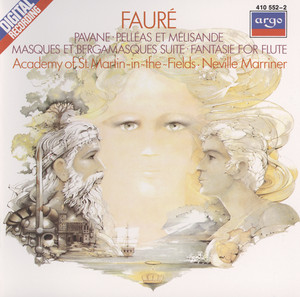 | Pelléas et Mélisande, Op.80: 3. Sicilienne | Gabriel Fauré, Academy of St. Martin in the Fields, Sir Neville Marriner | G Minor | 0 | 6A | 111 BPM |
- ISRC
- GBLWD8705202
- Label
- L-M Records/RCA Records