- BPM
- 79
- Key
- F Minor
- Camelot
- 4A
Letters from Paris: No. 2, The French Telephone by Ned Rorem, Gregg Smith Singers, Adirondack Chamber Orchestra, Gregg Smith Song Details
"Letters from Paris: No. 2, The French Telephone" by Ned Rorem, Gregg Smith Singers, Adirondack Chamber Orchestra, Gregg Smith had its release date on January 1, 1996. With This song being less than a minute long, we are pretty confident that this song does not contain any foul language. That being said, this song is pretty short compared to other songs. There are a total of 20 in the song's album "Rorem: Choral Works". In this album, this song's track order is #2. Furthermore, we believe that the track originated from Hong Kong. Letters from Paris: No. 2, The French Telephone is unknown right now. In our opinion, the overall tone is not very danceable and projects negative sounds, such as being sad, depressed, or angry.
BPM and Tempo
With Letters from Paris: No. 2, The French Telephone by Ned Rorem, Gregg Smith Singers, Adirondack Chamber Orchestra, Gregg Smith having a BPM of 79 with a half-time of 40 BPM and a double-time of 158 BPM, we would consider this track to have a Andante (at a walking pace) tempo marking. Because of this, we believe that the song has an overall slow tempo. The time signature for this track is 4/4.
Music Key
This song has a musical key of F Minor. Which also means that the camelot key for this song is 4A. So, the perfect camelot match for 4A would be either 4A or 3B. While, a low energy boost can consist of either 4B or 5A. For moderate energy boost, you would use 1A and a high energy boost can either be 6A or 11A. However, if you are looking for a low energy drop, finding a song with a camelot key of 3A would be a great choice. Where 7A would give you a moderate drop, and 2A or 9A would be a high energy drop. Lastly, 7B allows you to change the mood.
Want to find the BPM and music key for other songs? Check out our BPM and Key Finder page!
- Popularity
- 0%
- Loudness
- -31.839 dB
- Acousticness
- 97%
- Danceability
- 16%
- Energy
- 2%
- Instrumentalness
- 2%
- Liveness
- 9%
- Loudness
- 47%
- Speechiness
- 5%
- Valence
- 4%
Recommendations
| Track | Artist | Key | Energy | Camelot | BPM | ||
|---|---|---|---|---|---|---|---|
 | Cello Concerto in A Minor, Op. 129: IIa. Sehr langsam | Robert Schumann, Kian Soltani, Camerata Salzburg, Gregory Ahss | E Major | 0 | 12B | 113 BPM | |
 | Prelude and Fugue in D Major, P. 158: Fugue. Allegro (After J.S. Bach's BWV 532) | Ottorino Respighi, Seattle Symphony Orchestra, Gerard Schwarz | D Major | 1 | 10B | 99 BPM | |
 | Poeme. Op. 32, No.1 in F-Sharp Major - Duo-Art 6383 | Alexander Scriabin, Josef Hofmann, Peter Phillips | G Major | 0 | 9B | 91 BPM | |
 | Das alte Lied (Arr. Hough) | Henry Love, Stephen Hough | E♭ Major | 0 | 5B | 63 BPM | |
 | Cadenza für Violine und Klavier | Sophia Jani, Clarissa Bevilacqua, Martina Consonni | G Major | 0 | 9B | 91 BPM | |
 | Summer Music, Op. 31: IV. Tempo Primo, Joyous and Flowing | Samuel Barber, Ensemble Ouranos | G Major | 0 | 9B | 91 BPM | |
 | Symphony No. 3: II | Arvo Pärt, NFM Wrocław Philharmonic, Tõnu Kaljuste | A Minor | 0 | 8A | 95 BPM | |
 | Soleils de septembre | Lili Boulanger, Antonii Baryshevskyi, Orpheus Vokalensemble, Michael Alber | D Major | 0 | 10B | 71 BPM | |
 | Clarinet Sonata No. 2, Op. 120 No. 2: II. Allegro appassionato | Johannes Brahms, Nicola Boud, Anthony Romaniuk | A♭ Major | 1 | 4B | 134 BPM | |
 | Dolly Suite, Op. 56 (arr. H. Rabaud): III. Le Jardin de Dolly | Henri Rabaud, Gabriel Fauré, RTE Sinfonietta, John Georgiadis | E Major | 0 | 12B | 64 BPM | |
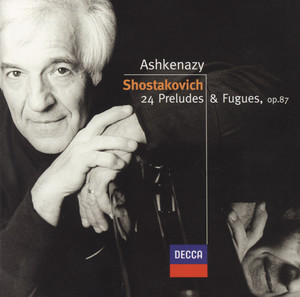 | Preludes and Fugues for Piano, Op.87: Prelude & Fugue No.1 in C major: Fugue | Dmitri Shostakovich, Vladimir Ashkenazy | A Minor | 0 | 8A | 92 BPM | |
 | Symphony No. 2: Tranquillo | Bournemouth Symphony Orchestra, Ned Rorem | B♭ Minor | 1 | 3A | 96 BPM | |
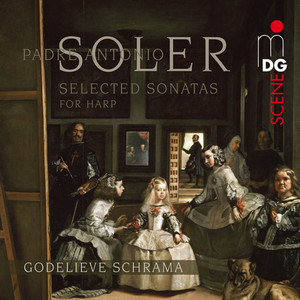 | Harpsichord Sonata No. 48: Allegro (arr. for Harp) | Antonio Soler, Godelieve Schrama | C Minor | 1 | 5A | 106 BPM | |
 | "Raindrop" prelude | Kiyotsugu Arai | D♭ Major | 0 | 3B | 85 BPM | |
 | Dona nobis pacem: The Angel of Death has been abroad | Ralph Vaughan Williams, Christina Pier, Matthew Brook, The Bach Choir, Bournemouth Symphony Orchestra, David Hill | F Major | 2 | 7B | 88 BPM | |
 | Symphony No. 5: IV. Adagietto. Sehr langsam (Arr. Farrington for Chamber Ensemble) | Gustav Mahler, Esther Yoo, Elen Hâf Rideal, Abigail Fenna, Liz Varlow, Chantal Woodhouse, Roberto Sorrentino, Benjamin Cunningham, David Gordon, Suzy Willison-Kawalec | G Major | 0 | 9B | 91 BPM | |
 | Sing My Soul, His Wondrous Love | Ned Rorem, Choir of St. John's College, Cambridge, Andrew Nethsingha | E Major | 1 | 12B | 94 BPM | |
 | Introduction and Allegro appassionato, Op. 92, for Piano and Orchestra in G Major: I. Langsam | Robert Schumann, Christian Zacharias, Orchestre de Chambre de Lausanne | G Major | 0 | 9B | 132 BPM | |
 | Hahn: Le rossignol éperdu: No. 52, Hivernale (Version for Piano) | Reynaldo Hahn, Shani Diluka | F♯ Minor | 0 | 11A | 137 BPM | |
 | Empty Abyss | Orithia | A Minor | 0 | 8A | 76 BPM | |
 | Rorem : Orchids | Ned Rorem, Susan Graham, Ensemble Oriol | F Minor | 0 | 4A | 87 BPM | |
 | Suite No. 1, "Orientale": I. Okenstamning: Adagio | Kurt Atterberg, Ferenc Balogh, Gyorgy Kertesz, Andras Kiss, Ilona Prunyi | B Minor | 1 | 10A | 61 BPM | |
 | Winter Pages: XII. Still Life | Ned Rorem, Ida Kavafian, Fred Sherry, Frank Morelli, Todd Palmer, Charles Wadsworth | G Minor | 0 | 6A | 97 BPM | |
 | Dispersed And Transcendental Chants, Op. 18: Chant 8. The Word | Julián De La Chica, Briana Hunter, Eric Sedgwick | G Minor | 0 | 6A | 75 BPM | |
 | Symphony No. 2 in One Movement, Op. 30: V. Adagio | Ruth Gipps, Rumon Gamba, BBC National Orchestra Of Wales | B♭ Major | 0 | 6B | 115 BPM |
- ISRC
- HKI192429030
- Label
- L-M Records/RCA Records