- BPM
- 151
- Key
- F Minor
- Camelot
- 4A
Nouvelles suites de pièces de clavecin / Suite in G Major, RCT 6: Menuets I & II by Jean-Philippe Rameau, Christophe Rousset Song Details
Jean-Philippe Rameau, Christophe Rousset's ' "Nouvelles suites de pièces de clavecin / Suite in G Major, RCT 6: Menuets I & II" was released on its scheduled release date, January 1, 1991. With This song being less than two minutes long, at 1:59, we are fairly confident that this song is not explicit and is safe for all ages. Based on the duration of this song, this song duration is much smaller than the average song duration. There are a total of 46 in the song's album "Rameau: Pièces de Claveçin". In this album, this song's track order is #11. Furthermore, we believe that the track originated from United Kingdom. Based on our statistics, Nouvelles suites de pièces de clavecin / Suite in G Major, RCT 6: Menuets I & II's popularity is unknown right now. Based on the vibe, this track doesn't seem to be that danceable, however its valence properties can make this some somewhat danceable.
BPM and Tempo
With Nouvelles suites de pièces de clavecin / Suite in G Major, RCT 6: Menuets I & II by Jean-Philippe Rameau, Christophe Rousset having a BPM of 151 with a half-time of 76 BPM and a double-time of 302 BPM, we would consider this track to have a Allegro (fast, quick, and bright) tempo marking. Because of this, we believe that the song has an overall fast tempo. Looking at the BPM of this song, this song might go great with running. The time signature for this track is 4/4.
Music Key
This song is in the music key of F Minor. Which also means that the camelot key for this song is 4A. So, the perfect camelot match for 4A would be either 4A or 3B. While, a low energy boost can consist of either 4B or 5A. For moderate energy boost, you would use 1A and a high energy boost can either be 6A or 11A. However, if you are looking for a low energy drop, finding a song with a camelot key of 3A would be a great choice. Where 7A would give you a moderate drop, and 2A or 9A would be a high energy drop. Lastly, 7B allows you to change the mood.
Want to find the BPM and music key for other songs? Check out our BPM and Key Finder page!
- Popularity
- 0%
- Loudness
- -15.311 dB
- Acousticness
- 93%
- Danceability
- 25%
- Energy
- 42%
- Instrumentalness
- 81%
- Liveness
- 9%
- Loudness
- 74%
- Speechiness
- 3%
- Valence
- 51%
Recommendations
| Track | Artist | Key | Energy | Camelot | BPM | ||
|---|---|---|---|---|---|---|---|
 | 4 Impromptus, Op. 90, D. 899: No. 4 in A-Flat Major | Franz Schubert, Khatia Buniatishvili | A♭ Major | 0 | 4B | 88 BPM | |
 | Sonata sesta for violino solo: I. Adagio | Daniel Purcell, Théotime Langlois de Swarte, Thomas Dunford | E Minor | 0 | 9A | 100 BPM | |
 | 3 Pieces in Old Style: No. 1, Aria | Krzysztof Penderecki, Warsaw Philharmonic Chamber Orchestra, Antoni Wit | B♭ Major | 0 | 6B | 75 BPM | |
 | Pièces froides / II. Danses de travers: 1. En y regardant à deux fois | Hélène Grimaud | A Minor | 0 | 8A | 72 BPM | |
 | Dvořák: Rusalka, Op. 114, B. 203, Act 1: Song to the Moon | Antonín Dvořák, Edgar Moreau, Jérémie Moreau | F♯ Major | 0 | 2B | 138 BPM | |
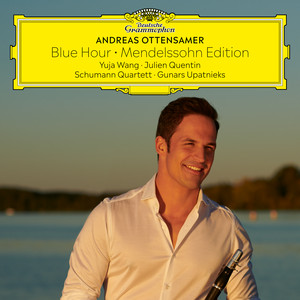 | Lieder ohne Worte, Op. 67: No. 2 Allegro leggiero (Arr. Ottensamer for Clarinet and Piano) | Felix Mendelssohn, Andreas Ottensamer, Yuja Wang | F♯ Minor | 0 | 11A | 75 BPM | |
 | Recueil de chants, Op. 65: No. 6, Barcarolle | Charles-Valentin Alkan, Bruce Liu | G Minor | 0 | 6A | 70 BPM | |
 | Castor et Pollux, RCT 32, Acte I, Scène III: Prélude - Air accompagné "Tristes apprêts" | Jean-Philippe Rameau, Teodor Currentzis | D Major | 0 | 10B | 86 BPM | |
 | Rameau: Les Indes galantes, Quatrième entrée "Les sauvages": "Forêts paisibles" (Zima, Adario, Sauvages) | Jean-Philippe Rameau, Sabine Devieilhe, Aimery Lefèvre, Le Jeune Choeur de Paris, Alexis Kossenko, Les Ambassadeurs | F♯ Minor | 3 | 11A | 85 BPM | |
 | Adagio from Violin Sonata in G Minor, Op. 5 No. 5 (Arr. Leopold Stokowski) | Arcangelo Corelli, Matthias Bamert, BBC Philharmonic | G Minor | 0 | 6A | 175 BPM | |
 | Concerto in D Minor, RV 565: IV. Andante e Spiccato | Alessandro Marcello, Concerto Italiano, Rinaldo Alessandrini | C Minor | 2 | 5A | 103 BPM | |
 | Anacréon - original version / Scene 1: "Règne, ô divin Bacchus!" - "Que le transport de ton ivresse" (Anacréon) | Jean-Philippe Rameau, Thierry Felix, Les Musiciens du Louvre, Marc Minkowski, Chorus Of Les Musiciens Du Louvre | E♭ Major | 1 | 5B | 106 BPM | |
 | Vaughan Williams: 6 Studies in English Folk-Song: No. 1, Adagio | David Parkhouse, Eileen Croxford | A Minor | 1 | 8A | 92 BPM | |
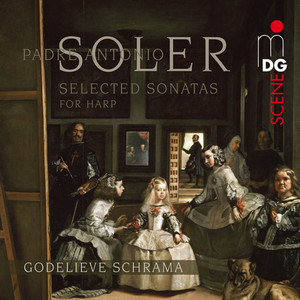 | Harpsichord Sonata No. 48: Allegro (arr. for Harp) | Antonio Soler, Godelieve Schrama | C Minor | 1 | 5A | 106 BPM | |
 | Le Tic-Toc-Choc, ou Les Maillotins: 18ème ordre, 3ème livre | François Couperin, Iddo Bar-Shaï | C Major | 3 | 8B | 145 BPM | |
 | Orfeo ed Euridice: Melody (Arr. G. Sgambati) | Christoph Willibald Gluck, Jura Margulis | D Minor | 0 | 7A | 73 BPM | |
 | Symphony in E-Flat Major, W. I/10: I. Allegro | Johann Christoph Friedrich Bach, Concerto Köln | D Major | 2 | 10B | 123 BPM | |
 | Melody from « Orfeo » | Christoph Willibald Gluck, Roberto Giordano | G Minor | 2 | 6A | 115 BPM | |
 | Trio Sonata in G Major, HWV 399, Op. 5 No. 4: III. Passacaille (Arr. for Piano) | George Frideric Handel, Martin Stadtfeld | F♯ Major | 0 | 2B | 174 BPM | |
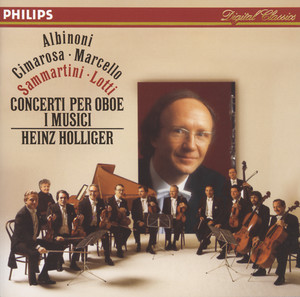 | Oboe Concerto in D Minor, S. Z799: II. Adagio | Alessandro Marcello, Heinz Holliger, I Musici | D Minor | 1 | 7A | 79 BPM | |
 | La Couperin (21e ordre) | François Couperin, Alexandre Tharaud | E Minor | 1 | 9A | 118 BPM | |
 | Fantasie g-Moll "duobus subjectis" BWV 917 | Inge Rosar | A Minor | 3 | 8A | 64 BPM | |
 | Fauré: Requiem, Op. 48: VII. In Paradisum | Gabriel Fauré, Paavo Järvi, Orchestre de Paris | D Major | 0 | 10B | 147 BPM | |
 | Symphony in C Major, Op. 1, No. 6 (Callen 6): I. Allegro | Franz Ignaz Beck, New Zealand Chamber Orchestra, Donald Armstrong | G Major | 2 | 9B | 143 BPM | |
 | Fantasia & Fugue in C Minor, Op. 86 (After J.S. Bach's BWV 537): Fantasia | Edward Elgar, Seattle Symphony Orchestra, Gerard Schwarz | F Minor | 1 | 4A | 143 BPM |
- ISRC
- GBF078942641
- Label
- L-M Records/RCA Records