- BPM
- 119
- Key
- D Major
- Camelot
- 10B
火の鳥 終曲 by Igor Stravinsky, Kotaro Fukuma Song Details
"火の鳥 終曲" by Igor Stravinsky, Kotaro Fukuma had its release date on September 17, 2014. The duration of This song is about 3 minutes long, at 3:17. Based on our data, This song appears to be safe for all ages and is not considered explicit. This track is about the average length of a typical track. There is only one song in 火の鳥 〜ロシア・ピアノ作品集〜, so we believe that "火の鳥 終曲" is a single. In terms of popularity, 火の鳥 終曲 is currently unknown. Although the tone can be danceable to some, this track does projects more of a negative sound rather than a postive one.
BPM and Tempo
The tempo marking of 火の鳥 終曲 by Igor Stravinsky, Kotaro Fukuma is Moderato (at a moderate speed), since this song has a tempo of 119 BPM. With that information, we can conclude that the song has a moderate tempo. This song can go great with walking. The time signature for this track is 4/4.
Music Key
This song is in the music key of D Major. This also means that this song has a camelot key of 10B. So, the perfect camelot match for 10B would be either 10B or 11A. While, 11B can give you a low energy boost. For moderate energy boost, you would use 7B and a high energy boost can either be 12B or 5B. Though, if you want a low energy drop, you should looking for songs with either a camelot key of 10A or 9B will give you a low energy drop, 1B would be a moderate one, and 8B or 3B would be a high energy drop. Lastly, 7A allows you to change the mood.
Want to find the BPM and music key for other songs? Check out our BPM and Key Finder page!
- Popularity
- 0%
- Loudness
- -20.961 dB
- Acousticness
- 100%
- Danceability
- 44%
- Energy
- 17%
- Instrumentalness
- 91%
- Liveness
- 10%
- Loudness
- 65%
- Speechiness
- 5%
- Valence
- 14%
Recommendations
| Track | Artist | Key | Energy | Camelot | BPM | ||
|---|---|---|---|---|---|---|---|
 | Transfigured Night, Op. 4 (Version for String Orchestra): Pesante - Grave | Arnold Schoenberg, Berliner Philharmoniker, Kirill Petrenko | E Major | 0 | 12B | 73 BPM | |
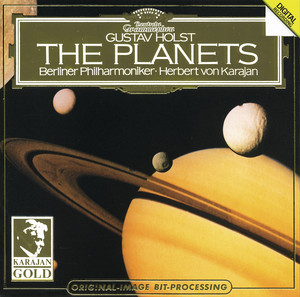 | The Planets, Op. 32: I. Mars, the Bringer of War | Gustav Holst, Berliner Philharmoniker, Herbert von Karajan | A♭ Major | 5 | 4B | 149 BPM | |
 | Don Quixote, Op. 35: XIV. Finale. The Death of Don Quixote. Sehr ruhig | Richard Strauss, Pierre Fournier, Giusto Cappone, Berliner Philharmoniker, Herbert von Karajan | D Major | 1 | 10B | 85 BPM | |
 | Stravinsky: Petrouchka, Tableau I "La foire du Mardi-Gras": Introduction - Fête populaire de la semaine grasse (1947 Version) | Igor Stravinsky, Riccardo Muti, Philadelphia Orchestra | D Major | 9 | 10B | 142 BPM | |
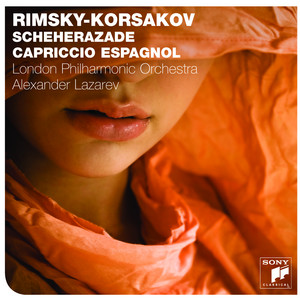 | Scheherazade: Calm - the triumph of Scheherazade | Nikolai Rimsky-Korsakov, Lars Hjalmar Joakim | E Minor | 0 | 9A | 68 BPM | |
 | Symphony No. 5 in E Minor, Op. 64: IV. Finale. Andante maestoso – Allegro vivace – Moderato assai e molto maestoso – Presto – Molto meno mosso | Pyotr Ilyich Tchaikovsky, Berliner Philharmoniker, Kirill Petrenko | E Major | 3 | 12B | 141 BPM | |
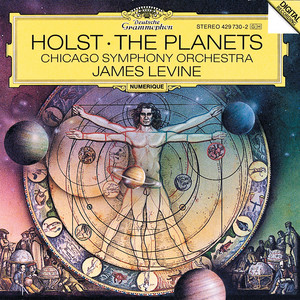 | The Planets, Op. 32: V. Saturn, the Bringer of Old Age | Gustav Holst, Chicago Symphony Orchestra, James Levine | G Major | 0 | 9B | 132 BPM | |
 | Symphony No. 1 in D Major: 2. Kräftig bewegt - Live | Gustav Mahler, Berliner Philharmoniker, Claudio Abbado | A Major | 1 | 11B | 96 BPM | |
 | Symphony No. 2 in C minor - "Resurrection" / 5th Movement: Sehr langsam und gedehnt ("der grosse Appell") | Gustav Mahler, Wiener Philharmoniker, Gilbert Kaplan | D♭ Minor | 0 | 12A | 67 BPM | |
 | The Planets, Op. 32: 6. Uranus, the Magician | Gustav Holst, Orchestre Symphonique de Montréal, Charles Dutoit | C Major | 2 | 8B | 115 BPM | |
![Symphony No. 5 In C Sharp Minor: 1. Trauermarsch (In gemessenem Schritt. Streng. Wie ein Kondukt) [Symphony No.5 in C sharp minor / Part 1] by Gustav Mahler, Wiener Philharmoniker, Pierre Boulez](https://i.scdn.co/image/ab67616d00001e025e6aa0e42f447f00063084c2) | Symphony No. 5 In C Sharp Minor: 1. Trauermarsch (In gemessenem Schritt. Streng. Wie ein Kondukt) [Symphony No.5 in C sharp minor / Part 1] | Gustav Mahler, Wiener Philharmoniker, Pierre Boulez | D♭ Minor | 1 | 12A | 86 BPM | |
 | Pictures at an Exhibition (Orch. Ravel): VI. Samuel Goldenberg und Schmuÿle | Modest Mussorgsky, Wiener Philharmoniker, Gustavo Dudamel | F♯ Minor | 1 | 11A | 114 BPM | |
 | D'un matin de printemps | Lili Boulanger, Yan Pascal Tortelier, BBC Philharmonic | C Major | 1 | 8B | 130 BPM | |
 | Aleko: Intermezzo | Sergei Rachmaninoff, Berliner Philharmoniker, Lorin Maazel | B♭ Major | 0 | 6B | 90 BPM | |
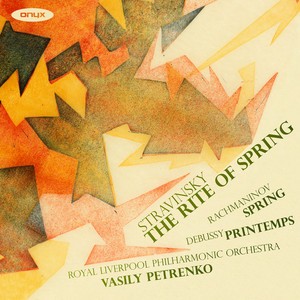 | Printemps, L. 61: II. Modéré | Claude Debussy, Vasily Petrenko, Royal Liverpool Philharmonic Orchestra | F♯ Minor | 2 | 11A | 103 BPM | |
 | The Firebird (L'oiseau De Feu) - Suite (1919): Berceuse | Igor Stravinsky, Orchestre de l'Opéra Bastille, Myung-Whun Chung | A♭ Minor | 0 | 1A | 135 BPM | |
 | Symphonie fantastique, Op. 14, H 48: III. Scène aux champs | Hector Berlioz, London Symphony Orchestra, Sir Colin Davis | F Major | 0 | 7B | 77 BPM | |
 | Tchaikovsky: Symphony No. 4 in F Minor, Op. 36: IV. Finale (Allegro con fuoco) | Pyotr Ilyich Tchaikovsky, San Francisco Symphony, Michael Tilson Thomas | F Minor | 4 | 4A | 80 BPM | |
| Symphony No. 5: II. Stürmisch bewegt, mit größter Vehemenz | Gustav Mahler, Wiener Philharmoniker, Pierre Boulez | B♭ Minor | 2 | 3A | 82 BPM | |
| Capriccio Espagnol: Alborada | Nikolai Rimsky-Korsakov, London Philharmonic Orchestra, Alexander Lazarev, Joakim Svenheden | B♭ Major | 3 | 6B | 126 BPM | |
 | Symphony No. 2 in B Minor: 3. Andante | Alexander Borodin, London Symphony Orchestra, Jean Martinon | D♭ Major | 1 | 3B | 91 BPM | |
 | Symphony No. 2 in B Minor: IV. Finale | Alexander Borodin, Gennady Rozhdestvensky, Royal Stockholm Philharmonic Orchestra | D Major | 1 | 10B | 129 BPM | |
 | Piano Concerto No. 2 in F Major, Op. 102: III. Allegro | Dmitri Shostakovich, I Musici de Montréal, Maxim Shostakovich | F Major | 3 | 7B | 164 BPM | |
 | Pomp and Circumstance March No. 2 in A Minor, Op. 39/2 | Edward Elgar, BBC Symphony Orchestra, Leonard Bernstein | B Minor | 2 | 10A | 132 BPM | |
 | Schoenberg: Verklärte Nacht, Op. 4: I. Grave (1943 Version) | Arnold Schoenberg, Daniel Barenboim, Chicago Symphony Orchestra | D Minor | 1 | 7A | 174 BPM |
- ISRC
- JPCO01424170
- Label
- L-M Records/RCA Records