- BPM
- 142
- Key
- D Major
- Camelot
- 10B
Stravinsky: Petrouchka, Tableau I "La foire du Mardi-Gras": Introduction - Fête populaire de la semaine grasse (1947 Version) by Igor Stravinsky, Riccardo Muti, Philadelphia Orchestra Song Details
On January 1, 1982, the song "Stravinsky: Petrouchka, Tableau I "La foire du Mardi-Gras": Introduction - Fête populaire de la semaine grasse (1947 Version)" was released by Igor Stravinsky, Riccardo Muti, Philadelphia Orchestra. With this song being about 5 minutes long, at This song is fairly a long song compared to the average song length. This song does not have an "Explicit" tag, making it safe for all ages. There are a total of 14 in the song's album "Stravinsky: Petrushka (1947 Version)". In this album, this song's track order is #1. Furthermore, we believe that the track originated from United Kingdom. Based on our statistics, Stravinsky: Petrouchka, Tableau I "La foire du Mardi-Gras": Introduction - Fête populaire de la semaine grasse (1947 Version)'s popularity is not that popular right now. The overall tone is very danceable, especially with its high energy, which produces more of a euphoric, cheerful, or happy vibe.
BPM and Tempo
With Stravinsky: Petrouchka, Tableau I "La foire du Mardi-Gras": Introduction - Fête populaire de la semaine grasse (1947 Version) by Igor Stravinsky, Riccardo Muti, Philadelphia Orchestra having a BPM of 142 with a half-time of 71 BPM and a double-time of 284 BPM, we would consider this track to have a Allegro (fast, quick, and bright) tempo marking. Because of this, we believe that the song has an overall fast tempo. Looking at the BPM of this song, this song might go great with jogging or cycling. The time signature for this track is 4/4.
Music Key
This song is in the music key of D Major. Or for those who are familiar with the camelot wheel, this song has a camelot key of 10B. So, the perfect camelot match for 10B would be either 10B or 11A. While, 11B can give you a low energy boost. For moderate energy boost, you would use 7B and a high energy boost can either be 12B or 5B. Though, if you want a low energy drop, you should looking for songs with either a camelot key of 10A or 9B will give you a low energy drop, 1B would be a moderate one, and 8B or 3B would be a high energy drop. Lastly, 7A allows you to change the mood.
Want to find the BPM and music key for other songs? Check out our BPM and Key Finder page!
- Popularity
- 5%
- Loudness
- -4.225 dB
- Acousticness
- 43%
- Danceability
- 75%
- Energy
- 89%
- Instrumentalness
- 0%
- Liveness
- 37%
- Loudness
- 93%
- Speechiness
- 4%
- Valence
- 96%
Recommendations
| Track | Artist | Key | Energy | Camelot | BPM | ||
|---|---|---|---|---|---|---|---|
![Les Noces, Scene 1: The Tresses (At the Bride's House) [the Wedding] by Susan Bickley, Martyn Hill, Alan Ewing, Alison Wells, Simon Joly Chorale, International Piano Quartet, Tristan Fry Percussion Ensemble, Robert Craft](https://i.scdn.co/image/ab67616d00001e02946bbad1fa051db2cacde94d) | Les Noces, Scene 1: The Tresses (At the Bride's House) [the Wedding] | Susan Bickley, Martyn Hill, Alan Ewing, Alison Wells, Simon Joly Chorale, International Piano Quartet, Tristan Fry Percussion Ensemble, Robert Craft | E Major | 2 | 12B | 118 BPM | |
![Symphony in 3 Movements, K73: I. [Allegro]. Crotchet = 160 by Igor Stravinsky, Berliner Philharmoniker, Pierre Boulez](https://i.scdn.co/image/ab67616d00001e0282434076bdfa956495520c6d) | Symphony in 3 Movements, K73: I. [Allegro]. Crotchet = 160 | Igor Stravinsky, Berliner Philharmoniker, Pierre Boulez | G Major | 1 | 9B | 84 BPM | |
 | The Rite of Spring, K15, Pt. 1: II. The Augurs of Spring | Igor Stravinsky, Berliner Philharmoniker, Herbert von Karajan | C Major | 7 | 8B | 91 BPM | |
 | Concerto for Orchestra, Sz. 116: IV. Intermezzo interrotto. Allegretto | Béla Bartók, Berliner Philharmoniker, Herbert von Karajan | F Major | 0 | 7B | 96 BPM | |
 | Barber: Adagio for Strings, Pt. 5 | Samuel Barber, Sir Simon Rattle, Berliner Philharmoniker | B♭ Minor | 1 | 3A | 99 BPM | |
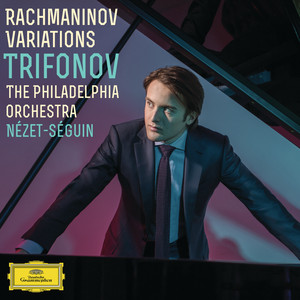 | Rhapsody on a Theme of Paganini, Op. 43: Variation No. 22 Marziale. Un poco più vivo. Alla breve | Sergei Rachmaninoff, Daniil Trifonov, Philadelphia Orchestra, Yannick Nézet-Séguin | B♭ Major | 3 | 6B | 175 BPM | |
 | Symphony No. 9 in E-Flat Major, Op. 70: II. Moderato | Dmitri Shostakovich, Berliner Philharmoniker, Kirill Petrenko | B♭ Minor | 2 | 3A | 122 BPM | |
 | La Mer, L.109: 2. Play of the Waves (Jeux de vagues) | Claude Debussy, Orchestre Symphonique de Montréal, Charles Dutoit | E Major | 1 | 12B | 113 BPM | |
| Symphony No. 9 in E-Flat Major, Op. 70: I. Allegro | Dmitri Shostakovich, Berliner Philharmoniker, Kirill Petrenko | B♭ Major | 4 | 6B | 136 BPM | |
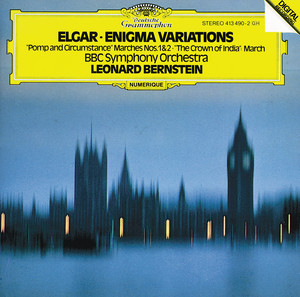 | Variations On An Original Theme, Op.36 "Enigma": 13. Romanza *** (Moderato) | Edward Elgar, BBC Symphony Orchestra, Leonard Bernstein | A♭ Major | 0 | 4B | 87 BPM | |
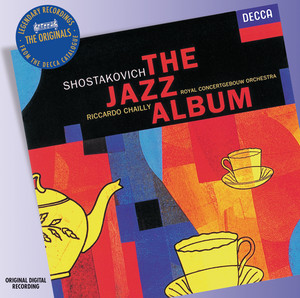 | Piano Concerto No. 1 in C Minor, Op. 35: IV. Allegro con brio | Dmitri Shostakovich, Ronald Brautigam, Peter Masseurs, Royal Concertgebouw Orchestra, Riccardo Chailly | A♭ Major | 4 | 4B | 82 BPM | |
 | Symphony No. 2, Op. 9, "Antar": I. Largo - Allegro - Largo - Allegretto - Adagio - Allegretto - Largo | Nikolai Rimsky-Korsakov, St. Petersburg State Symphony Orchestra, Andre Anichanov | F♯ Major | 0 | 2B | 71 BPM | |
 | Symphony No. 2 "The Age of Anxiety" / Part 1 / II. The Seven Ages: Variation 2. Poco più mosso | Leonard Bernstein, Krystian Zimerman, Berliner Philharmoniker, Sir Simon Rattle | A♭ Minor | 1 | 1A | 78 BPM | |
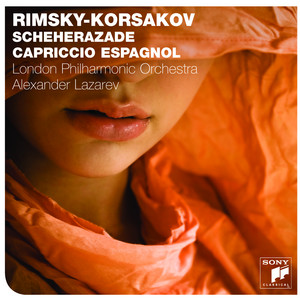 | Scheherazade: The Sea & Sinbad's Ship | Nikolai Rimsky-Korsakov, Lars Hjalmar Joakim | E Major | 1 | 12B | 82 BPM | |
 | Quatuor pour la fin du Temps: V. Louange à l'éternité de Jésus | Olivier Messiaen, Lucas Debargue, Torleif Thedéen | E Major | 0 | 12B | 81 BPM | |
 | Transfigured Night, Op. 4 (Version for String Orchestra): Pesante - Grave | Arnold Schoenberg, Berliner Philharmoniker, Kirill Petrenko | E Major | 0 | 12B | 73 BPM | |
 | Symphony in D Minor, FWV 48 (Remastered): II. Allegretto | César Franck, Pierre Monteux, Chicago Symphony Orchestra | E♭ Minor | 0 | 2A | 72 BPM | |
 | Symphonie fantastique, Op. 14, H 48: V. Songe d'une nuit de sabbat | Hector Berlioz, London Symphony Orchestra, Sir Colin Davis | C Minor | 1 | 5A | 60 BPM | |
 | The Planets, Op. 32: VI. Uranus, the Magician | Gustav Holst, Berliner Philharmoniker, Herbert von Karajan | C Major | 3 | 8B | 110 BPM | |
 | The Sleeping Beauty, Op. 66: Act II, No. 17 Panorama. Andantino | Pyotr Ilyich Tchaikovsky, Eugene Ormandy, Philadelphia Orchestra | G Major | 2 | 9B | 87 BPM | |
| Symphonie fantastique, Op. 14, H 48: IV. Marche au supplice | Hector Berlioz, London Symphony Orchestra, Sir Colin Davis | B♭ Major | 1 | 6B | 155 BPM | |
 | Sibelius: Symphony No. 5 in E-Flat Major, Op. 82: III. Allegro molto (1915 Version) | Jean Sibelius, San Francisco Symphony, Esa-Pekka Salonen | E♭ Major | 1 | 5B | 76 BPM | |
 | Symphony in C Major, Op. 46: II. Sehr langsam - | Hans Pfitzner, Seattle Symphony Orchestra, Gerard Schwarz | F Major | 0 | 7B | 87 BPM | |
 | Simple Symphony, Op. 4: I. Boisterous Bourrée | Benjamin Britten, English Chamber Orchestra | A Minor | 2 | 8A | 106 BPM | |
 | Symphony No. 1 in F Minor, Op. 10: I. Allegretto - Allegro non troppo | Dmitri Shostakovich, Michael Sanderling, Dresdner Philharmonie | B♭ Major | 3 | 6B | 95 BPM |
- ISRC
- GBAYC2002946
- Label
- L-M Records/RCA Records