- BPM
- 69
- Key
- E Minor
- Camelot
- 9A
Aria mit 30 Veränderungen, BWV 988 "Goldberg Variations": Variation 30a 1 Clav Quodlibet (BWV 988) by Johann Sebastian Bach, Francesco Tristano Song Details
Johann Sebastian Bach, Francesco Tristano's ' "Aria mit 30 Veränderungen, BWV 988 "Goldberg Variations": Variation 30a 1 Clav Quodlibet (BWV 988)" was released on its scheduled release date, January 1, 2012. With This song being less than two minutes long, at 1:56, we are fairly confident that this song is not explicit and is safe for all ages. Based on the duration of this song, this song duration is much smaller than the average song duration. The track order of this song in Francesco Tristano's "Long Walk" album is number 6 out of 9. Aria mit 30 Veränderungen, BWV 988 "Goldberg Variations": Variation 30a 1 Clav Quodlibet (BWV 988) is not that popular right now. The overall mood can be danceable to some, especially with it's high amount of postive energy.
BPM and Tempo
We consider the tempo marking of Aria mit 30 Veränderungen, BWV 988 "Goldberg Variations": Variation 30a 1 Clav Quodlibet (BWV 988) by Johann Sebastian Bach, Francesco Tristano to be Adagio (slowly with great expression) because the track has a tempo of 69 BPM, a half-time of 34BPM, and a double-time of 138 BPM. Based on that, the speed of the song's tempo is slow. The time signature for this track is 4/4.
Music Key
This song is in the music key of E Minor. Because this track belongs in the E Minor key, the camelot key is 9A. So, the perfect camelot match for 9A would be either 9A or 8B. While, a low energy boost can consist of either 9B or 10A. For moderate energy boost, you would use 6A and a high energy boost can either be 11A or 4A. However, if you are looking for a low energy drop, finding a song with a camelot key of 8A would be a great choice. Where 12A would give you a moderate drop, and 7A or 2A would be a high energy drop. Lastly, 12B allows you to change the mood.
Want to find the BPM and music key for other songs? Check out our BPM and Key Finder page!
- Popularity
- 1%
- Loudness
- -21.612 dB
- Acousticness
- 98%
- Danceability
- 43%
- Energy
- 13%
- Instrumentalness
- 92%
- Liveness
- 12%
- Loudness
- 64%
- Speechiness
- 3%
- Valence
- 73%
Recommendations
| Track | Artist | Key | Energy | Camelot | BPM | ||
|---|---|---|---|---|---|---|---|
 | Partita No. 3 in E Major, BWV 1006: I. Preludio | Johann Sebastian Bach, Kristóf Baráti | A Major | 2 | 11B | 116 BPM | |
 | Oboe Concerto in D Minor: II. Adagio | Alessandro Marcello, Jozsef Kiss, Budapest Ferenc Erkel Chamber Orchestra | D Minor | 1 | 7A | 131 BPM | |
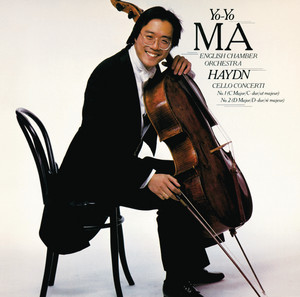 | Cello Concerto No. 1 in C Major, Hob. VIIb:1: II. Adagio | Joseph Haydn, Yo-Yo Ma, English Chamber Orchestra, José-Luis Garcia | F Major | 1 | 7B | 62 BPM | |
 | Prelude In C Major, BWV 924 : Praeambulum In C Major, BWV 924 | Janos Sebestyen, Johann Sebastian Bach | C Major | 2 | 8B | 139 BPM | |
 | Piano Concerto No. 21 in C Major, K. 467: II. Andante | Wolfgang Amadeus Mozart, London Mozart Players, Howard Shelley | F Major | 0 | 7B | 179 BPM | |
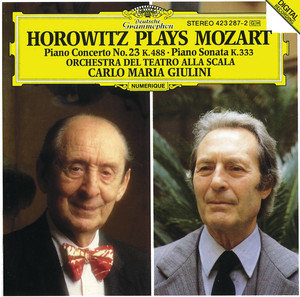 | Piano Concerto No. 23 in A Major, K. 488: II. Adagio | Wolfgang Amadeus Mozart, Vladimir Horowitz, Orchestra Del Teatro Alla Scala, Milano, Carlo Maria Giulini | F♯ Minor | 0 | 11A | 108 BPM | |
 | Orfeo ed Euridice (Orphée et Eurydice) - Arranged By Wilhelm Kempff: La Plainte d'Orphée (Ballet) | Christoph Willibald Gluck, Wilhelm Kempff | D Minor | 0 | 7A | 79 BPM | |
 | Kinderszenen | Robert Schumann, Ivan Moravec | F Major | 0 | 7B | 131 BPM | |
 | Brandenburg Concerto No. 1 in F Major, BWV 1046: I. (Allegro) - Live from Teatro Romolo Valli, Reggio Emilia, 2007 | Johann Sebastian Bach, Victor Aviat, Lucas Macias Navarro, Guido Gualandi, Giuliano Carmignola, Orchestra Mozart, Claudio Abbado | F Major | 3 | 7B | 90 BPM | |
 | Bach, JS : Well-Tempered Clavier Book 1 : Fugue No.2 in C minor BWV847 | Daniel Barenboim | C Minor | 1 | 5A | 132 BPM | |
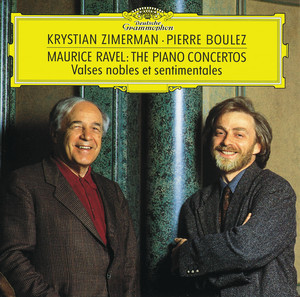 | Piano Concerto in G Major, M. 83: II. Adagio assai | Maurice Ravel, Krystian Zimerman, Cleveland Orchestra, Pierre Boulez | E Major | 0 | 12B | 74 BPM | |
 | Le Tic-Toc-Choc, ou Les Maillotins: 18ème ordre, 3ème livre | François Couperin, Iddo Bar-Shaï | C Major | 3 | 8B | 145 BPM | |
 | II. Adagio | Johann Sebastian Bach, Alexei Ogrintchouk, Alina Ibragimova, Swedish Chamber Orchestra, Reinut Tepp | C Minor | 1 | 5A | 84 BPM | |
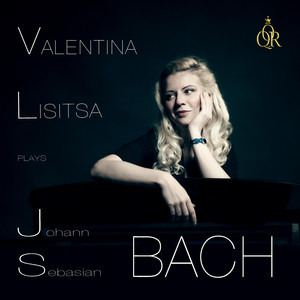 | Sicilienne, BWV 1031 | Valentina Lisitsa | D Minor | 2 | 7A | 73 BPM | |
 | Herz und Mund und Tat und Leben, BWV 147: Herz und Mund und Tat und Leben (Chorus) | Johann Sebastian Bach, Judith Spiesser, Annekathrin Laabs, Robert Sellier, Timo Janzen, Arcis-Vocalisten Munich, L'Arpa Festante Baroque Orchestra, Thomas Gropper | D♭ Minor | 1 | 12A | 127 BPM | |
 | Jesu, meine Freude, BWV 227: I. Choral "Jesu, meine Freude" | Johann Sebastian Bach, Collegium Vocale Gent, Philippe Herreweghe, Dorothee Mields, Damien Guillon, Thomas Hobbs, Peter Kooij, Zsuzsi Tóth | E♭ Minor | 1 | 2A | 189 BPM | |
 | Vaughan Williams: 6 Studies in English Folk-Song: No. 1, Adagio | David Parkhouse, Eileen Croxford | A Minor | 1 | 8A | 92 BPM | |
 | Bach Siciliano | Nimrod David Pfeffer | G Minor | 0 | 6A | 94 BPM | |
 | Goldberg Variations (‘Air with Thirty Variations’), BWV 988: II. Allegro con freschezza, e deciso | Chiyan Wong, Johann Sebastian Bach, Ferruccio Busoni | D Major | 2 | 10B | 105 BPM | |
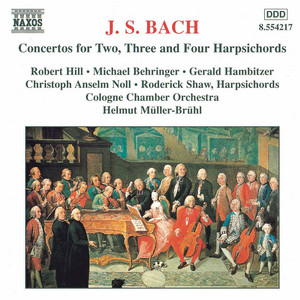 | Concerto For 2 Keyboards In C Minor, BWV 1062: I. - Allegro | Cologne Chamber Orchestra, Michael Behringer, Robert Hill, Johann Sebastian Bach | C Minor | 4 | 5A | 106 BPM | |
 | Concerto in F Major, S. 234: I. Vivace | Johann David Heinichen, Musica Antiqua Köln, Reinhard Goebel | E Major | 2 | 12B | 133 BPM | |
 | Musical Offering, BWV 1079: Ricercar a 3 | Johann Sebastian Bach, Nils-Thilo Krämer, Ariane Pfister, Christian Benda, Sebastian Benda, Capella Istropolitana | C Minor | 2 | 5A | 136 BPM | |
 | Concerto for 2 Violins, Strings, and Continuo in D minor, BWV 1043: 2. Largo ma non tanto | Johann Sebastian Bach, Arthur Grumiaux, Herman Krebbers, Les Solistes Romands, Arpad Gérecz | F Major | 1 | 7B | 90 BPM | |
 | Concerto for Oboe and Violin in C Minor, BWV 1060 | Lara St. John, Johann Sebastian Bach, Ariana Ghez, Eduardo Maturet, Simón Bolívar Youth Orchestra of Venezuela | C Minor | 2 | 5A | 177 BPM | |
 | Concerto in D Minor for Oboe, Strings and Continuo: II. Adagio | Alessandro Marcello, Gruppo Instrumentale di Roma, Giorgio Sasso, Andrea Mion | D♭ Minor | 1 | 12A | 68 BPM |
- ISRC
- This song does not have an ISRC.
- Label
- L-M Records/RCA Records